The Five Physiological Limiters of CrossFit Performance

In the early days of CrossFit, the prevailing training methodology was simple: work until you drop, ignore the burning in your lungs, and let sheer grit carry you across the finish line. If you blew up mid-workout, you simply weren’t tough enough.

Today, the sport has evolved. Elite coaches and athletes see the human body not as a sledgehammer swung mindlessly, but as an intricate thermodynamic engine. In high-intensity functional fitness, going “unbroken” is no longer viewed as a universal badge of honor; often, it is a sign of poor physiological intelligence. See the Theoretical Hierarchy Of Development from the 2002 CrossFit Journal article, What is Fitness?

To build an engine that’s nearly impossible to redline, you must understand, respect, and systematically train five deeply interdependent physiological systems, while navigating the hidden biomechanical bottlenecks that govern human performance. Neglect even one, and it can sabotage the others.

1. VO2 Max: The Engine’s Ceiling

The Science

VO2 Max is the absolute maximum volume of oxygen your body can consume, transport, and use per minute during intense exercise. It dictates the upper structural limit, the literal displacement, of your cardiorespiratory engine.

The CrossFit Application & Limitations

In CrossFit, your VO2 Max establishes your recovery rate between high-power movements or intervals. Imagine executing a heavy set of thrusters. Your body incurs a massive, immediate oxygen debt. If you possess a high VO2 Max, your cardiorespiratory system can clear that debt rapidly, lowering your heart rate and readying your muscles to pick up the next barbell. If your ceiling is low, your pacing will collapse as you stand over the bar gasping for air, waiting for your system to catch up.

Overcoming the Limitation

Your genetic profile limits your absolute VO2 Max, but many athletes fail to maximize it because they confuse generic “metcons” with true high-intensity interval training (HIIT). To expand the stroke volume of the heart, you must accumulate time spent right at your peak heart rate.

The Workout Protocol: Upgrading your Engine

  • The Format: 4 x 4 minute intervals at the sweet spot of 85-95% of max HR with 4 Minutes of complete rest. Also known as Norwegian Intervals which were designed maximize VO₂ and heart efficiency.
  • The Execution: Utilize a cyclical modality like rowing or an Echo bike. This must be a true 9/10 effort where you hit and maintain your peak heart rate for the final 2 minutes of every working interval. The 1:1 rest ratio is mandatory to allow your system to reset so you can hit the next round with equal intensity.

2. Aerobic Capacity: Build the Size of Your Gas Tank

The Science

While VO2 Max defines your physiological ceiling, Aerobic Capacity determines how much of that ceiling you can sustain over time. It depends heavily on peripheral adaptations such as mitochondrial content, capillarization, oxidative enzyme activity, and metabolic economy. Sustained aerobic training also improves the ability to deliver and use oxygen at a given workload. Also review training techniques to improve endurance exercise performance.

The CrossFit Application & Limitations

Aerobic capacity operates as the “metabolic vacuum cleaner” of your body. During long workouts like Murph or a 20-minute mixed-modal AMRAP, the oxidative system increasingly contributes to ATP production, helps oxidize lactate through the lactate shuttle, and allows you to sustain work without relying as heavily on higher-cost anaerobic pathways.

The common limitation here is the “one-gear athlete”: someone who can sprint like a rocket for three minutes but completely falls apart by minute ten because they lack the aerobic machinery to sustain output, recover between efforts, and maintain metabolic stability as fatigue accumulates.

Overcoming the Limitation

One of the most effective ways to expand the fuel tank is through regular low-intensity steady-state work, commonly referred to as Zone 2. The purpose is to accumulate meaningful aerobic volume at an intensity low enough to remain sustainable and repeatable without creating excessive fatigue.

The Workout Protocol: The Low-Gear Flush
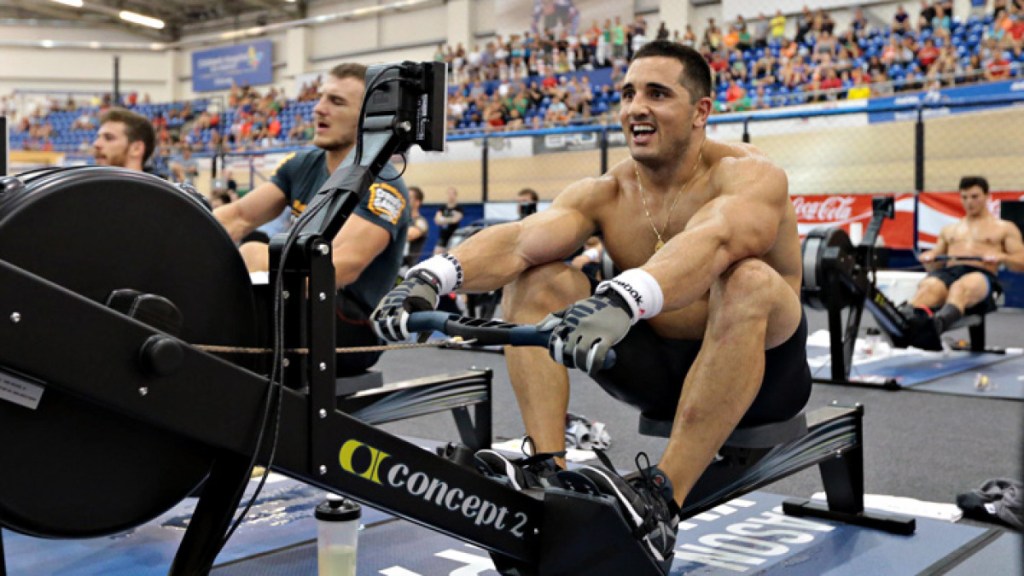
  • The Format: 30, 45, 60, and eventually even 90 minutes of continuous movement. This can be performed as a single modality or as carefully selected mixed-modal work
  • The Execution: Row, ski, jog, bike, or use low-complexity mixed-modal MAP 10-style training. Exercise selection should remain simple enough that local muscular fatigue does not become the limiter. Work at an intensity just below your first ventilatory/lactate threshold. For most recreational athletes, the easiest practical check is the talk test: you should be able to carry on a continuous conversation without gasping.

    The goal isn’t to chase fatigue. It’s to accumulate high-quality aerobic work that supports mitochondrial adaptation, capillarization, improved oxygen delivery and utilization, and better recovery between harder efforts.

The Intent

The intent is to build aerobic durability, not simply burn calories or “get some cardio in.”

You are trying to improve the athlete’s ability to:

  • sustain a greater percentage of VO2 max;
  • produce ATP aerobically for longer;
  • recover more quickly between harder bouts;
  • rely less heavily on glycolytic contribution at a given workload;
  • and accumulate training volume without adding substantial recovery cost.

The Expected outcome

Athletes should gradually see:

same pace/power with lower HR and lower perceived effort
or:
same HR/perceived effort with higher sustainable pace or power

They should also recover faster between rounds and movements, maintain steadier pacing deeper into longer metcons, and experience less of the “three minutes great, ten minutes dead” pattern.

That is the adaptation you want.

3. The Lactate Threshold: The Boundary Line

The Science

The Lactate Threshold (LT) is the exact exercise intensity at which blood lactate accumulates faster than your body can clear it. Once you cross this line, hydrogen ions flood the muscle tissue, acidity skyrockets, and rapid muscular failure can happen more easily. Also worthy of note is that contemporary physiology treats lactate production as associated with, and in some contexts helpful in managing, proton accumulation rather than being the acid-producing villain it was once considered.

The CrossFit Application & Limitations

CrossFit workouts are systematically designed to force you over your LT. When your forearms freeze up on pull-ups, or your legs turn to lead on wall balls, you have crossed the line. The limitation isn’t necessarily that elite athletes don’t produce lactate; it’s that they have trained their bodies to work right on the razor’s edge of their threshold (often at 85–90% of their max heart rate) without tipping over into a catastrophic redline.

Overcoming the Limitation

To push your threshold higher, you must spend extended intervals, over time, at or just below that uncomfortable boundary line, helping you adapt to buffer acidity more efficiently.

The Workout Protocol: Threshold Repeaters

  • The Format: 3 Rounds of 10 Minutes on, 3 Minutes Active Recovery.
  • The Execution: On an Assault Bike, Echo Bike, or rower, maintain a pace that feels “comfortably hard.” Your breathing should be deep and rhythmic, but you should not be gasping. The goal is to keep output relatively consistent across all three intervals. If your pace drops sharply from round to round, you went out too hard. Back off slightly and hold the line.

4. Rate Pressure Product (RPP): The Myocardial Tax

The Science

Rate Pressure Product (RPP) is calculated as Heart Rate × Systolic Blood Pressure. It is the premier clinical index used to measure the actual physical workload and oxygen demand placed directly on the muscle walls of your heart (myocardial oxygen consumption) NCBI Myocardial Strain.

The CrossFit Application & Limitations

In standard cardio like running, RPP climbs smoothly and predictably. In CrossFit, RPP spikes violently. When you perform high-rep, moderately heavy lifting (like clean & jerks, thrusters, or deadlifts), your contracting muscles physically compress your local blood vessels. This is called muscular occlusion. To force blood past these squeezed vessels, your blood pressure skyrockets. Combined with an elevated heart rate, your heart faces an extreme workload. This sudden “myocardial tax” explains why a short lifting metcon can leave you far more exhausted and lightheaded than a long run.

Overcoming the Limitation

You cannot bypass the physics of muscular occlusion, but you can manipulate your execution mechanics to give your heart and local capillary beds micro-breaks.

The Workout Protocol: Building The Tactical Single

  • The Format: For Time: 20 Squat Cleans at 75% of your 1RM.
  • The Execution: As many of you already know, it’s best not to do touch-and-go reps at this weight. Instead, perform steady singles ~every :10-:12. Also, always use the hook grip. Utilizing the hook grip locks the hand mechanically to the bar vs holding on to it. This drastically reduces the active muscle contraction required by your forearm and wrist flexors during the pull. Also, the exact moment you stand fully, with the hips and knees reaching full extension, drop the bar. Dropping the bar and releasing the grip unlocks the muscular occlusion, causing an immediate burst of fresh, oxygenated blood (reactive hyperemia) that flushes out trapped hydrogen ions, drops peripheral vascular resistance, and can lower peak RPP stress.

5. Cardiovascular Drift: The Pacer’s Enemy

The Science

Cardiovascular Drift (CV Drift) is the phenomenon in which heart rate gradually rises over the course of prolonged exercise even though power output, speed, or physical intensity remains constant (Wikipedia’s Cardiovascular Drift Analysis).

The CrossFit Application & Limitations

As you sweat during a long, hot workout, plasma volume can fall and stroke volume can decrease. As stroke volume falls, heart rate rises in an attempt to maintain cardiovascular output and sustain the same workload.

The limitation here is a pacing trap: if you pace a 30-minute workout (or 60 minute workout) purely by how your muscles feel in the first five minutes, cardiovascular drift can progressively increase the relative cardiovascular cost of that same pace, eventually pushing you toward or beyond a sustainable threshold and causing a late-workout collapse.

Overcoming the Limitation

Defeating cardio drift requires a combination of situation-specific hydration and active, conscious down-regulation of your nervous system during transitions.

The Workout Protocol: Murph Drift Prevention

The Format: 3 Rounds
2–3 Minutes of controlled running at a predetermined, repeatable pace
1–2 Rounds of Cindy
5 Pull-ups
10 Push-ups
15 Air Squats
1 Minute walking recovery while deliberately relaxing the hands, shoulders, and jaw and regaining controlled breathing
2–3 Minutes on the BikeErg at a predetermined, repeatable split or wattage
1–2 Rounds of Cindy
1 Minute walking recovery with the same down-regulation focus

The full session should initially fall somewhere around 30 minutes.

Scaling the Prescription
For newer athletes, begin with one round of Cindy after each monostructural effort. Across three rounds, that produces six total rounds of Cindy:

  • 30 Pull-ups
  • 60 Push-ups
  • 90 Air Squats

That’s enough volume to provide meaningful exposure to the movements without allowing local muscular endurance to overwhelm the cardiovascular purpose of the session.

For experienced recreational CrossFit athletes who already tolerate gymnastics volume well, two rounds of Cindy is entirely appropriate. Across the session, that produces twelve total rounds:

  • 60 Pull-ups
  • 120 Push-ups
  • 180 Air Squats

The determining factor is not whether the athlete can complete the higher volume. It is whether they can complete it while preserving full range of motion, movement integrity, and the intended pacing stimulus.

If the pull-ups deteriorate, the push-ups become half reps, or the squats lose depth simply to keep moving, the athlete has changed the limitation being trained. Local muscular failure has taken over the session.

Scale before that happens. Scaling does not diminish the work. Poor repetitions do.

The Execution

The monostructural pieces should be performed at a fixed, repeatable external workload, not by chasing a predetermined heart rate.

For example:

  • Run at the same pace each round.
  • Hold the same BikeErg wattage or split each round.

Then observe what happens to heart rate. If the athlete runs the same pace at 138 bpm during the first round, 148 bpm during the second, and 158 bpm during the third, cardiovascular drift is becoming visible.

The goal over time is not necessarily a lower heart rate at every moment. The goal is a smaller rise in heart rate while maintaining the same external work.

Several weeks later, the same athlete might produce:

138, 143, and then 148 bpm at the same running pace, same BikeErg output, and same bodyweight volume. That’s a measurable improvement.

Why the Walking Recovery Matters

The one minute walking intervals are not designed to make the workout easy. They teach the athlete to actively manage transitions rather than allowing every transition to become another uncontrolled effort.

Walk. Drop the hands. Relax the shoulders and jaw. Regain control of the breathing pattern. Then begin the next piece deliberately rather than sprinting blindly into it.

This creates repeated opportunities to practice controlling unnecessary sympathetic escalation while maintaining enough movement to keep the cardiovascular system engaged.

The athlete is learning to recover while still working. That matters in Murph, but it also matters in almost every other CrossFit workout.

Progressing the Session

Progress the workout gradually rather than simply making everything harder at once.

A simple progression might look like:

Week 1: 3 rounds with 2-minute monostructural efforts and 1 round of Cindy per station.

Week 2: Increase the run and BikeErg pieces to 3 minutes.

Week 3: Maintain duration but slightly increase the prescribed pace or power.

Week 4: For athletes demonstrating excellent movement quality and recovery, introduce a second round of Cindy at beginning or the end.

Later progressions may include longer total duration, warmer environmental conditions, and eventually a weight vest. But these progressions only happen after the athlete can maintain full range of motion and consistent pacing without the workout deteriorating into survival.

The goal is not to manufacture suffering. The goal is to build an athlete who can sustain increasingly demanding work while controlling the cardiovascular cost.

The Expected Outcome

With consistent exposure, the athlete should begin to demonstrate:

  • less heart-rate drift at the same running pace or BikeErg output
  • faster recovery during transitions
  • improved ability to maintain breathing control under accumulating fatigue
  • greater consistency from the first round to the last
  • improved tolerance of mixed-modal work without premature redlining
  • better preservation of pull-up, push-up, and squat mechanics late in the session
  • and ultimately, improved performance when those qualities are tested in longer workouts such as Murph

Murph then becomes what it should be: the expression of the capacity you developed in training, not the only place you ever practice it.

And no matter what, DO NOT cheat the reps. Do legitimate pullups, pushups, and squats. Don’t wear the vest if you can’t do the FULL ROM on every rep. Scaling does NOT diminish the work you’re doing. No one cares if you scaled the workout, everyone cares if you cheated.

A Note on System Interdependency: The Multi-Pillar Bleed-Over

While it is helpful to categorize your engine into five distinct pillars for diagnostic purposes, the human body does not operate in isolated, clinical buckets. In the human machine, a breakdown in one pillar triggers a catastrophic domino effect across multiple systems simultaneously.

Consider how easily the boundaries blur mid-workout:
If your Aerobic Capacity (Pillar 2) is weak, your body cannot efficiently clear metabolic waste. This forces you to cross your Lactate Threshold (Pillar 3) much earlier in the workout than expected. The moment you cross that threshold, your breathing becomes rapid and shallow to buffer the rising blood acidity. This frantic breathing pattern spikes your autonomic panic response and drives your heart rate up.

That spiked heart rate, combined with the heavy muscle occlusion of a lifting movement, sends your Rate Pressure Product (Pillar 4) into the red zone. Worse, the heat generated by this systemic panic accelerates sweat loss, triggering early Cardiovascular Drift (Pillar 5) and forcing you to hit your absolute VO2 Max ceiling (Pillar 1) just to maintain a basic walking pace.

You aren’t managing five separate systems; you are balancing a web. A leak in one corner of the engine will inevitably drown the rest.

For the Beginner: Avoid Learning the Hard Way

Every veteran athlete you see executing smooth, steady singles with a calm expression has a graveyard of workouts behind them where they blew up, choked on their own pace, and ended up flat on their back questioning their life choices.

As a beginner, your mind loves to learn lessons the hard way. When a coach gives you a pacing strategy, your ego will whisper, “You feel great, go faster, go unbroken.”

To bypass years of unnecessary metabolic suffering, write these three rules in your training diary of wherever you keep mission-critical information:

  1. Intensity is an Asset, Not a Strategy: Blind toughness is a finite resource. If you redline your engine in the first two minutes of a ten-minute workout, no amount of mental toughness will override the biochemistry of acidic muscle tissue.
  2. Pacing is the True Secret Sauce: Pacing isn’t about moving slowly; it’s about defending your thresholds. Your goal should be to move at a speed that allows you to finish the final minute of a workout at the exact same intensity (or faster) than your first minute.
  3. Trust the Coach’s Intent: If a coach tells you a workout should take 8 minutes, and you pick a weight that forces you to take 20 minutes, you didn’t get a better workout, you completely missed the intended physiological stimulus. You trained a different energy system entirely.

Listen to the mapmakers. The coaches and veteran athletes who came before you ran full speed into the physiological walls so you wouldn’t have to. Respect the biology, master your pacing, use the mechanical shortcuts like the hook grip, and turn your engine into a finely tuned, unstoppable machine.

The Hidden Nuances of Elite Performance

To transition fully from a standard textbook understanding of physiology to the reality of competitive sports, athletes must master two final unwritten variables:

Nuance 1: The Biomechanical Shunt – Postural Occlusion

Most people assume muscle occlusion only happens because you are lifting heavy weights. They forget about the physiological tax of changing your body’s physical position under gravity. When you transition rapidly from a horizontal position to a vertical position (like jumping up from a burpee to perform a thruster, or dropping off a pull-up bar into a heavy deadlift), your cardiovascular system has to violently shift blood pressure dynamics to prevent blood pooling in your lower extremities. Your heart has to contract significantly harder to maintain stroke volume, causing an immediate, artificial spike in your RPP.

  • The Fix: Athletes shouldn’t just pace the reps; they must pace the transitions. Taking a deliberate pause at the top of a burpee, 3-5 seconds, before grabbing the barbell allows the vascular system to normalize pressure, preventing an autonomic panic surge.

Nuance 2: The CO₂ Tolerance Deficit – The Brain’s Panic Button

Athletes often mistake a gasping, redlined feeling for a lack of oxygen. In reality, the human brain rarely panics because of low oxygen; it panics because of a buildup of carbon dioxide (CO₂). When your muscles burn, they produce hydrogen ions, which your blood buffers by turning them into CO₂. Your brain’s respiratory center detects this rising CO₂ and triggers a frantic, survival-driven command to breathe faster. If an athlete has a low tolerance for CO₂, they begin hyperventilating prematurely. This shallow, rapid breathing increases anatomical “dead space” in the airways, accelerates Cardiovascular Drift, and causes the brain’s Central Governor (model/theory) to pull the emergency brake.

  • The Fix: This explains why elite CrossFit athletes are increasingly turning to respiratory muscle training behind the scenes to optimize their engines (The Barbell Spin). Renowned coaches use these methods to elevate baseline conditioning. Targeted Inspiratory Muscle Training (IMT), using isolated breathing-resistance tools (like the O2 Trainer), acts as a legal cheat code. They do not just mechanically thicken and strengthen the diaphragm muscle to prevent it from “stealing” blood from your limbs via the respiratory metaboreflex (PMC Respiratory Metaboreflex). They force your nervous system to tolerate higher intracellular pressures and controlled CO₂ accumulation without triggering a psychological panic response (Isocapnic BWB Strength Features).

Quick Reference: Assessing and Addressing Each Limiter

• VO2 Max: Assess with all-out, short interval efforts (e.g., 4-min max effort test). Improve with high-intensity intervals at peak heart rate and full recovery.

• Aerobic Capacity: Assess with sustained efforts (e.g., 60-min continuous movement). Improve with consistent Zone 2, low-intensity steady-state work.

• Lactate Threshold: Assess with pace/effort you can hold for 20–40 minutes before sharp muscular fatigue. Improve with threshold repeat intervals at a “comfortably hard” pace.

• Rate Pressure Product: Assess with moderate-load, high-rep lifting under fatigue. Improve by managing rest, using hook grip, and breaking up reps to reduce occlusion.

  • Cardiovascular Drift: Assess by monitoring heart rate in long, hot workouts for upward drift. Improve with hydration, conscious down-regulation, and transition protocols.
  • For all limiters, log workouts and physiological responses to identify which system fails first during high-intensity sessions.

Glossary for Novices

• VO2 Max: The maximum amount of oxygen your body can use during intense exercise.

• Aerobic Capacity: How long you can sustain exercise using oxygen efficiently.

• Lactate Threshold: The intensity where your body starts accumulating fatigue-causing byproducts faster than it can clear them.

• Rate Pressure Product: A measure of how hard your heart is working (heart rate × blood pressure).

• Cardiovascular Drift: When your heart rate rises during long workouts even if you’re not working harder.

• Muscular Occlusion: When working muscles temporarily restrict blood flow because they’re contracting.

• Angiogenesis: The process of growing new blood vessels.

• Reactive Hyperemia: The rush of blood that occurs when a muscle relaxes after being contracted.

• Central Governor: The brain’s way of limiting effort to protect you from harm.

• Zone 2: A training intensity where you can carry on a conversation easily, usually 60–70% of your maximum heart rate.

Refer to this glossary as you read, and use the quick reference section to help guide athlete assessments and target training interventions.
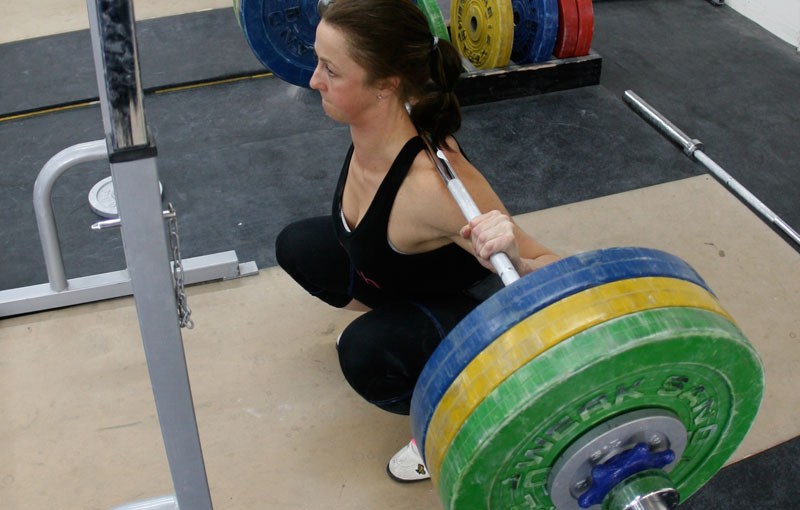
Back to the Garage: 20 Years of Catalyst Athletics | Documentary (2026)

Thank you for 20 years. Here’s a look at the past, present and future of Catalyst Athletics.

Twenty years of Catalyst Athletics.

If you’ve spent any meaningful amount of time around Olympic weightlifting, CrossFit, or strength and conditioning over the last two decades, there’s a pretty good chance Catalyst Athletics has influenced you somehow, whether you realized it or not.

Greg Everett founded Catalyst in 2006, and what followed became far more than a weightlifting gym.

Catalyst became a team. A method. A library. A publishing platform. A coaching resource. And, ultimately, one of the institutions that helped make quality Olympic weightlifting education accessible to athletes and coaches around the world.

Long before every coach had an Instagram account and every training question returned a thousand competing answers, Greg was doing the decidedly less glamorous work of teaching.

Writing, coaching, filming exercise demos, developing programs, publishing The Performance Menu back in the day, writing Olympic Weightlifting: A Complete Guide for Athletes & Coaches and building an enormous free library of weightlifting education.

And, in 2013, he produced American Weightlifting, a film he conceived years earlier and essentially wrote, filmed, directed, edited, produced, and even scored himself because he believed the story of American weightlifting deserved to be told.

Read more: Back to the Garage: 20 Years of Catalyst Athletics | Documentary (2026)

Catalyst itself evolved along the way. A commercial gym and a competitive team. From Cali to Oregon. Different athletes, different eras, different challenges. But the underlying commitment to the craft remained remarkably consistent.

And I think craft is the right word.

One of the things I’ve always appreciated about Greg’s work is that it reflects something I believe deeply about coaching: principles matter, but principles still have to be applied to an actual human being.

Technique matters, strength matters, programming matters, assessments matters and experience all matter. And eventually, the coach has to take all of those things and decide what this athlete needs right now.

That’s the art.

It’s one reason Greg and Catalyst have found their way into my own writing on programming and coaching. When discussing the people who helped shape modern thinking about weightlifting and strength and conditioning, Greg belongs in that conversation, not because he invented the snatch or discovered progressive overload, but because he has spent twenty years organizing, refining, teaching, documenting, and sharing the craft.

And that’s a contribution worth recognizing.

Greg has now released a documentary telling the story of Catalyst Athletics, and if you’ve ever learned from one of his articles, watched one of those exercise demos, followed one of his programs, read one of his books, listened to him talk weightlifting, or simply benefited from the broader weightlifting culture Catalyst helped build, it’s worth taking the time to watch.

Twenty years is a hell of a lot of reps.

Congratulations to Greg, Aimee, the athletes, coaches, contributors, and everyone else who has been part of the Catalyst Athletics story.

Here’s to the next chapter. The principles remain constant. The application is the art.

And few people have spent more time documenting and developing that art than Greg. Hopefully, the next 20 years are even better than the first.

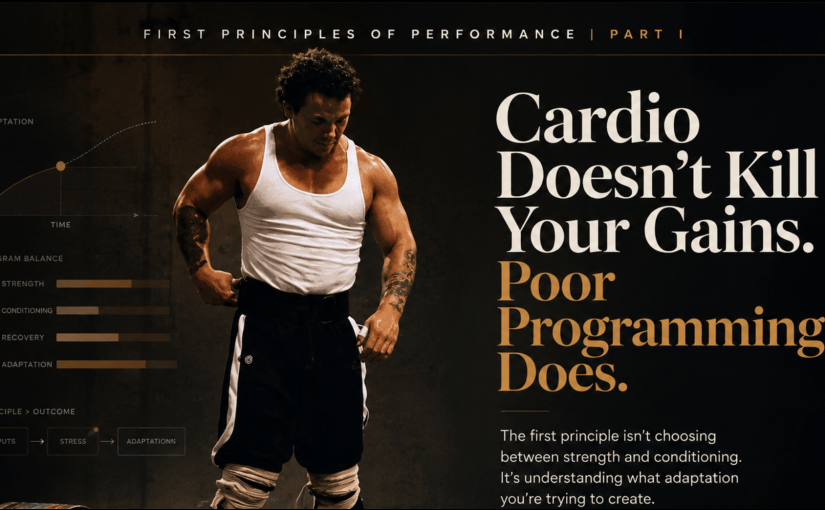
First Principles of Performance | Part I

Cardio Doesn’t Kill Your Gains. Poor Programming Does.

“The first principle isn’t choosing between strength and conditioning. It’s understanding what adaptation you’re trying to create.”

The Lion Killer

For decades, one of the most persistent myths in strength training has been deceptively simple:

“If you want to build muscle, avoid cardio.”

It sounds reasonable. After all, endurance athletes tend to be lean, while bodybuilders are muscular. Somewhere along the way, many people concluded that cardiovascular training and muscle growth must exist at opposite ends of the same spectrum.

Like most fitness myths, there’s a grain of truth buried beneath a mountain of oversimplification.

Can excessive endurance training interfere with maximal hypertrophy? Yes.

Can intelligently programmed cardiovascular training improve your health, enhance your recovery, increase your work capacity, and have little meaningful effect on muscle growth?

Also yes. The difference isn’t cardio. It’s programming

The Wrong Question

People often ask, “How much cardio can I do without losing muscle?” It’s the wrong question. The better question is: What adaptation am I trying to produce?

Every training session asks your body to solve a problem. Heavy squats ask it to produce more force. Tempo intervals ask it to become more efficient at clearing lactate.

Sprints demand explosive power. Long easy efforts improve aerobic efficiency.

These aren’t competing identities. They’re simply different physiological adaptations. Understanding that distinction changes everything.

First, Let’s Define “Cardio”

One reason this discussion becomes so confusing is because we use the word cardio as though it’s a type of exercise.

It isn’t. It’s a physiological demand.

Your cardiovascular system doesn’t know whether you’re running, rowing, cycling, carrying sandbags, or performing twenty-rep squats. It only knows that your muscles require oxygen, nutrients, and energy.

Think about workouts like:
– The Standard (Grace – 30 clean and jerks at 135/95, 30 ring muscle ups, Isabel – 30 snatches at 135/95)
– Heavy sled pushes
– Oly complexes of 5 reps or more
– 2k row for time
– 5k run
– Fran
– 20 rep max back squat
– Murph

Nobody finishes those wondering whether their cardiovascular system was challenged. Weight training can absolutely become cardiovascular training depending on how it’s programmed.

Intensity.
Density.
Rest intervals.
Exercise selection.
Volume.

These variables determine the cardiovascular demand, not whether you’re holding a barbell or running shoes. The conversation isn’t “weights versus cardio.”

It never was.

Where the Myth Came From

The concern isn’t entirely imaginary.

Researchers have long studied what’s known as the interference effect, the observation that combining endurance and resistance training can, under certain conditions, reduce some strength and hypertrophy adaptations compared with resistance training alone.

Notice the language. Can. Under certain conditions.

Not: Always. Those conditions matter.

A competitive marathon runner performing sixty miles each week while trying to maximize leg hypertrophy faces a very different challenge than someone lifting four days a week while adding two thirty-minute conditioning sessions.

Those are not the same training problems. Yet they’re often discussed as though they are.

What Actually Interferes?

For most lifters, muscle isn’t lost because they jogged. It’s lost because recovery becomes the limiting factor.

Poor programming often looks like this:
Heavy lower-body lifting followed immediately by long-distance running.
High-volume conditioning layered on top of already excessive lifting volume.
Poor sleep.
Insufficient calories.
Inadequate protein intake.
Eventually something has to give.
Trying to train near maximally, whether it’s loading or intensity, 4-6 days per week.

If training continually exceeds your ability to recover, progress slows—not because cardio is inherently bad, but because the total stress exceeds your adaptive capacity.

The Research Is More Encouraging Than the Internet

Fortunately, the research is considerably more nuanced than the internet. Much of the fear surrounding cardio comes from laboratory discussions about molecular signaling. You’ll often hear that endurance exercise activates one pathway while resistance training activates another, and that these pathways “fight” each other.

There is truth here. But physiology is rarely as binary as social media suggests.

These signals are temporary. They’re influenced by nutrition, training age, exercise selection and most important, recovery.

And they’re often localized to the tissues being trained rather than acting as a simple on-off switch across the entire body.

More importantly, when researchers look beyond the molecular biology and examine actual training outcomes, the picture becomes much less dramatic.

For the overwhelming majority of recreational lifters, and even many competitive athletes, well-designed conditioning has little meaningful effect on muscle growth.

Programming matters far more than the mere presence of cardiovascular exercise.

I hope the archive of this blog never disappears.

Optimum Performance Training (OPT) James Fitzgerald

Numerous studies support the idea that cardio, when programmed intelligently, does not meaningfully hinder muscle growth. For example, a 2015 meta-analysis by Dr. Brad Schoenfeld and colleagues concluded that combining strength and cardio training results in only a negligible impact on muscle and strength gains, provided programming is sound (Schoenfeld, B.J., Ogborn, D., & Krieger, J.W., 2015, Sports Medicine).

Cardio That Supports Muscle Growth

If hypertrophy is your primary objective, conditioning should complement not compete with your lifting.

Generally speaking, it could look like the following:

  • Shorter, more intense sprint work.
  • Use interval-based conditioning where appropriate.
  • Row.
  • Cycle.
  • Throw med-balls.
  • Use the SkiErg.
  • Carry odd objects.
  • Push and pull sleds.
  • Perform tempo intervals.
  • Carry heavy implements.
  • Include sprint interval training when recovery allows.
  • Separate demanding conditioning from heavy lower-body strength sessions whenever practical.

Most importantly, keep the main thing, the main thing.

Conditioning exists to improve health, increase work capacity, and support recovery, not to leave you so fatigued that tomorrow’s strength session suffers.

Keep the Main Thing the Main Thing

The best programs are surprisingly disciplined. They know exactly what they’re trying to improve. Everything else exists to support that objective, not distract from it.

One of the greatest mistakes athletes make is assuming every session must improve every quality simultaneously.

It doesn’t. Training is about emphasis or specificity to the individual and their goals. Some phases prioritize maximal strength. Some emphasize hypertrophy, aerobic capacity gymnastic or Olympic Weightlifting skill. A skill Ive always referred to as barbell gymnastics because of how skill dependent they are.

The art of coaching isn’t teaching every quality simultaneously. It’s knowing which qualities deserve emphasis today, and which can simply be maintained until tomorrow.

That’s programming.

Paleo - BJJ - white belt - black belt - earned not issued

The First Principle

Cardio doesn’t kill your gains. Poor programming does. If your training reflects clear priorities, if recovery matches workload, if nutrition supports adaptation, if conditioning complements rather than competes with strength, then you can become stronger. You will then become stronger, healthier, and better conditioned.

Not because you avoided cardio, but because you finally stopped asking whether strength and conditioning are enemies.

They never were. They simply need a coach who understands how to make them work together.

The principles remain constant. The application is the art.

If you’re curious why all of this works, not merely what to do, we’ll step out of the weight room and into the physiology laboratory. There we’ll explore the molecular conversation taking place inside skeletal muscle every time you lift, sprint, row, or recover, and discover why the story is far more nuanced than the internet would have you believe.

References

Schoenfeld, B. J., Ogborn, D., & Krieger, J. W. (2015). Effect of concurrent aerobic and strength training on maximal strength, power, and hypertrophy in healthy adults: A systematic review and meta-analysis. Sports Medicine, 45(5), 697–708.

Wilson, J. M., Marin, P. J., Rhea, M. R., Wilson, S. M. C., Loenneke, J. P., & Anderson, J. C. (2012). Concurrent training: A meta-analysis examining interference of aerobic and resistance exercises. Journal of Strength and Conditioning Research, 26(8), 2293–2307.

Power Cleans and the SuperFit Games

Seems like I had an audience tonight.

What’s good fellas ✌🏽

In this video, after the power clean work I clipped in an old video of a buddy and I winning the Masters division at the SuperFit Games Championship. Took the last three workouts in a row and the final event by almost two minutes to bring home the gold.

But the focus here isn’t the throwback.

It’s the technical work.

Today was positional refinement on the power clean.

First pull:

  • Solid hip-to-shoulder relationship
  • Chest over the bar
  • Strong, consistent back angle

Transition:

  • Bar stays tight
  • Smooth move into power position
  • Slight early arm bend — intentional — but maintained consistently

Extension:

  • Decent triple extension
  • Bar reaches correct height
  • No crash in the rack

Catch:

  • Elbows snap fast
  • Clean, stable front rack
  • Vertical torso
  • Knees out
  • Weight balanced through the mid-foot
  • Bar stacked properly on the anterior delts
  • Shoulders, hips, heels aligned

Only real miss: knees aren’t actively re-sweeping under the bar the way I’d like.

That’s fine. We keep drilling and sharpening the sword.

What Do Performance Meals Actually Look Like?

Picking Up Where We Left Off

In Week 3, we learned that nutrient timing matters for performance.
In Week 4, we reframed carbs not as villains but as essential performance fuel.
In Week 5, we cleared the deck on dietary fat, not evil, not unlimited, just essential when used right.

This week, we put it all together.

Now that you understand why macros matter, the next question becomes:
“Okay… so what does a real performance meal look like?”

That’s what we’ll answer today, without rigid rules, caloric obsession, or influencer mythology.

Ever find yourself staring at a fridge full of random leftovers, wondering how to build a meal that actually fuels you? That’s where the performance plate turns chaos into confidence.

The Goal: Balanced, Functional, Repeatable Meals

A performance meal supports:

  • Training intensity and output
  • Smart recovery
  • Stable energy
  • Hormone balance
  • Cognitive performance

A performance plate isn’t perfection; it’s consistency with intention.

The Anatomy of a Performance Plate

Instead of calories, think in functional portions:

1. Protein — the Foundation

25–40g per meal
Purpose: repair, rebuild, satiety
Examples:

  • Skinless chicken, turkey, lean beef
  • Fish/seafood
  • Eggs or egg whites
  • Greek yogurt, cottage cheese
  • Whey, casein, and high‑quality protein powders

2. Carbohydrates — the Fuel

Enough to support your output

  • Pre‑training: moderate → high
  • Post‑training: moderate (to replenish glycogen)
  • Low‑intensity or rest days: moderate → low

Good sources:

  • Rice, oats, potatoes, sweet potatoes
  • Fruit
  • Whole‑grain bread/pasta
  • Beans, legumes

3. Fats — the Modulator

Small, intentional amounts

  • Avocado
  • Nuts & seeds
  • Olive oil, nut oils
  • Fatty fish (salmon, sardines)

Fats slow digestion and support hormone signaling, but not 100% of the time.

Anti-Hero Myth:

Carbs are not just for athletes; your brain and muscles both need them, especially after training. Skipping carbs post-workout is one of the fastest ways to sabotage recovery and performance.

A Simple Performance Plate Template

Protein~25–40gRepair, maintain muscle, recovery
CarbohydratesModerateFuel, glycogen resynthesis
VegetablesGenerousMicronutrients & fiber
FatsModestHormones, satiety, absorption

Quick Performance Meal Summary:

  • 1 palm-sized serving of protein (chicken, fish, tofu)
  • 1 fist-sized serving of carbs (rice, potato, beans)
  • 1 thumb-sized serving of healthy fat (olive oil, avocado)
  • Unlimited non-starchy vegetables
  • Hydrate: 12–16 oz of water with every meal

Example Plate (Post‑Training)

  • 6 oz grilled chicken (~35g protein)
  • 1 cup cooked rice (~45g carbs)
  • 1 cup mixed vegetables
  • 1 tbsp olive oil (~14g fat)

Example Plate (Rest/Easy Day)

  • 5 oz salmon (~30g protein + healthy fats)
  • 1 sweet potato (~30–40g carbs)
  • Large salad with olive oil

How This Adjusts for Different Days

Training Day (Morning/Afternoon)

  • Higher carbs around training
  • Moderate protein
  • Light fats pre‑workout

Training Day (Evening)

  • Moderate carbs in the afternoon or post‑session
  • Protein at every meal
  • Fat later slows evening digestion

Non‑Training Day

  • Maintain protein
  • Scale carbs to activity (lower than training days)
  • Maintain healthy fats

Action Challenge

For the next 3 days:

  1. Construct at least one performance meal per day using the template above.
  2. Log it with a simple note on intention:
    • Was it pre-training fuel?
    • For recovery?
    • A rest day meal?
  3. Reflect:
    • How did you feel 2–3 hours after eating?
    • How was your training quality?
    • Any energy lows or highs?

This isn’t about perfection; it’s about pattern recognition and learning what works for your body and schedule.

Coach’s Corner

  • Protein at every meal makes everything else easier.
  • Carbs are your performance currency; spend them where they matter (training/mental load).
  • Fats are intention modifiers, not fillers.
  • A structure beats motivation every time.

Suggested Reading

“The Performance Cortex” by Zach Schonbrun
Not a diet book, but a deep look at how nervous systems and fuel interact. It’s perfect for understanding how food enables performance.

Science Insight:

A 2022 meta-analysis in Sports Medicine found that balanced meals with protein, carbs, and healthy fats significantly improve training recovery, sustained energy, and muscle adaptation compared to single-macro meals.

Key Takeaway

A performance plate is not a restrictive template, it’s a balanced framework that supports energy, training, recovery, and long‑term resilience. Build one intentional plate every day, regardless of chaos around you. Consistency beats perfection, every time.

Once you understand how to build a meal based on function, not fear, your nutrition becomes simpler, more repeatable, and far more effective.

You don’t need to eat perfectly; you eat purposefully.

Fat Isn’t Evil: It’s Essential

Picking up from where we left off last week — we’ve already dismantled the myths around protein and carbohydrates, now it’s time to put the final macronutrient into proper context.

In Week 3, we covered nutrient timing and why eating with intention matters. In Week 4, we cleared the air around carbs, showing they’re a necessary tool for fueling performance, not something to fear.

This week, we’re doing the same with fat, one of the most demonized and misunderstood components of the human diet.

Why This Matters:

Most people trying to ‘eat healthy’ unknowingly sabotage their energy, focus, and results by fearing fat. Understanding the truth lets you make smarter, less stressful choices in and out of the gym.

The Problem: Fat Got Blamed for What Sugar (and Sedentary Living) Did

The war on fat started in the 1970s and 80s, pushing people toward fat-free everything, from cookies to frozen dinners. What happened next?
• Obesity skyrocketed.
• Type 2 diabetes surged.
• People got sicker, not healthier.

Why? Because removing fat didn’t remove the problem. It just made food more processed, more sugary, and less satisfying.

Question:

Ever skip the avocado on your salad because you thought it was ‘too fattening’, then ended up hungry an hour later? Now, youre beginning to pick up what I’m puttin’ down.

What Fat Actually Does in the Body

Fat isn’t the enemy. It’s a required nutrient for:
• Hormone production (testosterone, estrogen, cortisol)
• Brain health and cognition
• Joint lubrication and recovery
• Fat-soluble vitamin absorption (A, D, E, and K)
• Cellular structure (yes, your cells are literally built from it)

But here’s the key: fat is fuel for low-intensity output and recovery, not high-performance explosive training. That’s where carbs step in.

Quick Fat Facts:

• Unsaturated fats (olive oil, nuts, avocado, fatty fish) support heart and brain health.

• Saturated fats (animal fats, butter, coconut oil) are fine in moderation, especially from whole foods.

• Trans fats (partially hydrogenated oils) are in a different league; avoid them entirely. They wreak havoc on cholesterol and inflammation.

You need both fat and carbs, but at the right doses for the right goals.

Data Point:

Fat slows gastric emptying, helping you feel fuller for longer—a secret weapon against late-night snacking (British Journal of Nutrition, 2021).

Why “Healthy Fats” Doesn’t Mean “Unlimited Fats”

Yes, olive oil, avocado, nuts, and salmon are great, but overconsumption is still overconsumption.

Fat is energy-dense.
• 1 gram of fat = 9 calories
• That’s more than double protein or carbs (4 calories per gram)

So while you need it, you don’t need as much as you might think, especially if you’re already fueling with protein and carbs.

Most Common Fat Mistake:

Dousing salads, veggies, or “healthy” bowls with extra oil or nuts. Even good fats add up fast, so measure, don’t guess.

What This Looks Like in Practice

Swap:

Instead of fat-free salad dressing (loaded with sugar), use olive oil and vinegar for flavor, better absorption of nutrients, and longer-lasting energy.

Here’s how to build smart, balanced fat intake into your day:

• Add a thumb-sized portion of fat to your main meals (nuts, oil, nut butter, avocado)
• Don’t dump oil or butter onto every dish “for health;” it adds up fast
• Keep fats lighter pre-workout, so digestion doesn’t slow you down
• Post-workout, prioritize protein + carbs, not a heavy fat load
• Evening meals can include more fats to help slow digestion and promote satiety

You don’t need to avoid fat, you need to respect it.

Visual Analogy:

Think of fat as the steady-burning logs on a campfire versus using pine needles: the dry pine needles can get the fire going, but don’t last. The logs are for warmth that lasts all night.

Now that we’ve set the record straight, here’s how to use fat like an anti-hero: deliberately, strategically, and never just because the label says “healthy.”

Action Challenge

For the next 3 days:
• Track how much fat you’re eating (rough estimate is fine)
• Identify where it’s coming from (meals vs snacks vs sauces/oils)
• Adjust one meal per day to intentionally include a measured fat source (e.g., 1 tbsp olive oil, 1/4 avocado, or 10 almonds)

You’ll start to see how easily fat sneaks in and how powerful it can be when used deliberately.

Coach’s Corner

• Fat is a recovery nutrient, not a performance one.
• Don’t go to war with it, just don’t treat it like a free-for-all either.
• Balance is your ally. Fat has its place, use it like a tool, not a reward.

Suggested Reading

“Deep Nutrition” by Dr. Cate Shanahan
A sharp breakdown of how traditional diets used fats well, and how we can reclaim that without getting lost in the noise.

Real-World Headline:

In 2024, a major study published in JAMA found that replacing just 5% of calories from saturated to unsaturated fat was associated with a significant reduction in cardiovascular risk. (Source: JAMA, April 2024)

Science Insight:

Regular consumption of omega-3 fatty acids (found in fatty fish, chia, and flaxseed) is associated with improved heart health and reduced inflammation, according to the American Heart Association (2023).

Quick Fact:

Contrary to old myths, moderate whole-egg consumption does not increase heart disease risk for most people (Harvard School of Public Health, 2022).

Key Takeaway: Your hormones, brain, and cells are built from fats. Don’t fear them, but definitely manage them.

Key Anti-Hero Move: Use fat on your terms, not the food industry’s. Portion is power.

Empowerment Challenge:

What’s one fat source you’ll add back this week? Try it, track it, and notice the difference. Anti-heroes don’t just read, they act.

What’s Coming Next

You’ve now got a full picture of the big three macros, but how do you put them together? In Week 6, we’ll map out what a real-world performance meal looks like, and how to adjust it for your goals, whether that’s training, leaning out, or staying sharp at work.

Zen and the Art of AWS Security Domain 5: Data Protection | Guarding What Truly Matters

There is an old saying that fits data protection perfectly:

“You don’t simply protect what you value. You protect what you cannot afford to lose.”

In AWS, data is that thing.

Not compute.
Not networking.
Not even identity.

Those exist to serve data.

This is why AWS treats data protection not as a single control, but as a layered discipline spanning encryption, access, durability, lifecycle management, and governance.

And this is why the exam tests how you think about protecting data, not just which checkbox you tick.

Why Data Protection Is Its Own Domain

Data protection answers one core question:

If everything else fails, what survives?

A secure AWS environment assumes:

  • credentials can be compromised
  • networks can be misconfigured
  • workloads can be attacked

Data protection is what prevents those failures from becoming irreversible losses.

On the exam, this domain tests whether you understand:

  • where data lives
  • how it is encrypted
  • who can access it
  • how it is recovered
  • and how its exposure is prevented by design

AWS’s Data Protection Philosophy

AWS data protection follows five principles:

  1. Encrypt everything, everywhere
  2. Control access separately from storage
  3. Assume data will move
  4. Protect backups as carefully as production
  5. Make exposure detectable, not silent

If your answer aligns with these principles, you are almost always on the right path.

Core Data Protection Controls (Exam-Critical)

Encryption at Rest, The Default, Not the Feature

AWS expects encryption at rest by default.

Services commonly tested:

  • S3
  • EBS
  • RDS/Aurora
  • DynamoDB
  • EFS
  • Redshift

Correct exam answers almost always include:

  • SSE-KMS (not SSE-S3 unless explicitly stated)
  • customer-managed CMKs for sensitive workloads
  • key rotation enabled

Exam mental model: If the data matters, AWS wants KMS involved. Exam mental model: If you see “KMS” think encryption and key management. If you see “SSE-S3” think storage-level encryption. If you see “Macie” think S3/PII monitoring—especially for sensitive data exposure. If you see “Secrets Manager” think credential lifecycle and rotation—never hardcode secrets.

Encryption in Transit is a Non-Negotiable

Encryption in transit protects data while it moves.

Look for:

  • TLS for ALBs/NLBs
  • HTTPS for APIs
  • encrypted database connections
  • mutual TLS in higher-security scenarios

If the question mentions:

  • “data in transit”
  • “between services”
  • “across VPCs or accounts”

Encryption in transit is required.

AWS Key Management Service (KMS) | Control, Not Convenience

KMS is not “just encryption.”

It provides:

  • key policies (resource-based)
  • IAM integration
  • auditability via CloudTrail
  • centralized control
  • automatic rotation (for CMKs)

On the exam:

  • KMS = security
  • service-managed keys = convenience

If the scenario mentions compliance, separation of duties, or auditability → choose KMS.

Secrets Management | Never Hardcode Trust

AWS expects secrets to be:

  • rotated
  • auditable
  • centrally managed

Primary services:

  • AWS Secrets Manager
  • SSM Parameter Store (SecureString)

Exam preference:

  • Secrets Manager for rotation-heavy use cases
  • Parameter Store for simpler workloads

If credentials appear in:

  • code
  • AMIs
  • user data
  • config files

That is a deliberate trap.

Amazon Macie | Data Awareness

Macie detects:

  • sensitive data in S3
  • PII exposure
  • unintended public access
  • anomalous access patterns

If the question includes:

  • “PII”
  • “sensitive data discovery”
  • “S3 data exposure”

Macie is the correct answer.

Backups & Durability | Security’s Quiet Backbone

AWS treats backups as security artifacts.

Correct patterns include:

  • AWS Backup
  • cross-region backups
  • cross-account backups
  • immutable backups (where applicable)
  • restricted restore permissions

If ransomware or deletion is mentioned: Backups + restricted access are mandatory.

High-Yield Exam Patterns

  • Encryption everywhere → KMS
  • Sensitive S3 data → Macie
  • Credentials → Secrets Manager
  • Compliance → customer-managed CMKs
  • Backups → cross-account, encrypted
  • Exposure prevention → least privilege + monitoring

These patterns answer a large percentage of Domain 5 questions.

The Philosophical Layer: What Data Protection Really Is

Data protection is not paranoia. It is respect.

Respect for:

  • the people whose data you store
  • the systems that depend on it
  • the trust placed in you as a steward

In martial terms, this is guarding the centerline.

You don’t need to chase every strike to protect yourself against them. You only protect what, if lost, will end the fight.

AWS data protection works the same way:

  • encryption limits blast radius
  • access control limits misuse
  • backups ensure recovery
  • monitoring ensures visibility

This is calm, disciplined defense, not fear-driven security.

Closing: Quiet strength is the test. Not panic. Not noise. Not drama.

Data protection is rarely visible when done well.

There are no alerts.
No dashboards screaming.
No hero moments.

And yet:

  • breaches are survivable
  • incidents remain contained
  • recovery is possible
  • trust endures

On the exam, and in production environments, this domain rewards patience, clarity, and restraint.

Security without pessimism lives here. Protect the data. Everything else is replaceable. In AWS, as in life, what you protect quietly is what endures.

The Art of Cyberwar | Part XIII | The Use of Spies

The principles:

“Knowledge of the enemy’s dispositions can only be obtained from other men.”

“However, spies cannot be usefully employed without a certain intuitive sagacity.”

“Be subtle and use your spies for every kind of business.”

“Hence, it is only the enlightened ruler and the wise general who will use the highest intelligence of the army for purposes of spying, and thereby they achieve great results.”

The Quiet After the Fire

After the smoke clears, the last weapon isn’t destruction; it’s knowledge. Sun Tzu closes his book here, not with conquest, but with insight. The general who knows through others, he says, wins without fighting. The one who fights without knowing spends blood buying what wisdom could have earned.

In modern form, intelligence replaces escalation. Information, verified and interpreted, is the ultimate force multiplier.

The Five Spies

Sun Tzu’s framework remains elegant and practical. He identifies five types of spies, each still alive and well in today’s cyber and geopolitical landscape.

  1. Local spies = insiders, collaborators, citizens.
    • Modern analogue: human intelligence, insider threat programs, whistleblowers, or local analysts embedded in culture.
    • Lesson: you can’t know an environment without someone who breathes its air.
  2. Inward spies – the enemy’s own people who provide insight.
    • Modern analogue: defectors, double agents, internal whistleblowers, or compromised insiders in adversary organizations.
    • In cyber: infiltration of adversary forums, threat actor telemetry, or behavioral analysis of attacker TTPs.
  3. Converted spies – enemy agents who have been turned.
    • Modern analogue: captured malware turned into indicators, enemy disinformation repurposed for exposure.
    • Intelligence and counterintelligence merge – data becomes self-revealing.
  4. Doomed spies – agents sent with false information, knowing they will be sacrificed.
    • Modern analogue: honeypots, decoy networks, misinformation campaigns used to draw out adversaries.
    • Lesson: deception has cost; calculate it.
  5. Surviving spies – those who return with verified knowledge.
    • Modern analogue: analysts who gather, vet, and integrate multiple data sources to produce actual intelligence.
    • Lesson: data isn’t knowledge until it’s interpreted and fed back into strategy.

The five together form a complete intelligence loop: gather, plant, deceive, sacrifice, verify.
Today, we refer to this as the intelligence cycle.

Information as the New Espionage

We live in an age where everything and everyone collects or steals your data. Apps harvest movement. Sensors record temperature and tone. Governments build databases so vast they blur into prophecy.

But the principle hasn’t changed: intelligence is not about having information – it’s about understanding what matters and when.

A terabyte of telemetry means nothing without discernment. One well-placed attacker can outperform a thousand firewalls.

Foreign Policy and the Failure of Insight

Throughout the 20th century, U.S. foreign policy often suffered from information abundance but a lack of the ability to interpret the intelligence it had gathered.

  • Pearl Harbor: a multitude of signals existed, but interpretation failed.
  • Vietnam: metrics replaced meaning – body counts masquerading as progress.
  • Iraq WMDs: intelligence distorted to paint a specific picture rather than inform decision-making.
  • Afghanistan: decades of data existed without a clear endgame, destroyed thousands of American lives, and wasted trillions of taxpayers’ dollars.

Each case proves Sun Tzu’s point: “If you know neither the enemy nor yourself, you will succumb in every battle.”

Intelligence was there, but self-awareness wasn’t. Knowing isn’t only about them; it’s about seeing what you refuse to see in yourself.

Cyber Intelligence: Seeing Without Touching

In cybersecurity, the “spies” are telemetry, sensors, analysts, and sometimes friendly adversaries.
Every alert, log, and anomaly is a scout’s report. But like all intelligence, its value depends on interpretation.

  • Local spies: internal logs and behavior analytics.
  • Inward spies: penetration testing, red-team operations, insider threat programs.
  • Converted spies: captured malware and attacker infrastructure repurposed for defense.
  • Doomed spies: honeypots, deception networks, and fake data seeds.
  • Surviving spies: analysts, threat-hunters, and intel-sharing alliances.

The objective is clarity without exposure, to see everything while remaining unseen. Fire consumes, intelligence illuminates.

The Moral Dimension of Knowing

Intelligence work carries moral weight. Spies, human or digital, trade in trust. Sun Tzu demands that the general handle them with the highest regard: reward them generously, guard them carefully, and never waste them carelessly.

The ethical parallel today is privacy. The line between intelligence and intrusion is measured in intent and restraint. Knowledge gathered without purpose is voyeurism. Knowledge used without reflection is manipulation.

Sun Tzu’s ideal: learn enough to prevent war, not to justify one.

Strategic Lessons for Leaders

  1. Listen to your scouts.
    Truth often arrives quietly, wrapped in discomfort. Leaders who dismiss dissent lose foresight.
  2. Reward information honestly.
    Transparency and gratitude feed the flow of truth; fear and ego choke it.
  3. Centralize interpretation, not collection.
    Many sensors, one mind – unified analysis, decentralized data.
  4. Balance secrecy with accountability.
    Intelligence held too tightly becomes blindness.
  5. Use information to avoid fire.
    The goal of knowledge is to make destruction unnecessary.

From Fire to Silence

The transition from Attack by Fire to Use of Spies is the book’s moral hinge. After escalation comes discernment; after destruction, discipline.

Sun Tzu understood what modern states and corporations often forget: Force is crude, information is subtle – and subtlety wins the wars that power cannot.

In cybersecurity, this is the move from reaction to anticipation. In foreign policy, it’s the evolution from aggression to diplomacy. In leadership, it’s the shift from command to comprehension.

The best security posture isn’t dominance – it’s awareness. The most powerful army is one that rarely fights.

Epilogue — The Quiet Art

The Art of War ends not with blood or banners, but with silence, a stillness that comes from mastery.

True security, like true wisdom, is invisible.
It doesn’t announce itself.
It doesn’t need to.

When you know yourself and your adversary, every threat is already half-dissolved. When you act only when necessary, victory becomes maintenance rather than spectacle. And when you can learn from what moves unseen, you stop fighting the same battles over and over again.

As Operation Aurora proved, a sophisticated cyber espionage campaign that quietly infiltrated major tech companies, the side with better intelligence rarely needs to escalate; quiet knowledge can outmaneuver brute force.

That’s the art of cyberwar – when you know yourself and your adversary, every threat is already half-dissolved. When you act only when necessary, victory becomes maintenance rather than spectacle. And when you can learn from what moves unseen, you stop fighting the same battles over and over again.

That is the final lesson of Sun Tzu, and of cyberwar:
Not destruction, but understanding.
Not conquest, but control of your own attention.
Not escalation, but insight.

Not noise, but silence.

The art is not in the fight, but in the knowing. Return always to the principle: “Knowledge of the enemy’s dispositions can only be obtained from other men.”

And, in the end, mastery is realizing you rarely need to fight at all.

How Much Protein Do You Actually Need?

Forget hype. Here’s what science and results actually say.

Protein is the most misunderstood macronutrient in nutrition. It’s essential for more than just muscles or fitness; protein underpins your energy, brain function, and long-term health.
Most people fall into one of two groups:

  • Under-eaters, living off snacks, smoothies, and “light” meals.
  • Over-obsessors, hitting 300 grams a day and still thinking it’s not enough.

Both miss the point.

The goal isn’t to chase numbers; it’s to consistently eat enough to support muscle, recovery, cognition, and metabolic health.

Let’s walk through what actually matters and help you stop guessing.

The Real Job of Protein

Protein isn’t a magic fat burner. It’s not a cheat code. It’s a raw material, and your body needs it daily for:

  • Muscle repair and growth
  • Tendon and ligament recovery
  • Immune system function
  • Neurotransmitter production
  • Skin, hair, and tissue health

No fad diet, cleanse, or cutting phase changes that. Protein is required every day, not just “on training days.”

Think of protein as the bricks and mTOR as the foreman. Without enough bricks, the foreman can’t build or repair anything.

Trust “The Science“: Protein activates a pathway called mTOR, which acts as your body’s ‘growth command center.’ When you eat enough protein, mTOR signals your cells to repair, build muscle, and recover efficiently. Skimp on protein, and that signal never fires at full strength.

Multiple studies show that eating 25–40g of protein per meal maximizes muscle protein synthesis in adults (Morton et al., 2018). People who consistently meet their protein needs tend to retain more muscle as they age and recover faster from injuries.

Myth-busting:

Myth: “Too much protein will damage your kidneys.”

Reality: For healthy people, there’s no evidence that moderate-to-high protein intake harms kidney health. (See: National Kidney Foundation, 2017)

How Much Protein You Actually Need

Here’s what current science says, without the influencer fluff:

Sedentary0.6 – 0.8 g/lb
General Training0.8 – 1.0 g/lb
Strength / Hypertrophy1.0 – 1.2 g/lb
Cutting / Deficit1.2 – 1.4 g/lb

All ranges above are based on your target body weight, not your current weight, and definitely not your high school dream-physique weight. If you’re 180-200 pounds and lifting 3–5x/week, your target likely falls around 180–200g/day — not 300g+ and not 80g from “lean” meals and vibes. Now, depending on how much intensity you’re cranking up, you’ll have an additional need for carbohydrates, not protein.

Practical Ways to Hit Your Target

Protein isn’t just chicken breast and powder. Here’s what works for me and examples of how I actually hit my numbers every day without burning out:

Solid protein sources (per serving):

  • Chicken, turkey, smoked salmon, tuna, shrimp, beef, eggs
  • Greek yogurt, cottage cheese
  • Whey, casein, or egg white protein (smartly used, not overused)
  • Protein-forward meal replacements (e.g., a “complete” protein shake, a FairLife, RX bars, jerky only when needed/planned)

Underrated strategies:

  • Aim for 25–50g of protein per meal, instead of grazing on 10g snacks. A palm-sized portion of chicken, tofu, or fish is usually around 25g of protein—use your hand as a guide if you don’t want to count.
  • Don’t rely on just dinner to “catch up”
  • Use high-protein staples to plug into busy days (e.g. 8 oz chicken = ~50g, two scoops whey = 21-25g, ½ cup of yogurt + ½ cup of cottage cheese + 1 cup of fruit of your choice)

You don’t need a perfect plan. You need a repeatable system. A “protein-first” mindset simplifies the rest of your day.

Week Two Action Challenge:

Pick 3 protein staples that match your schedule and eat them for the next 3 days.

  • These should give you 30–40g per meal.
  • Rotate them between breakfast, lunch, dinner, or post-training
  • Make it frictionless, not fancy.

The goal: clarity, consistency, and a structure that supports your real life.

Protein isn’t just for athletes; it’s for everyone who wants to stay strong, energized, and resilient for life. Just like with your habits, it’s about building a system that makes the right choice automatic.

Coach’s Corner:

  • Protein is the most forgiving macro, but only if you get enough.
  • Hit your baseline. Track it once, then automate it.
  • Build around meals, not snacks.

Suggested Reading:

“The Protein Book” by Lyle McDonald
Dense, thorough, science-backed, and extremely useful for athletes or serious lifters.

Key Takeaway:

Protein isn’t about hitting a magic number; it’s about consistently meeting your needs so you can reach your life and training goals, whatever those are.

Once you get it right, energy balance improves, recovery speeds up, and hunger stabilizes.

Everything else becomes easier.

That’s all for this week. Let me know if this helps!