The Art of Cyberwar | Part IX | The Army on the March

“The Army on the March” — Illustrated for The Art of Cyberwar, Part IX. This artwork evokes the visual language of classical Chinese scroll painting, capturing the essence of Sun Tzu’s Chapter IX with striking thematic fidelity. The scene unfolds in layers across a sweeping golden landscape: tightly ordered battalions march along mountain paths, supply barges cross a winding river, and distant formations assemble beneath the rising sun. Each element reflects the logistical burden, psychological tension, and environmental dependence that define an army deep into foreign territory.
At the foreground, a lone commander on horseback surveys the terrain, flanked by advisors whose varied stances suggest counsel, observation, and caution. His elevated vantage mirrors Sun Tzu’s emphasis on awareness — the practice of reading fatigue, momentum, and environmental signals before they harden into irreversible consequences. The river crossing, perilous and slow, symbolizes the fragility of overextension; the distant city, shimmering beyond the horizon, represents both ambition and the looming threat of exhaustion.
The overall composition blends serenity with strain, grandeur with vulnerability. In doing so, it transforms ancient military wisdom into a timeless reminder for modern strategists: every march requires vigilance, and every expansion carries its cost.

The Principle:

“When you leave your own country behind, and take your army across neighboring territory, you find yourself in a position of dependence on others. There you must watch for signs of strain.”— Sun Tzu

The Signs Before the Fall

Sun Tzu’s ninth chapter is about perception.

Here he shifts from action to awareness. It’s about how a commander reads fatigue, imbalance, and internal decay before they destroy an army from within.

This is not simply a lesson in combat, but more importantly, it’s a lesson in foresight. This is a crucial distinction that often separates a near-flawless victory from a crushing defeat.

Because every empire, every enterprise, every cyber defense effort eventually faces the same drift:

  • expansion that outruns understanding
  • momentum that hides exhaustion
  • ambition that blinds leadership
  • reach that exceeds resources

Armies break this way.
Companies implode this way.
Nations lose coherence this way.

In martial arts, this is the moment a fighter looks powerful, but their footwork is mis-aligned, the subtle tell of hand movement, the delayed return to guard, or the half-beat of hesitation that usually precedes success but this time leads to being hit.

Sun Tzu teaches us: if you can’t read the signs, you can’t survive the march.

Overreach: The Eternal Temptation

History loves proving this point.

Rome’s legions stretched from Britain to Mesopotamia until it could no longer feed its own frontiers. Britain built an empire “over all seas,” only to watch its overstretched supply lines rot from within.

The United States, victorious after World War II, constructed a global presence so vast that presence itself began replacing purpose.

Sun Tzu warned: The longer the march, the more fragile the army becomes.

Modern America has been marching for generations, militarily, economically, digitally, and each expansion has carried both pride and price.

Corporations experience the same decay. Cloud ecosystems suffer it even faster. What begins as strength, scale, reach, integration, becomes fragility when maintenance exceeds cost-tolerance.

In martial arts, overreach is the fighter who throws too many power shots, chasing a knockout rather than reading the opponent. They exhaust themselves long before the opponent is even breathing heavily.

Strength without pacing is just a longer route to collapse.

The Weight of Infinite Reach

In cybersecurity, overreach becomes complexity collapse.

Each new department adopts a new tool. Each executive demands a new dashboard. Each vendor promises a universal cure.

Suddenly:

  • no one sees the whole system
  • logs pile up unread
  • alerts become background noise
  • integrations multiply into untraceable webs
  • dependencies form faster than they can be understood

What once felt powerful becomes paralyzing.

Foreign policy suffers the same rhythm on a grander scale.

WWI.
WWII.
The Cold War.
Korea.
Vietnam.
Bosnia
Iraq.
Afghanistan.

Each began with a clean, confident objective. Most devolved into attrition, mission creep, and moral fatigue. It can confidently be argued that mission creep began with WWI, but that’s a conversation for another time.

Sun Tzu would summarize it simply: When the troops are weary and the purpose uncertain, the general has already lost.

In BJJ, this is the fighter who scrambles nonstop, burning energy on transitions without securing position. Sometimes, not even needing to scramble or change position, but hasn’t trained long enough to even know that.

In boxing, it’s the puncher throwing combinations without footwork. The fighter simply stands in place, wondering why his punches never land.

In Kali, it’s the practitioner who commits too aggressively, losing awareness of angles and openings.

The march becomes too long.
The lines become too thin.
And collapse becomes inevitable.

Business: The Corporate Empire Syndrome

Businesses suffer the same fate as empires.

Growth attracts attention. Attention fuels pressure to expand. Expansion becomes compulsive.

Suddenly, the company is chasing:

  • ten markets
  • ten products
  • ten strategies
  • ten “high-priority” initiatives

Each of these demanding its own “army.”

The parallels to national instability are perfect:

  • Expansion without integration
  • Strategy scaling faster than understanding.
  • Leaders mistaking size for stability.

Eventually, the weight becomes unsustainable.

The company can no longer “feed the army.”
Costs rise.
Culture cracks.
Purpose fades.

What killed Rome wasn’t the final battle; it was the slow erosion of balance across its territory.

Most businesses die the same way, and so do most digital ecosystems.

In Wing Chun, this is the collapse of structure, the moment you can see a fighter trying to do too much, forgetting the centerline, being everywhere except where they need to be.

Overreach is always invisible until it isn’t.

The Modern March: Cyber Empires and Digital Fatigue

Our networks are the new empires.

Every integration is a border.
Every API is a supply line.
Every vendor is an ally whose failure becomes your crisis, and you can never plan for when that crisis comes.

Cloud architecture multiplied this exponentially.

Organizations now live everywhere and nowhere at once.

Sun Tzu’s image of an army dependent on supply lines maps perfectly to modern digital infrastructure:

  • Multi-cloud systems
  • SaaS sprawl
  • CI/CD pipelines with invisible dependencies
  • Third-party integrations with inherited vulnerabilities

When visibility fades, risk multiplies. When dependencies become opaque, consequences become catastrophic.

A company that cannot trace its supply chain of code is like an army that has lost its map.

One outage.
One breach.
One geopolitical tremor.

And the entire formation can buckle.

We call this “scalability.”
Sun Tzu would call it: Marching too far from home.

Reading the Dust Clouds

Sun Tzu taught his officers to read subtle signs:

  • dust patterns revealing troop movement
  • birds startled into flight
  • soldiers’ voices around the fire
  • the speed of camp construction
  • the tone of marching feet

Modern versions of those signs are just as revealing:

  • Escalating ‘critical’ alerts no one addresses
  • Morale fading under constant pressure
  • Defensive posture maintained through inertia
  • Strategies repeated because they worked once, not because they work now
  • Partners showing hesitation before they show defection

In WWI, the Lusitania offered one of the clearest “dust clouds” in modern history.

Germany declared unrestricted submarine warfare. British intelligence knew passenger liners were targets. The Lusitania was warned. The U.S. was warned. Even the ship’s cargo, which included munitions, made it a predictable target.

Yet the warnings were dismissed.
The signs were clear.
The perception failed.

And America’s reaction, too, was predictable; a “neutral nation” was pushed closer to war by a tragedy entirely foreseeable. Some might argue that certain American politicians sought to force the US into the war. Again, that’s a discussion for another time.

Sun Tzu’s maxim remains timeless: The first to lose perception always loses position.

The Cost of Endless Motion

Overextension rarely appears dramatic at first.

It looks like success:

  • revenue rising
  • troops advancing
  • dashboards expanding
  • integrations multiplying

Then the consequences arise:

  • fatigue
  • erosion
  • misalignment
  • burnout
  • doubt

You begin fighting just to justify how far you’ve marched.

In cybersecurity, this is the company chasing every vulnerability without fixing their architecture.

In foreign policy, it’s the nation fighting endless “small wars” that collectively cost more than stability ever would.

In boxing, it’s the fighter who keeps moving forward until they walk into exhaustion, not a punch.

In Kali, it’s the flow practitioner who adds complexity until their movement becomes noise rather than intent.

Sun Tzu warned: An army that has marched a thousand li must rest before battle.

Modern systems rarely rest. We only measure uptime, not wisdom.

Restraint as Renewal

The answer isn’t retreat, it’s an informed, measured rhythm.

Knowing when to:

  • advance
  • consolidate
  • recover
  • regroup
  • reconsider the terrain

Strategic restraint is not weakness. It is self-preservation.

Rome could have lasted longer by fortifying fewer borders. Corporations could thrive longer by protecting focus instead of chasing scale. Nations could endure longer by strengthening their homeland defenses before ever wasting a single dime projecting power abroad.

Sun Tzu’s art was never about conquest. It was about sustainability.

Victory without stability is just defeat on layaway.

Awareness in Motion

Awareness is the antidote to overreach.

It requires honest measurement:

  • what’s working
  • what’s weakening
  • what’s cracking
  • what’s already lost

It requires humility: no army, business, or nation can move indefinitely without rest.

In cybersecurity, awareness is visibility.
In leadership, it’s listening.
In foreign policy, it’s simply remembering.

Awareness doesn’t stop momentum. It calibrates it.

It’s the half-beat between breaths that keeps the system alive.

Bridge to Chapter X | Terrain

Sun Tzu ends this chapter by looking outward again.

Once you’ve learned to read fatigue, imbalance, and decay within, the next step is to read the environment beyond.

The internal determines how you survive the external.

Which returns us to the opening principle: When you leave your own country behind…you find yourself in a position of dependence on others.

An army on the march teaches us to see ourselves. Chapter X Terrain teaches us to read the world:

  • its obstacles
  • its openings
  • its deception
  • its opportunities
  • its traps

Awareness of self means little without awareness of landscape. That’s where the next battle begins.

Fuel to Perform: The Athlete’s Edge in Everyday Eating

If you show up on the mats, under the barbell, or work hard to refine your gymnastic skills with any kind of serious intent, you’re not just training. You’re preparing and refining, often asking your body to do more than the day before. In our world, what you eat becomes the difference between a “good session” and a “great session,” and between strategic recovery and systemic breakdown. It’s the small details that separate showing up from showing out!

Let’s skip the noise and get tactical: how do semi-competitive athletes or serious recreational competitors fuel performance when life’s messy—work, travel, kids, and tired mornings? Let’s make it real.

The Big Picture

Research shows nutrient timing matters, especially around workouts. The ISSN says, “Purposeful ingestion of nutrients at various times throughout the day” (source) supports strength, power, body composition, and performance.

But for your average serious athlete? The “anabolic window” isn’t a specific, narrow window where you must cram in a meal. That “window” is basically as wide as a garage door. You don’t need perfect timing; it’s about being prepared at the right time.

Three Fuel Strategies That Work

1. Pre-training Anchor Meal
Eat something 60-90 minutes before your session: a moderate amount of carbs, lean protein, and a lighter amount of fat. Example: oatmeal with banana + a scoop of whey or Greek yogurt. Why? You’re topping off glycogen and priming your engine. If you train early and can’t eat, choose a liquid option: an easy-to-digest protein and carb-balanced smoothie.

2. In Training Mini Feeding (When It’s Longer or More Intense)
If your session lasts more than 60 minutes or you’re doing back-to-back days, plan a quick carb hit mid-session (30–60g) and hydrate thoroughly. Why? To prevent an energy crash during your training and help protect your neurologic control.

3. Post Training Recovery Meal
Hit carbs + protein within 1–2 hours after intense work. Aim for a carb-to-protein ratio of roughly 3:1 to 4:1. Why? To replenish muscle glycogen, repair muscle, and prepare for your next session. Example: 4-6oz chicken breast, 1/2 sweet potato, 1 cup of roasted veggies drizzled with garlic-infused olive oil + 1 banana + 1 tbsp peanut butter.

How to adjust for workload (without going neurotic)

• Light day/skill day: Reduce carbs by ~20–30% and keep protein moderate.
• Heavy day/max effort session: Increase carbs by 10–20%, keep protein steady.
• Rest day: Keep protein consistent, reduce carbs/fats based on hunger, not fear.

You don’t need daily macro spreadsheets. Just know your baseline, use a fuel strategy, and build awareness. This gets easier each week and with every rep.

matt shannon glory days of crossfit


Notes from the Field

I’ve watched CrossFit athletes and tactical team members burn themselves out because they consistently skipped their pre-session carbs or failed to track and meet their protein intake for 2 or 3 consecutive days. When your training really matters, you have to treat eating like it’s a part-time job. I’ve run a meal prep business, coached fighters, been a fighter, and lived and trained overseas. I know that life because I’ve lived and breathed it for years. Fueling with purpose is fundamental.

Super Simple Action Steps You Can Take This Week

Pick one heavy training day and one rest/light day. Write down your usual food. For the heavy day, increase pre- and post-training carbs. On a rest day, maintain a steady protein intake and reduce carbohydrates by approximately 20%. Have a pre-workout anchor meal 60 minutes before a session. Note your energy, focus, and performance.

Log your post-training recovery meal within 2 hours after a session—get your carb and protein hit. Track how you feel the next day.

The key takeaways: Fuel consistently, match carbs to your workload, prioritize recovery, and make eating part of your training routine.

Train. Eat. Recover. Repeat.

If you’re training to lead from the front, fuel like someone already ahead of the pack.

New Deadlift PR: 234kg/515lbs for a Double

Best Practices to Secure Data in a K-12 Environment

1. Implement Strong Access Controls

  • Role-Based Access Control (RBAC): Ensure that only authorized personnel have access to sensitive data. Assign permissions based on roles and responsibilities.
  • Multi-Factor Authentication (MFA): Require MFA for accessing sensitive systems and data to add an extra layer of security.

2. Regular Security Training and Awareness

  • Staff Training: Conduct regular cybersecurity training sessions for teachers, administrators, and support staff to recognize phishing attempts, social engineering, and other common threats.
  • Student Awareness: Educate students about safe online behaviors, the importance of password security, and how to avoid suspicious links and downloads.

3. Use Strong Password Policies

  • Complex Passwords: Enforce the use of strong, complex passwords that include a mix of letters, numbers, and special characters.
  • Password Management: Encourage the use of password managers to help staff and students manage their passwords securely.

4. Network Security

  • Firewalls: Deploy firewalls to protect the school’s network from unauthorized access and malicious traffic.
  • Intrusion Detection and Prevention Systems (IDPS): Implement IDPS to monitor and respond to potential threats in real time.
  • Segmentation: Segment the network to limit access to sensitive data and reduce the attack surface.

5. Data Encryption

  • Encryption at Rest and in Transit: Ensure that all sensitive data is encrypted both when stored and when transmitted over the network.
  • Secure Communication Channels: Use secure protocols like HTTPS, SSL/TLS, and VPNs for remote access and data transfer.

6. Regular Updates and Patch Management

  • Software Updates: Keep all software, including operating systems, applications, and security tools, up to date with the latest patches and security fixes.
  • Automated Patch Management: Use automated tools to manage and apply patches consistently and promptly.

7. Regular Backups and Disaster Recovery Planning

  • Data Backups: Perform regular backups of critical data and store them securely offsite or in the cloud.
  • Disaster Recovery Plan: Develop and regularly test a disaster recovery plan to ensure quick recovery from data breaches, ransomware attacks, or other disruptions.

8. Endpoint Security

  • Antivirus and Anti-Malware: Install and maintain up-to-date antivirus and anti-malware solutions on all devices.
  • Mobile Device Management (MDM): Use MDM solutions to manage and secure mobile devices used by students and staff.

9. Application Security

  • Secure Software Development: Ensure that applications developed or used by the school follow secure coding practices and are regularly tested for vulnerabilities.
  • Third-Party Applications: Vet and monitor third-party applications for security compliance before integrating them into the school’s IT environment.

10. Physical Security

  • Secure Access to Facilities: Implement physical security controls like locks, access badges, and surveillance cameras to protect areas where sensitive data is stored.
  • Device Management: Ensure that devices such as laptops, tablets, and USB drives are securely stored and tracked.

11. Incident Response and Management

  • Incident Response Plan: Develop and maintain a comprehensive incident response plan outlining steps to take in the event of a data breach or security incident.
  • Regular Drills: Conduct regular incident response drills to ensure that staff are prepared to handle security incidents effectively.

12. Compliance and Auditing

  • Regulatory Compliance: Ensure compliance with relevant regulations such as FERPA (Family Educational Rights and Privacy Act) and COPPA (Children’s Online Privacy Protection Act).
  • Regular Audits: Conduct regular security audits and assessments to identify and address vulnerabilities and ensure ongoing compliance with security policies.

Discover & Fingerprint: Nmap flags you should actually know (and when to use them)

Discovery and fingerprinting are where recon stops being guesswork and starts being a map. Over the next few weeks I’ll dig into Nmap and other recon tools — for now, here’s a compact, practical list of Nmap switches worth committing to memory for pentesting exams and real-world ops. Don’t just memorize the letters — learn the purpose and the use case.

Basic target input / listing

  • nmap -iL targets.txt
    Scan targets from a file. Use when you have a long list to automate.
  • nmap -iR 100
    Scan 100 random hosts. Good for practice/learning about global scanning patterns in a lab.
  • nmap 192.168.1.10 -sL
    List-only — no probes. Use to verify target resolution without touching ports.

Host discovery vs port scan

  • nmap 192.168.1.1/24 -sn
    Ping/host discovery only (no port scan). Fast way to find live hosts on a subnet.
  • nmap 192.168.1.1-5 -Pn
    Skip host discovery (treat hosts as up). Useful when ICMP/ARP are blocked but you still want to try ports.

Port specification

  • nmap 192.168.1.1 -p 21
    Scan a single port (FTP, in this example).
  • nmap 192.168.1.1 -p 21-100
    Scan a specific port range. Use when you want targeted scanning (faster than full 65k).

Service & OS fingerprinting

  • nmap 192.168.1.1 -sV
    Service/version detection. Helps identify vulnerable versions (e.g., out-of-date FTP/SSH).
  • nmap 192.168.1.1 -O
    Remote OS detection (TCP/IP stack fingerprinting). Useful when you need OS-level attack vectors.
  • nmap 192.168.1.1 -A
    Aggressive: OS detection + version detection + scripts + traceroute. Good for a quick, deep look — loud and obvious on the network.

Timing / IDS evasion

Timing templates adjust scan speed and stealth. Choose based on network reliability and detection risk.

  • -T0 Paranoid — ultra-slow. Used to evade IDS or noisy logging systems.
  • -T1 Sneaky — very slow.
  • -T2 Polite — slows scans to reduce bandwidth/impact on target.
  • -T3 Normal — default.
  • -T4 Aggressive — faster, assumes stable network.
  • -T5 Insane — very fast; only on extremely reliable links or internal lab networks.

Memory tricks & practical tips

  • I/O flags: -iL = Input List. File-based scanning automation.
  • List-only: -sL — “List targets only.” No probing.
  • Host discovery: -sn = scan no ports (ping only).
  • Skip discovery: -Pn = treat hosts as Up (No ping).
  • Service info: -sV for service Version, -O for OS.
  • One-shot vs range: -p 21 vs -p 21-100. Single vs range.
  • Aggressive -A = one-shot deep recon; loud but thorough.
  • Timing -T# = speed vs stealth. 0 is slowest/most stealthy; 5 fastest.

Mini workflows (real use-cases)

  • Quick inventory on a subnet:
    nmap 10.0.0.0/24 -sn → find live hosts, then nmap -sV -p 22,80,443 <host> for details.
  • When ICMP blocked:
    nmap -Pn -p 1-1000 <host> → skip discovery, probe ports directly.
  • Stealth check in an IDS lab:
    nmap -T1 -sV <host> → slow timing to reduce IDS noise.
  • Full noisy recon in a lab environment:
    nmap -A -T4 <target> → quick comprehensive view.

Closing — don’t memorize blindly

The exam question isn’t “what flag is X” — it’s “which flag solves this problem.” Memorize the purpose and practice applying them in labs. Over the coming weeks I’ll publish deeper examples for each of these switches, show script usage, and map Nmap output to real exploitation workflows.

Another beautiful day in the country

Physical training for the day:

A1. Incline curls 10, 10, 10, 10 – :03 second lowering/eccentric load; rest 0
A2. Seated hammer curls 20, 20, 20, 20; rest 0
A3. Standard EZ bar curl 20, 20, 20, 20; rest 2mins
B1. Bench dips 20 x 3; rest 0
B2. Banded press downs 20, 20, 20; rest 0 – pause for two deep nasal breaths at the top of every 5th rep
B3. Triceps push-ups max effort/push to failure; rest 2mins
C1. EZ bar close grip curls 15, 15, 15; rest 0 – try to stay at the same weight for all 3 movements
C2. EZ bar drag curls 15, 15, 15; rest 0
C3. EZ bar overhead triceps exts. 20, 20, 20; rest 1
+
7 n 7 for 7
7 Hang power cleans & push press
7 walk out burpees without the pushup

On Monday I accepted an offer to begin teaching, part-time, for Chegg/Thinkful.com in their Cyber Security program. I’m really looking forward to helping the next wave of cyber sec professionals. It’ll be another great way to help keep up with current trends, continue to reinforce the fundamentals, and also share past and present experiences with a wide swath of new IT pros. Who knows, before long I just might be able to start posting videos of training and teaching again.

Current affairs:

The bravest are surely those who have the clearest vision of what is before them, glory and danger alike, and yet notwithstanding, go out to meet it.

Peter Onuf’s Jefferson & Reclaiming 1619

Pelosi & Congress Claims Sovereign Immunity in Federal Court to Keep January 6 Videos and Emails Secret

Hawks Smear War Opponents Again by Ted Galen Carpenter

Putin Wants His Own Monroe Doctrine by Patrick J. Buchanan

Rep after Rep — Easy Day

Don’t no rep me

When I first wrote this, I wasn’t chasing promotions or algorithms. I was just trying to keep showing up to train, to learn, to get a little better each day. Back then, “rep after rep” was more than a training mantra. It was a way to stay grounded when progress felt invisible.

The hardest part wasn’t physical. It was the repetition, the daily grind that felt endless. Whether I was refining form under the barbell or troubleshooting code that refused to run, the challenge was the same: staying patient when nothing seemed to move forward.

Some days you make the lift. Some days the lift makes you. But the point is always to come back tomorrow.

At some point, I stopped expecting each session, physical or mental, to feel like a breakthrough. The breakthrough was the habit itself. The more I showed up, the more the process began to reveal patterns: what worked, what didn’t, and how small adjustments compound over time.

In strength and in cybersecurity, consistency is the quiet multiplier. Each drill, each review, each run-through, one more rep toward mastery.

That same mindset carries through everything I do now — training teams, hardening systems, or writing content. I don’t chase perfect outcomes anymore. I look for steady iterations. A little tighter form. A cleaner line of code. A stronger policy.

That’s how resilience is built, not simply through intensity, but through consistency.

Progress doesn’t shout. It stacks. And one day, you realize the work that used to test you has become the warm-up.

Training for the day:

7 mins of:

7 Banded Sumos

7 Banded bodyweight squats w/moderate band

7 Calf raises

+

A. Back Squat 10, 10,10,10; rest 2/2:30 – 10 RM-ish

B1. Heels elevated air squats x 10 x 3; rest :10

B2. RDL w/an empty bar, sweep away — lumbar focus x 15 x 3; rest 1

C. SL RDL stability, unloaded x 10 x 3; — 5 per leg; rest 1

+

10min alt EMOM:

20 Step-ups – 10 per

15 push-ups

Martial skill work — 5 x 5 min rounds of Z2-Z4 striking, upper push/pull bodyweight movements in trapping/grappling range, and take down defense/sprawling/working underhook escapes et cetera.

Today in my world of Linux and pentesting I worked on building out an Active Directory Lab and worked on the initial attack vectors when attacking an AD based system. Things like LLMNR Poisoning, Capturing NTLMv2 Hashes with Responder, Password Cracking with Hashcat, LLMNR Poisoning Defense, SMB Relay Attacks, Discovering Hosts with SMB Signing Disabled, Start SMB Relay Attack Defenses, & Gaining Shell Access.

Current affairs:

We Got Him (Again, and Again, and Again): On the Latest ISIS Takedown In a Long Line of American Military Actions by Andrew Bacevich

Virginia Supreme Court throws out challenge to Youngkin mask order

Bombshell Proof The ATTACK On Joe Rogan Is Politically Funded! This Is Deeper Than Spotify!

Boom: Rumble offers Joe Rogan $100M to leave Spotify…

And of course, the twat waffle who is Jonah Goldberg, is returning to his roots.

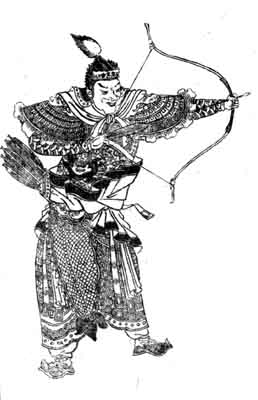
水滸傳
The Outlaws of the Marsh

Keep moving dirt

closer to the way

Training:
A1. Seated Arnold rotations x 20, 20, 20; rest :30
A2. Banded triceps press down 20, 20, 20; rest 1
B1. SA DB row x 10-12 reps x 3; @31X1 on the first 5 reps rest :10 secs b/t arms
B2. Snatch grip BTN press w/an empty bar x 15 x 3; rest 1
C1. Assisted pullups using barbell and feet in pullup cage x 6-8 x 3; rest :0
C2. DB push press 15, 15, 15; rest 1
D1. DB shrugs 30, 30, 30, 30; rest :30
D2. Banded upright row 25, 25, 25, 25; rest 90

5 sets of :30secs of work/:30 secs of rest
:30secs KBS – 2pd.
:30secs rest
:30 secs pushups
:30secs rest
:30 secs DB RDL – 55/h
:30secs rest
:30secs 24” box step-ups
:30secs rest

Today’s professional training covered Linux User Accounts and Groups along with Managing File Ownership and Permission. Then in network penetration we covered privilege using Sudo + about hour of training over at tryhackme.

Current Affairs:

The Media Outlets Demanding Joe Rogan’s Removal from Spotify Spread Far More Disinformation

Today in Syria 13 people killed, including six children and four women, during a SF pre-dawn raid targeting ISIS leader Abu Ibrahim al-Hashimi al-Qurayshi.

Johns Hopkins Study: Lockdowns Only Reduce Mortality by 0.2 Percent – good thing they didn’t announce this study on Rogan’s show.

Trudeau’s lies about Freedom Convoy/Canadian truckers show he’s just gaslighting the everyday working man

CORONAVIRUS — Majority of Canadians Now Want COVID Rules to End After Trucker Revolt — Massive 15 point swing in sentiment suggests trucker are not “fringe minority.”

Energy is similar to the bending of a crossbow; decision, to the releasing of a trigger. -- Sun Wu
Energy is similar to the bending of a crossbow; decision, to the releasing of a trigger.

Work more, talk less

this is the way

Warm-up – 10 mins of:
5 air squats
10 banded shoulder pass-throughs
15 banded good mornings
30 Shoulder ROT/stability – 10 to horizontally to the chest, 10 semi-vertically front/down to clavicles, 10 BTN, then…

7 sets of:
6 goblet reverse lunges per leg
3 goblet step-ups per leg
3 goblet squats
6 SA KB Press per arm
6 SA KB Row per arm
6 SA KB Swing per arm

Martial skill work

45 mins of JKD and Wing Chun striking + short-range kicking and counter wrestling

Today’s studies included:
Linux: working toward mastery of the CLI & searching and extracting data from files and archiving. I also focused my practical network penetration testing studies to privilege escalation in a Linux environment.

Bipartisan Congressional War Drums Are Beating Again

The GOAT calls it a career — Tom Brady officially announced he is retiring today.