Progress isn’t linear. Martial artists learn this the hard way. One day you nail a three punch combo finished with a clavicle crushing elbow; the next, you stumble over the same movement combination you were hitting regularly just a couple days before. Some weeks, you level up quickly, while others days you’ll hit stumbling blocks. Always approach your wins and losses with the same humility.
Cybersecurity follows the same rhythm. Just as martial artists face setbacks, security professionals experience their own ups and downs. You patch systems, close vulnerabilities, and tighten configurations. Then a new zero-day vulnerability emerges, or an audit reveals previously unaddressed blind spots. It feels like sliding backward.
That slide isn’t a failure, it’s where progress truly forms.
The Myth of Linear Progress
We often imagine progress as, although slow, always moving upward. Reality is less predictable.
Perfection Bias We assume improvement should always feel smooth. However, mastery, in both martial arts and cybersecurity, is a jagged path. The dips are where the depth develops.
The Comparison Trap We see others’ highlight reels, the black belt breaking boards, or the company posting its “zero vulnerabilities” report, and mistake it for constant progress. Behind every clean result lies a mess of mistakes, patches, and failed tests.
Forgetting That Setbacks Build Strength Regression often signals deeper adaptation in progress. In training, it’s when you refine mechanics. In security, it’s when you reinforce foundations.
Why Steps Back Matter
Plateaus and regressions aren’t detours; they’re checkpoints. They test persistence. Anyone can stay motivated when everything goes as planned; resilience forms when it doesn’t.
They reveal gaps in fundamentals. A failed pen test or misconfigured IAM or conditional access policy highlights what needs real attention. They build humility and precision. Overconfidence blinds; setbacks sharpen focus.
On the mats and in the SOC, mastery isn’t about avoiding mistakes, it’s about learning faster from them.
The Cybersecurity Parallel
You don’t know what you don’t know so every incident teaches you something you didn’t know you needed to learn. Every vulnerability scan reveals details you may have overlooked. It isn’t failure. It’s your system adapting, like a martial artist’s mind & body.
A martial artist doesn’t quit after a rough sparring session. They analyze what went wrong, refine their techniques, and return smarter & stronger. Security teams should do the same. A missed vulnerability isn’t a defeat; it’s a mirror. It can show you where your technique slipped & where to tighten your counter-offensive skills.
From the Mats to the Data Center
Both disciplines thrive on discipline, reflection, and repitition:
Training drills = Routine audits. Each repetition builds muscle memory for fighters and for security teams.
Pad work and shadow boxing = Playbooks and runbooks. Practicing in controlled settings builds confidence under pressure.
Sparring = Incident Response sims. You can’t simulate chaos perfectly, but you can train to be calm, and respond correctly, in chaos. That’s why you just keep training and doing reps over and over because each time your partner responds differently but you’re learning to respond with the correct technique every time.
Every repetition, every submission attempt, every punch, every kick, or incident response builds competence and confidence. Every CVE update, OWASP update or vulnerability scan creates visibility and awareness.
The Real Skill of a Black Belt: The Ability to Adapt and Overcome
In martial arts, the belt color doesn’t make you untouchable; it signifies you’ve learned and adapted more than others. In cybersecurity, it’s the same. The strongest organizations aren’t flawless; they’re mobile, agile and when necessary, hostile.
Adaptation beats perfection. Reflection beats reaction. Resilience beats your comfort zone. So the next time your scan lights up with new vulnerabilities or your red team exposes a blind spot, don’t get discouraged. It’s just another training session.
Final Thought
Progress, whether in close range combat or in your code, isn’t about avoiding setbacks. It’s about showing up again after them. The real win isn’t being unbreakable, it’s being unshakable.
Keep patching. Keep learning. Keep moving. Progress isn’t linear, but staying adaptive always drives you forward. Or, as it was once famously said, “Be water my friend.”
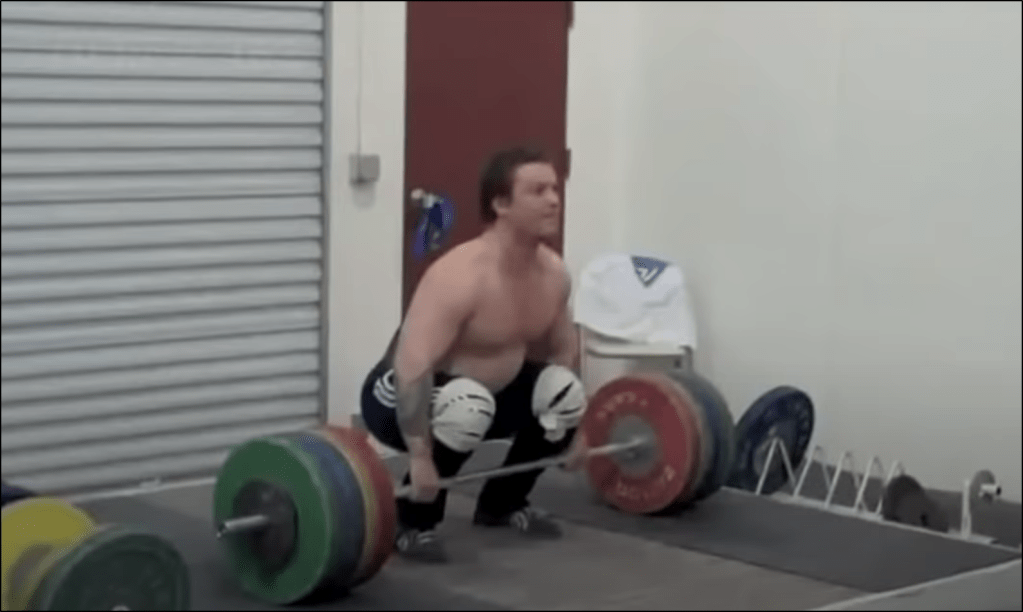
Closed out the training block on a high note — pulled a new PR double at 234kg (515lbs). This cycle was all about fast-twitch development and explosive power, and it paid off on the bar.
The plan now: a short deload through the holidays, then hit the ground running January 1st with fresh momentum.
Takeaway: whether in the gym or in cybersecurity, progress comes from focused blocks, not random effort. You train a specific quality, test it, then recover and reset. Discipline > perfection, every time.
Wishing you all a Merry Christmas — and here’s to chasing your own PRs, wherever they are.
When I first clicked “Enroll,” I didn’t know it would add up to 162 hours of training. That’s almost a full month of time — stolen from late nights, weekends, and early mornings before work.
Like a lot of people breaking into cybersecurity, I started with curiosity and a mess of browser tabs. YouTube videos, Reddit threads, course recommendations. It’s easy to drown in the noise. What made the difference wasn’t just finding the right content, it was learning how to stay with it long enough for the dots to connect.
Udemy became my training ground. Not glamorous, not perfect, but consistent. Over time, those 162 hours weren’t just “video time.” They became hours of repetition, frustration, and slow understanding.
There’s a phase in every learner’s path where you stop studying for a test and start thinking like the work.
That’s what those hours taught me, how to reason through a network like a puzzle, how to see the seams where systems and people meet, how to build patience in a field where curiosity is the only constant.
Looking back, those 162 hours weren’t just prep for certification. They were the price of entry, not into a career, but into a mindset.
Every scan that failed, every lab that wouldn’t load, every problem that took three days instead of three hours, they were all small rehearsals for the real work ahead.
And that’s the absolute truth about cybersecurity training: the time never feels fast, but it’s never wasted. You’re not just learning commands. You’re learning endurance. It’s the art of staying with a problem long enough to earn its answer.
There’s a moment most people don’t talk about when they post their certifications, it’s that part where you stare at the screen, waiting for the result to load, rehearsing how you’ll feel either way.
That was me, after months of studying, rewrites, retakes, and nights when the last thing I wanted to see was another port, protocol, or payload.
I’d already passed the CompTIA trifecta, A+, Network+, Security+, and each one felt like a step forward. But PenTest+ was different. It wasn’t just about memorization. It forced me to think like an adversary, to build a structured approach out of controlled chaos. It was humbling.
There were setbacks. Long hours after long workdays. Missed weekends. That quiet voice that says, maybe this one’s just too much right now.
But that’s where persistence replaces motivation. I tell my students and training partners the same thing I remind myself: motivation gets you started, discipline keeps you moving.
When that “Pass” finally appeared on the screen, it wasn’t triumph, it was relief. And gratitude. Because every failed scan, every misconfigured lab, every late-night tracing network maps, they built the competence that makes the win real.
The truth is, no certification on its own changes who you are. The process does. The grind does. The decision to sit back down after the first, second, or third setback does.
In cybersecurity, as in martial arts, you don’t earn a belt to prove you’re done. You earn it because you’ve decided you’re not done yet.
And that lesson, more than any flag on a résumé, is what makes the next challenge possible.
Cyber threats are everywhere. Learn nine expert-approved cybersecurity practices, from password hygiene to phishing prevention, that help protect your data, privacy, and peace of mind.
In today’s hyperconnected world, being hacked isn’t just a risk — it’s a near inevitability if you’re not prepared. Whether you’re an individual, a small business owner, or part of a larger organization, protecting your data should be a daily habit, not an afterthought.
Hackers exploit the smallest cracks: weak passwords, outdated software, and misplaced trust. The good news? A few consistent habits can make you a far harder target.
Here are nine proven ways to reduce your risk of being hacked, simple, practical, and backed by modern cybersecurity best practices.
Use Strong, Unique Passwords
Weak or reused passwords remain one of the top causes of account compromise. A strong password should be:
At least 12 characters long
Include a mix of upper and lowercase letters, numbers, and symbols
Avoid personal details like your pet’s name or birthday
Pro Tip: Use a password manager to create and store unique credentials safely — it’s far more secure than your memory (or sticky notes).
2. Enable Multi-Factor Authentication (MFA)
If passwords are your front door, MFA is your deadbolt. This simple tool requires an additional verification step — like a text message code or an authentication app prompt — before granting access.
Even if a hacker steals your password, MFA can stop them cold. Enable it everywhere you can: email, banking, social media, and especially your work accounts.
Keep Software and Systems Updated
Cyber attackers love outdated software — it’s like an open window. Enable automatic updates on your devices, browsers, and security tools to patch vulnerabilities before attackers can exploit them.
Updates aren’t annoyances; they’re armor.
4. Spot and Stop Phishing Scams
Phishing remains the #1 way users get hacked. Attackers use fake emails or messages that mimic trusted sources to trick you into clicking malicious links or revealing credentials.
Stay sharp:
Check sender addresses carefully
Hover over links before clicking
Be skeptical of urgent or emotional language (“Your account will be suspended!”)
When in doubt, contact the organization directly
Education here pays off, once you’ve spotted a good phish, you’ll never unsee the patterns.
Secure Your Home Network
Your Wi-Fi router is the gateway to everything on your home network.
Change the default password immediately after setup.
Use WPA3 encryption (the most secure standard).
Disable WPS and consider hiding your SSID.
Set up a guest network to isolate visitors and IoT devices.
A few minutes of setup can close the door on thousands of automated attacks.
Use a Virtual Private Network (VPN)
When connecting to public Wi-Fi (airports, cafes, hotels) use a VPN to encrypt your internet traffic. This prevents hackers from intercepting data like login credentials and personal info.
Choose a reputable, paid VPN provider. (Free ones often collect your data instead of protecting it.)
7. Be Mindful of What You Share Online
Every social post is a breadcrumb. Hackers use personal details to guess passwords, craft phishing messages, or reset your accounts.
Limit what you share publicly, especially location check-ins and birthdates. Remember: oversharing fuels social engineering — the human side of hacking.
Regularly Back Up Your Data
Ransomware doesn’t work if your data is safely backed up. Use the 3-2-1 rule:
3 total copies of your data
2 different storage types (cloud + external drive)
1 kept offline
Automate backups and test them occasionally — a broken backup is no backup at all.
9. Educate Yourself and Your Circle
Technology changes fast — human habits change slowly. Stay updated on emerging threats, and share what you learn with coworkers, friends, or family.
Security awareness training and cybersecurity newsletters are excellent ongoing resources.
Cybersecurity is everyone’s job. The more we all understand, the safer we all become.
Final Thoughts
Avoiding being hacked isn’t about paranoia — it’s about preparation. Each of these habits strengthens your security posture one layer at a time.
Think of cybersecurity as compound interest: small daily actions, multiplied over time, create unbreakable resilience.
Stay curious. Stay cautious. Stay secure.
*Updated October 2025: refreshed to reflect updated security practices for the modern threat landscapes.
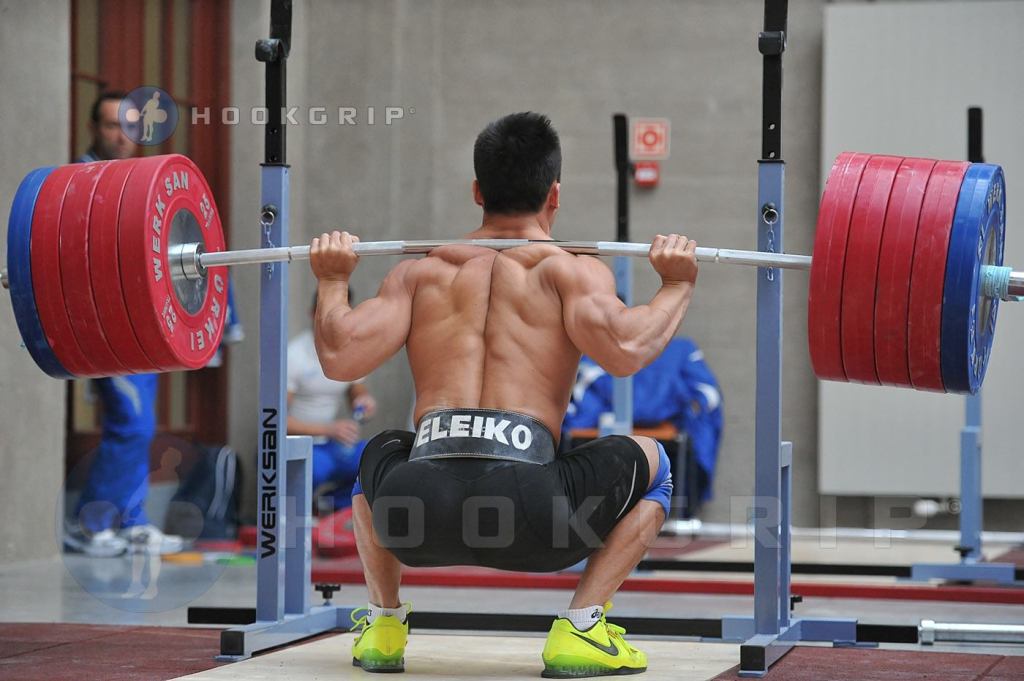
Here’s a sample 8-Week Hypertrophy Phase for Building Strength in the High Bar Back Squat. The high bar back squat is a foundational exercise for developing leg strength, power, and muscle hypertrophy. This 8-week hypertrophy program focuses on squatting twice a week, with an emphasis on high-repetition sets in the 15-20 rep range to stimulate muscle growth. Complementary accessory exercises, proper recovery, and nutrition are also crucial for maximizing gains during this phase.
Program Overview The 8-week hypertrophy phase is divided into two 4-week blocks. Each block progressively increases the intensity and volume of your workouts to optimize muscle growth and strength. The program includes two squat sessions per week, supplemented with accessory exercises to target supporting muscle groups and ensure balanced development.
Week 1-4: Volume Accumulation
Focus: Build a foundation of muscle mass and muscle endurance.
Rep Range: 15-20 reps
Intensity: 50-60% of 1RM
Frequency: Twice per week
Week 5-8: Intensification
Focus: Increase intensity, maintaining high volume, and technical proficiency.
Rep Range: 12-15 reps
Intensity: 60-70% of 1RM
Frequency: Twice per week
Weekly Training Schedule
– Monday: High Bar Back Squat Focus
High Bar Back Squat: 4 sets of 15-20 reps
Romanian Deadlifts: 3 sets of 15-20 reps
Bulgarian Split Squats: 3 sets of 15-20 reps per leg
Front Foot Elevates Split Squat (FFESS): 3 sets of 20 reps – 10 per leg
Single leg, body weight calf raises: 3 sets of 20-25 reps
– Thursday: High Bar Back Squat Focus
High Bar Back Squat: 4 sets of 15-20 reps
Walking Lunges: 3 sets of 15-20 reps per leg
Front Squats: 3 sets of 10 reps at 40-50%
Frog Pumps: 3 sets of 15-20 reps
Tib Raises: 3 sets of 30 reps
Week 5-8 Adjustments
As you progress into the second block, increase the intensity by raising the weight and slightly lowering the rep range to 12-15 reps per set while maintaining the same structure and exercise selection.
Monday: High Bar Focus
High Bar Back Squat: 4 sets of 12-15 reps
Romanian Deadlifts: 3 sets of 12-15 reps
FFESS: 3 sets of 12-15 reps per leg
Reverse Hyper: 3 sets of 12-15 reps
Single leg, body weight calf raises: 3 sets of 15-20 reps
Thursday: High Bar Focus
High Bar Back Squat: 4 sets of 12-15 reps
Walking Lunges: 3 sets of 12-15 reps per leg
Front Squats: 3 sets of 10 reps at 40-50%
Frog Pumps: 3 sets of 15-20 reps
Tib Raises: 3 sets of 15-20 reps
Recovery and Nutrition: Prioritizing recovery and proper nutrition is crucial for maximizing gains during the hypertrophy phase:
Sleep: The NUMBER 1 thing you can fix to see increases in the gym — adequate rest and recovery! Aim for 7-9 hours of quality sleep each night to support muscle recovery and growth.
Nutrition:
Protein: Consume 1.6-2.2 grams of protein per kg of body weight daily to support muscle repair.
Carbohydrates: Ensure adequate carbohydrate intake to fuel workouts and replenish glycogen stores. Include complex carbs like whole grains, fruits, and vegetables.
Healthy Fats: Incorporate healthy fats from sources like avocados, nuts, seeds, and olive oil to support overall health and hormone production.
Hydration: Stay well-hydrated to maintain performance and facilitate recovery.
Active Recovery: Incorporate intensity work on such as MAP 10 training, walking, kayaking, yoga, or stretching on rest days to promote blood flow and reduce muscle soreness.
Monitoring Your Progress: Tracking your progress is essential for adjusting your program and ensuring continuous improvement:
Training Log: Record your workouts, including weights used, sets, reps, and any relevant notes on how you felt during each session.
Regular Testing: Periodically test your 1RM to gauge strength improvements and adjust training intensities accordingly. I’d suggest testing your 1RM every 3 to 4 months.
Adjustments: Based on your progress and recovery, modify variables such as intensity, volume, and exercise selection to avoid plateaus and continue making gains.
Final Thoughts:
An 8-week hypertrophy phase focused on the high bar back squat can significantly enhance your leg strength and muscle mass. By incorporating a structured training program that emphasizes high-repetition sets, prioritizing recovery and nutrition, and monitoring your progress, you can achieve substantial gains in your squat performance and overall strength. Stay consistent, maintain proper form, and adjust your program as needed to continue progressing towards your strength and hypertrophy goals.
Always remember, quality of reps over quantity of reps!
Map 10, which stands for Maximal Aerobic Power, simply means that work at this pace is very easy. As you move from MAP 10 to MAP 1, the pace increases as and the time of each interval drops in length.
Why do we love MAP 10 specifically?
It’s great for recovery!
MAP 10 Can Help You Recover from Soreness
A time tested and proven method that’s especially relevant to functional fitness athletes is mixing intense training with slow recovery sessions throughout the week. This style of training is often referred to as “High Low Method.”
OPEX Fitness calls the slow recovery style of aerobic work “MAP 10”. This is taught in the OPEX Coaching Certificate Program (CCP) because coaches must be able to prescribe a wide variety of training paces, dependent on their client’s needs. When programming different paces, coaches are also tapping into different energy systems. There are three main energy systems refer that we refer to as OPEX Gain, Pain, and Sustain:
(Coach’s Resource: Learn more about how to train specific energy systems in this free guide.)
Gain – this is scientifically referred to as the Anaerobic Alactic System. This system refers to very short, 1-20 seconds, bursts of energy at very high power, or “turnover.” Gain refers to you not being able to sustain your power output past that length of time because your muscles cannot continue to turn over fast enough
Pain – this is scientifically referred to as the Anaerobic Lactic System. This system refers to a longer interval time, 20 to 720 seconds, at higher power, or turnover. While the range is much longer, you’ll notice the word “Anaerobic” still remains in the name. That means that it isn’t aerobic which means that it isn’t sustainable. If you hold that higher power for those time periods, you will now “feel the burn” and you will recognize that you cannot hold that pace forever
Sustain – this is scientifically referred to as the aerobic system. This system refers to efforts that are sustainable. As you move from MAP 1 to MAP 10, your time frame gets even longer, and your power output goes down even more.
MAP 10 pace is on the far end requiring the most amount of time at the slowest pace with the least amount of power, therefore, falling under the Sustain “curve.” Whereas Gain begins with slow and low volume efforts in the beginning followed by a progression of faster, more voluminous efforts later. MAP 10 efforts should begin with longer efforts at a slower pace in the beginning (for most people). The reason MAP 10 needs to start with such long efforts is that you need to keep the pace easy. Very easy effort mixed with smaller amounts of eccentric muscle contractions is often interpreted as recovery by your body.
How to Program MAP 10 Aerobic Workouts
When programming MAP 10 you often want to begin with more aerobic – long easier efforts – work before you implement Gain work into your client/athlete’s fitness program because it builds your ability to do more work – volume – in your training.
To benefit greatly from MAP 10 – and easy aerobic work – make sure you minimize the eccentric load on your client. In the video, you will notice that Solange is doing carries (overhead, suitcase, etc…), Flywheel biking, versa climbing, Front Leaning Rest – FLR (plank) on the rings – etc…The lack of eccentric work allows her body to get better recovery than she would if she was pounding her body day in and day out in her “aerobic” work.
To pick great MAP 10 workouts, you want to pick easy, non-eccentric work and “go easy.” You don’t need to overthink this. You just need to move blood, find relaxation and rhythm, and be consistent in “going long.” People get scared of doing a 60-minute workout because they are going long and hard. MAP 10 is long and easy! To progress in this, you will add volume, but you would still get the pace nice and easy.
Programming MAP 10 Aerobic Workouts For Athletes
High-level athletes may have five morning sessions of 60-90 minutes of MAP 10 work + two “off” days of three sessions/day of 60-90 min of easy aerobic pieces. It will be all different styles of movement but do the math of that volume. They may have 8-12 hours of easy aerobic work each week on top of 3-4 hours per week of intense work.
When you are doing your easy aerobic work, don’t be afraid to go at conversational pace or listen to a podcast or read a book if you are on a machine that allows you to do that. We don’t recommend Deadmau5 for easy aerobic work unless you want to “wake up” 20 min into a row at 180 beats per minute heart rate. Also, don’t be afraid to just walk (in the sun if possible)
Next Steps
MAP 10 is just tapping into one of the body’s three energy systems. If you are looking to become a professional coach and develop your programming ability download our free guide Energy System Training, today.
Plyometric training is an excellent way to develop the explosive power necessary for Olympic lifts like the snatch and clean and jerk. These dynamic movements help improve muscle recruitment, speed, and power, all of which are essential for successful Olympic lifting. By incorporating a weekly plyometric session into your training regimen, you can enhance your explosiveness and overall performance. This article outlines a comprehensive once-a-week plyometric workout designed to complement your Olympic lifting training.
Plyometric Training Overview
Plyometrics, or jump training, involves explosive movements that require rapid stretching and contracting of muscles. This type of training enhances the stretch-shortening cycle (SSC) of muscles, which is crucial for generating maximal force in a short amount of time. Plyometric exercises target the fast-twitch muscle fibers, which are responsible for explosive movements.
Key Benefits of Plyometric Training for Olympic Lifters:
Increased power output
Improved rate of force development
Enhanced neuromuscular coordination
Greater agility and balance
Reduced risk of injury through improved proprioception
Weekly Plyometric Workout
Perform this plyometric workout once a week, preferably on a day when you are not doing heavy lifting, to ensure you are fresh and can maximize your effort in each exercise. Always start with a proper warm-up and finish with a cool-down to reduce the risk of injury.
Warm-Up (10-15 minutes):
2-3 mins on an Ski, bike or row erg
Dynamic Stretching: Leg swings, arm circles, hip rotations
Light Jogging or Jump Rope: 5-10 minutes to increase heart rate and blood flow
Mobility Drills: Ankle hops, high knees, butt kicks, hammie sweeps, et cetera
Sets: 3 Reps: 2-3 Rest: rest :10-:12 between reps and 90 seconds
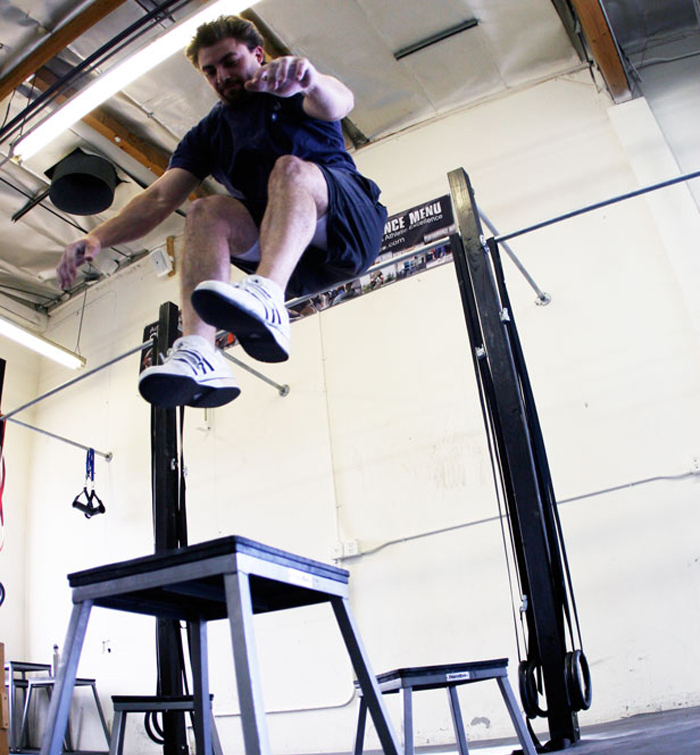
Description: Stand in front of a sturdy box or platform. 1/4 squat down, then explode upward, landing softly on the box with both feet. Step down and repeat.
Sets: 3 Reps: 3-5 Rest: rest :10-:12 between reps and 90 seconds
Description: Stand on a box, step off, and upon landing, immediately jump as high as possible. Focus on minimizing ground contact time to develop reactive strength.
Sets: 3 Reps: 2-3 Rest: :10-:12 between reps and 90 seconds
Description: Stand with feet shoulder-width apart. Perform a powerful squat jump forward, aiming for maximum distance. Land softly and reset for the next jump.
Sets: 3 Reps: 3-4 Rest :10-:12 between reps and 90 seconds
Description: Hop forward on one leg, focusing on distance and height. Land softly and immediately bound forward again. Complete all reps on one leg before switching.
Description: Stand with feet shoulder-width apart. Jump as high as possible, tucking your knees toward your chest at the peak of the jump. Land softly and reset.
Description: Hold a medicine ball overhead. Explosively slam the ball into the ground, using your whole body. Pick up the ball and repeat.
Cool-Down (10 minutes):
Static Stretching: Hamstrings, quadriceps, calves, hip flexors Foam Rolling: Focus on the legs and lower back to alleviate any tightness or soreness
Tips for Effective Plyometric Training
Quality Over Quantity: Focus on performing each rep with maximal effort and proper form rather than completing as many reps as possible.
Progress Gradually: Start with lower intensity plyometric exercises if you are new to this type of training and gradually progress to more advanced movements.
Adequate Rest: Ensure you get sufficient rest between sets to maintain high intensity for each exercise.
Listen to Your Body: If you feel any pain or excessive fatigue, stop the workout and assess your condition. Plyometric exercises are high-impact and can strain the joints if not performed correctly.
Integration with Olympic Lifting
Integrating plyometric training with Olympic lifting can significantly enhance your performance. Schedule your plyometric session on a day that allows for adequate recovery before and after your heavy lifting days. For example, if you perform heavy Olympic lifts on Monday and Thursday, schedule your plyometric session on Saturday.
Final thoughts
Incorporating a once-a-week plyometric session into your training regimen can dramatically improve your explosiveness and overall performance in Olympic lifts. By focusing on high-quality, explosive movements and ensuring proper recovery and technique, you can enhance your power output and lift heavier weights more effectively. Stay consistent with your training, listen to your body, and watch your performance in the snatch and clean and jerk reach new heights.
The deadlift is a foundational exercise in Olympic weightlifting, crucial for developing overall strength, maximum power, and athletic performance. Improving your deadlift can enhance your performance in the clean and jerk, snatch, and other compound lifts. Below you’ll find detailed strategies to enhance your deadlift, focusing on technique, strength training, range of motion work, and basic recovery strategies.
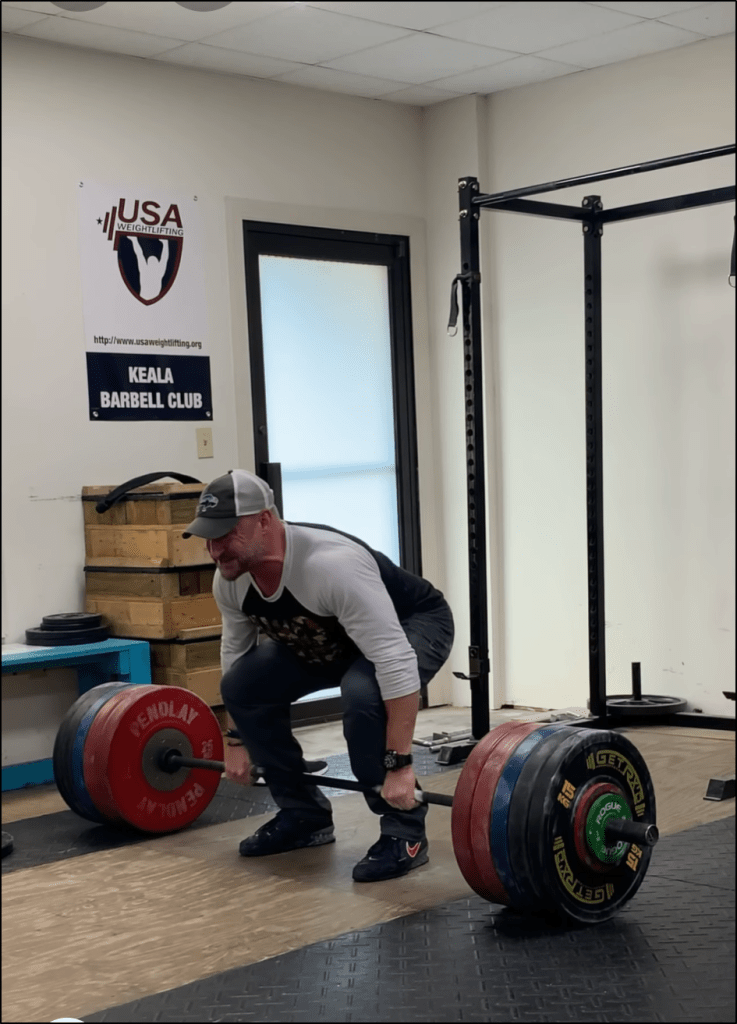
1. Perfect Your Technique — the main point here is this exercise will only help improve your lifts if it looks like the the first pull of the lifts. We are emphasizing the clean variation of the deadlift not the traditional deadlift.
Technique is paramount in the deadlift. Proper movement pattern not only reduces the risk of injury but also maximizes strength gains where it matters most. Here’s a more detailed breakdown of the essential components of deadlift technique:
Foot Positioning:
Stance: From the start, use your pulling position in the clean and/or snatch as reference. Like the conventional deadlift though be sure not to begin with your feet too narrow or too wide. My starting position varies slightly but should almost always be EXACTLY the same. Stand with your feet hip/shoulder-width apart, ensuring your toes are pointing slightly outward. How much your toes point out will determined by your hip structure genetically and your over mobility or lack-there-of. No matter where you begin, you want it to a habitual and it be a position to allow for a stable base and optimal leverage during the 1st pull, i.e. the deadlift portion of the movement.
Setup: Place the barbell over the mid-foot, close to your shins. This minimizes helps prevent the bar from traveling forward off the ground and helps keep it from getting out of position in any other portion of the lift. Even though some of you are not martial artists always remember this phrase — position before submission. This means make sure you put/keep the bar in the correct position throughout the movement so you can have MAXimal control over the bar throughout the movement.
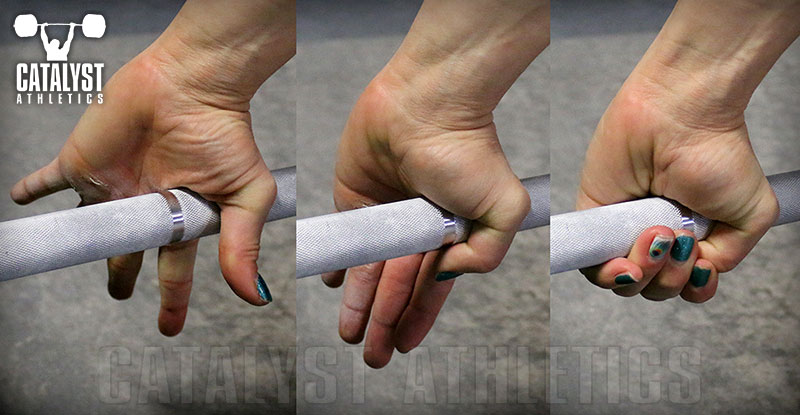
Grip: There’s only one and that’s the hook grip. get used to it early and make it habitual.
Hook Grip: Thumb is wrapped around the bar and secured by the fingers. This grip is more secure but can be uncomfortable initially.
Bar Path:
Proximity: Keep the barbell close to your body throughout the lift. The bar should travel in a straight line from the ground to the lockout position. This minimizes the distance the bar travels and reduces the strain on your lower back.
Hips and Back:
Starting Position: Begin with your hips lower than in a conventional deadlift, and your torso more upright. This engages your legs more effectively and helps you get used to using your legs to DRIVE the earth away.
Spine Position: Maintain a neutral spine throughout the lift. Avoid rounding your back to prevent injuries. Engage your core to stabilize your spine.
Pulling Motion:
Initial Lift: Drive through your WHOLE FOOT, extending your hips and knees simultaneously. Your shoulders should be slightly in front of the bar at the start.
Engagement: Engage your lats to keep the bar close to your body and prevent it from drifting forward.
Lockout: Fully extend your hips and knees at the top of the lift, ensuring your shoulders are back and your chest is up.
2. Build Strength with Accessory Exercises
Incorporate accessory exercises to target the muscles involved in the deadlift. These exercises help to build strength and address any weaknesses:
Execution: Stand in your snatch or clean pulling stance with a clean grip on the bar. Set your back in the same extension you use to pull the snatch and clean and brace your trunk forcefully.
Hinge at the hip while bending the knees very slightly to bring the bar as far down the legs as possible without losing any back extension. Actively keep the bar as close to the legs as possible throughout the motion.
Stay balanced evenly over the whole foot rather than pushing the hips back more than necessary and shifting to the heels. This will limit how much weight you can handle, but it will make the exercise more effective by increasing the force on the hips and back while reinforcing the balance we want in the snatch and clean, as well as strengthening the back and shoulders’ ability to keep the bar close to the body.
Stay braced tightly so as you change directions at the bottom, you don’t allow any softening of the back extension.
If you’re mobile enough to get the plates to the floor with perfect back extension, still stop just short of touching—the changing of direction without compromising back extension is an important element of the exercise.
Benefits: Focuses on the hamstrings and glutes, improving the posterior chain strength essential for a powerful deadlift.
Execution: The good morning is a posterior chain strength exercise that emphasizes isometric back extension strength.
Place the bar on the back as you would for a back squat. You can use either your squat or pulling stance depending on which you want to focus on.
Brace the trunk forcefully with the lower back neutral or slightly more extended and the upper back flattened as much as possible.
Bend the knees very slightly as you hinge at the hips as far as you’re able without losing back extension. Bend forward at a controlled speed, and recover at a natural to quick speed.
Maintain whole foot balance or shift slightly more to the heels, but keep the whole foot in contact with the floor.
Don’t allow your back to soften as you change direction in the bottom to stand again—resisting that force with a rigid trunk is a primary element of the exercise.
The knees can be bent more to shift more of the work to the glutes than the hamstrings, or can be locked straight to maximize hamstring emphasis.
Benefits: Strengthens the lower back, glutes, and hamstrings, promoting better hip hinge mechanics.
Pendlay Rows: AKA Bent-over row, bent forward row, barbell row
Execution: The bent row is a basic but effective upper body pulling exercise that strengthens the upper back, shoulders and arms.
Hold the bar with a clean-width grip, brace your trunk in the same position you would when pulling from the floor, and hinge forward at the hips while bending the knees to bring your trunk just above horizontal, letting the bar hang at arms’ length close to the legs.
Pull the bar to the abdomen, squeezing your shoulder blades back together and forcefully extending the upper back at the top of each rep. Lower the bar to full elbow extension without losing your braced back position.
Notes The bent row can be performed strictly with a controlled tempo, or with a little body English to put some speed on the bar and then reach the trunk into the bar at the top of the row. The angle of the trunk can also be varied depending on the desired effect, from horizontal to closer to 45-degrees—the higher the angle, the more heavily it can be loaded, but the smaller the range of motion.
Benefits: Develops mid-back strength, crucial for maintaining proper bar path and posture during the deadlift.
Execution: Fix the ankles in a glute-ham bench or similar adjusted to place the pad on the upper thighs. Bend at the hip and back to hang straight down from the hip—back relaxed and trunk hanging vertically.
Extend the hip and back together to bring yourself up to an extended position above horizontal in which the entire back, including the upper back, is extended completely and the glutes are forcefully contracted. Lift your head up at the top to reinforce upper back extension.
For unweighted back extensions, placing the hands behind the head is recommended to help encourage better extension of the upper back. For weighted back extensions, hold the weight in the form of a barbell or dumbbell behind the neck to ensure better resistance and better reinforce that upper back extension.
Notes Technically, this execution is combined back and hip extension. Back extension can be isolated by fixing the hips in place with the glutes and flexing and extending only along the spine. This can be assisted by relocating the fulcrum or pad of the bench closer to the hips.
Trunk Work: Copenhagen Plank, Chinese Plank (add weight if/when you can) Russian Twists: Leg Raises: Lying Leg Raises. For the Copenhagen & Chinese planks think doing 3-5 sets of 1min resting 1-2 mins between for all of the others think 3-4 set of 15-25 reps per exercise and also resting 1-2 mins between sets.
Execution: Use a wide grip, similar to a snatch. Perform the deadlift with this grip.
Benefits: Enhances upper back and grip strength and increases the range of motion.
3. Focus on strength in your end ranges of motion not simply “mobility” or being “flexible”
Mobility and flexibility are vital for performing a safe and effective deadlift and overall quality of your movement pattern(s). Think of and possibly implement these movements into your mobility/ROM work exercises into your routine:
Hips: Perform hip flexor stretches, pigeon pose, and hip circles to improve hip flexibility.
For your hamstrings think of using using dynamic and static stretching to enhance hamstring flexibility, allowing for better hip hinge movement. Things like poor man’s GHR, Frankensteins, Hamstring sweeps, and so on.
Ankle Mobility: Incorporate ankle plantar and dorsiflexion exercises to ensure you can maintain proper foot positioning and balance. Worst case scenario just do a couple of slow, controlled bodyweight double and single calf raise to get your calves and ankle complex warm/fired up and ready to lift!
Thoracic Mobility: Here really focus on getting the support structure of your t-spine loose and work on what you need to get yourself closer and closer to the best starting position you can achieve.
Here’s a great exercise The Barbell Physio just dropped on their IG page:
Progressive overload is essential for continuous improvement. Gradually increase the weight you lift, the number of repetitions, or the volume of your training sessions to challenge your muscles and stimulate growth. Here’s how to effectively implement progressive overload:
Linear Progression: Increase the weight lifted in small, consistent increments/percentages each week.
Volume Training: Add more sets and reps to your routine, focusing on maintaining proper form.
Tempo Variations: Incorporating tempo with your lifts, primarily slow eccentrics (lowering phase), to increase time under tension and build strength are of paramount importance. Using slow tempos also help you feel the muscles you use to do the lifts, and can be the greatest tool you’ll be exposed to help you master the positions of the lifts.
5. Last, and certainly not least, prioritize Recovery
Recovery is just as important as training itself. Proper recovery ensures that your muscles repair and grow stronger, and reduces the rick of injury.
Key recovery strategies include:
NUMBER ONE! Adequate Sleep: Aim for 8-9 hours of sleep per night to support muscle recovery and overall health.
Nutrition: As one famous fitness influencer one said — you can only piss in the gas tank for so long and expect elite performance. So, be sure to quality proteins, healthy fats, and lots of fruits and vegetables. Consider post-workout nutrition/protein shakes if you struggle to meet your daily macros to aid muscle repair. But, first and foremost, be sure you are focusing on eating whole foods vs supplementing with any kind of shakes. Yes, use them when necessary but only when necessary.
Hydration: Stay well-hydrated to maintain muscle function and performance.
Active Recovery: Engage in low-intensity activities such as walking, jogging, rowing, swimming or any sort of quality mixed modal training to help promote blood flow and muscle recovery.
Improving your Olympic weightlifting deadlift requires a comprehensive approach that includes perfecting your technique, incorporating accessory exercises, focusing on mobility, implementing progressive overload, and prioritizing recovery. By consistently applying these strategies, you will build the strength, power, and resilience needed to excel in your deadlift and overall Olympic weightlifting performance. Remember, progress takes time and dedication, so stay patient and committed to your training regimen. More importantly, deadlifting feels cool because you can move a lot of weight but don’t forget to actually do the lifts!
Discovery and fingerprinting are where recon stops being guesswork and starts being a map. Over the next few weeks I’ll dig into Nmap and other recon tools — for now, here’s a compact, practical list of Nmap switches worth committing to memory for pentesting exams and real-world ops. Don’t just memorize the letters — learn the purpose and the use case.
Quick legal note: Only scan systems you own or have explicit permission to test. Unauthorized scanning can be illegal and definitely burns bridges.
Basic target input / listing
nmap -iL targets.txt Scan targets from a file. Use when you have a long list to automate.
nmap -iR 100 Scan 100 random hosts. Good for practice/learning about global scanning patterns in a lab.
nmap 192.168.1.10 -sL List-only — no probes. Use to verify target resolution without touching ports.
Host discovery vs port scan
nmap 192.168.1.1/24 -sn Ping/host discovery only (no port scan). Fast way to find live hosts on a subnet.
nmap 192.168.1.1-5 -Pn Skip host discovery (treat hosts as up). Useful when ICMP/ARP are blocked but you still want to try ports.
Port specification
nmap 192.168.1.1 -p 21 Scan a single port (FTP, in this example).
nmap 192.168.1.1 -p 21-100 Scan a specific port range. Use when you want targeted scanning (faster than full 65k).
nmap 192.168.1.1 -O Remote OS detection (TCP/IP stack fingerprinting). Useful when you need OS-level attack vectors.
nmap 192.168.1.1 -A Aggressive: OS detection + version detection + scripts + traceroute. Good for a quick, deep look — loud and obvious on the network.
Timing / IDS evasion
Timing templates adjust scan speed and stealth. Choose based on network reliability and detection risk.
-T0Paranoid — ultra-slow. Used to evade IDS or noisy logging systems.
-T1Sneaky — very slow.
-T2Polite — slows scans to reduce bandwidth/impact on target.
-T3Normal — default.
-T4Aggressive — faster, assumes stable network.
-T5Insane — very fast; only on extremely reliable links or internal lab networks.
Stealth check in an IDS lab: nmap -T1 -sV <host> → slow timing to reduce IDS noise.
Full noisy recon in a lab environment: nmap -A -T4 <target> → quick comprehensive view.
Closing — don’t memorize blindly
The exam question isn’t “what flag is X” — it’s “which flag solves this problem.” Memorize the purpose and practice applying them in labs. Over the coming weeks I’ll publish deeper examples for each of these switches, show script usage, and map Nmap output to real exploitation workflows.














 Matt Shannon, Security Pro