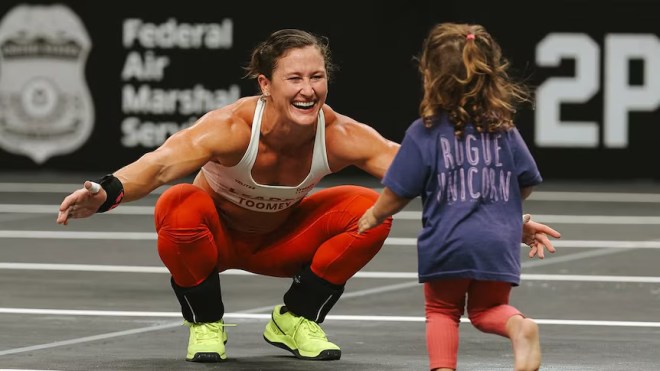
Ever take a look in the mirror after your first week of serious lifting and thought, “Wait, am I getting bigger?” Here’s what’s really happening…
The Real Problem Isn’t Lifting, It’s Perception
Most women don’t avoid lifting because they’re lazy. They avoid it because they’ve been given the wrong framework. Somewhere along the way, strength training got tied to a single fear:
“If I lift weights, I’ll get bulky.”
That belief isn’t based on physiology. It’s based on misunderstanding. And if the foundation is wrong, every decision built on top of it will be, too.
Think: Understand What Actually Drives Muscle Growth
Muscle doesn’t appear by accident.
It requires:
- Progressive overload
- Sufficient calorie intake
- Adequate protein
- Consistency over months and years
Even under ideal conditions, muscle growth is slow.
Now layer in reality:
- Women have significantly lower testosterone levels
- Most people are not eating in a surplus
- Most training programs are not optimized for maximal hypertrophy
The result?
Most women don’t accidentally get bulky. They struggle to build muscle at all.
Lift: Train for Strength, Not Fear
If your goal is to be healthier, stronger, and more capable, your training should reflect that.
That means:
- Lifting with intent
- Progressively increasing load over time
- Training consistently across weeks, months, and years
Not:
- Avoiding moderate to heavy weightlifting
- Staying in low-intensity comfort zones
- Making decisions based on appearance fears
Because here’s the reality: Strength training builds overall capacity, not excess.
Quick Facts: Muscle vs. Bulk
– Muscle gain is slow and is achieved intentionally, not accidentally.
– Most women gain strength, improved muscle tone, and confidence, not size.
– Temporary changes (pump or water retention) fade within hours to days.
What most women experience when they lift properly:
- Improved muscle tone
- Better posture
- Increased strength
- Reduced body fat
- Higher confidence in movement
That’s not bulk. That’s functional strength.
Live: Strength Is a Long-Term Investment
This is where the conversation shifts. Not aesthetics. Not trends. Outcomes.
If you don’t build strength over time:
- Muscle mass declines with age (sarcopenia)
- Bone density decreases
- Injury risk increases
- Daily tasks become harder
- Metabolic health worsens
This isn’t hypothetical. It’s guaranteed to happen to everyone.
Now flip that and you’ll find that strength training supports:
- Longevity and independence
- Bone density and joint health
- Metabolic resilience
- Cognitive and emotional stability
- The ability to live life without unnecessary limitation
Strength training isn’t just about today’s confidence, it’s your ticket to stronger bones, better balance, and staying independent for decades. That’s why a change in mindset is important.
Thinking before: Avoided weights, worried about getting ‘big.’
Thinking after: Trained with intention, gained strength, energy, and self-assurance, no bulk in sight.
What “Bulky” Actually Means and Why It’s Misunderstood
Most people don’t define “bulky” clearly.
In practice, what they’re reacting to is:
- Seeing muscle definition for the first time
- Temporary muscle fullness (“pump”): This can cause a temporary feeling of ‘swelling’ or looking puffier, don’t panic. It’s just increased blood flow and water retention in the muscle, and it fades quickly.
- A change in body composition they’re not used to
Actual muscular size:
- Takes years to build
- Requires intention
- Requires nutrition to support it
You don’t drift aimlessly into it, and you couldn’t even if you tried.
The Reality Most People Don’t Say Out Loud
Many women would benefit from more muscle, not less.
In fact:
- Many struggle to gain even a few pounds of lean mass
- Many under-eat relative to their activity
- Many never train with enough load to stimulate growth
The result isn’t “too bulky.”
It’s:
- Underdeveloped strength
- Lower resilience
- Missed potential
Action: Train Systematically, Not Emotionally
Scientific Insight:
A 2022 study in the Journal of Strength and Conditioning Research found that women who strength trained 2–4x per week improved bone density, confidence, and body composition, without significant increases in body size.
The World Health Organization and American College of Sports Medicine both recommend women include strength training at least two days per week for optimal health, resilience, and longevity.
If your decisions are driven by fear, your results will be limited.
Instead:
- Train 2–4x per week with resistance
- Focus on progression, not perfection
- Eat enough protein to support recovery
- Give it time
Let outcomes guide adjustments, not assumptions.
Coach’s Notes
- Muscle is difficult to build and easy to lose. Act accordingly.
- Strength is protective. It supports everything else you do.
- If you ever reach a point where you feel “too muscular,” you can adjust. But, fear not, 99% of the population never even get close to that point.
Final Thought
I doubt Olympic Weightlifters like Olivia Reeves or Mattie Rogers ever think twice about “getting too bulky,” and you shouldn’t either. Strong women aren’t bulky; they’re confident, capable, and resilient.
The goal is to become stronger and more capable. That means more strength, more tenacity, more control over your body, and your overall well-being.
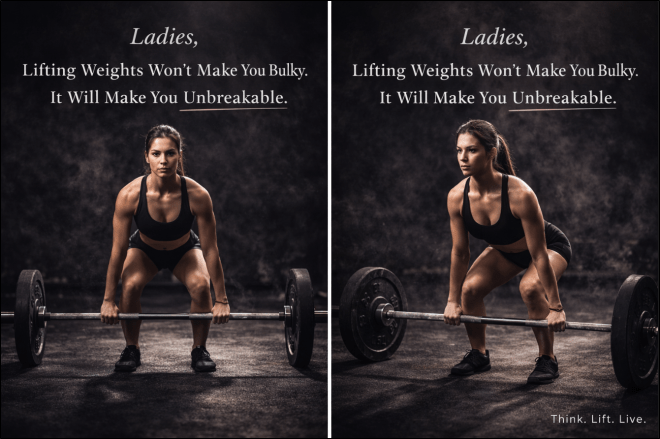
So always remember, lifting weights won’t make you bulky. It will make you unbreakable.


 Matt Shannon, Security Pro