The day began like the perfect hymn for the weekend. First light spilling over the ridgeline. Fog blowing across the mountains like they’re alive and breathing. The whole place is brought to life by the energy of the mountains, the wind, the sun, and the sky.
You can hear a waterfall in the distance, as steady as time itself.
Later, a violet sunset arrives as the last of the day’s light folds into the night.
Then, at nightfall, the only things that remain are the ghost stories and the million stars in the sky, like a thousand bridges of light overhead, leading some old, lost spirits home over the horizon.
Meal prep gets talked about so much these days, you’d swear it’s a personality trait. It’s always rigid, joyless, and maybe just a little smug. But the truth is, prepping food isn’t about discipline for its own sake. It’s about simplifying the week so you can think less about logistics, saving money, and staving off adverse health effects, and more about living your life.
While you’ll often see phrases like “may help” or “might improve” online, real data and everyday experience show what actually works. Here’s what makes a real difference for people like us.
Myth #1: “Meal prep means eating the same thing every day.”
Reality: Meal prep doesn’t mean you have to eat chicken and rice every day until you’re sick of them. The real goal is to make healthy choices easy and convenient.
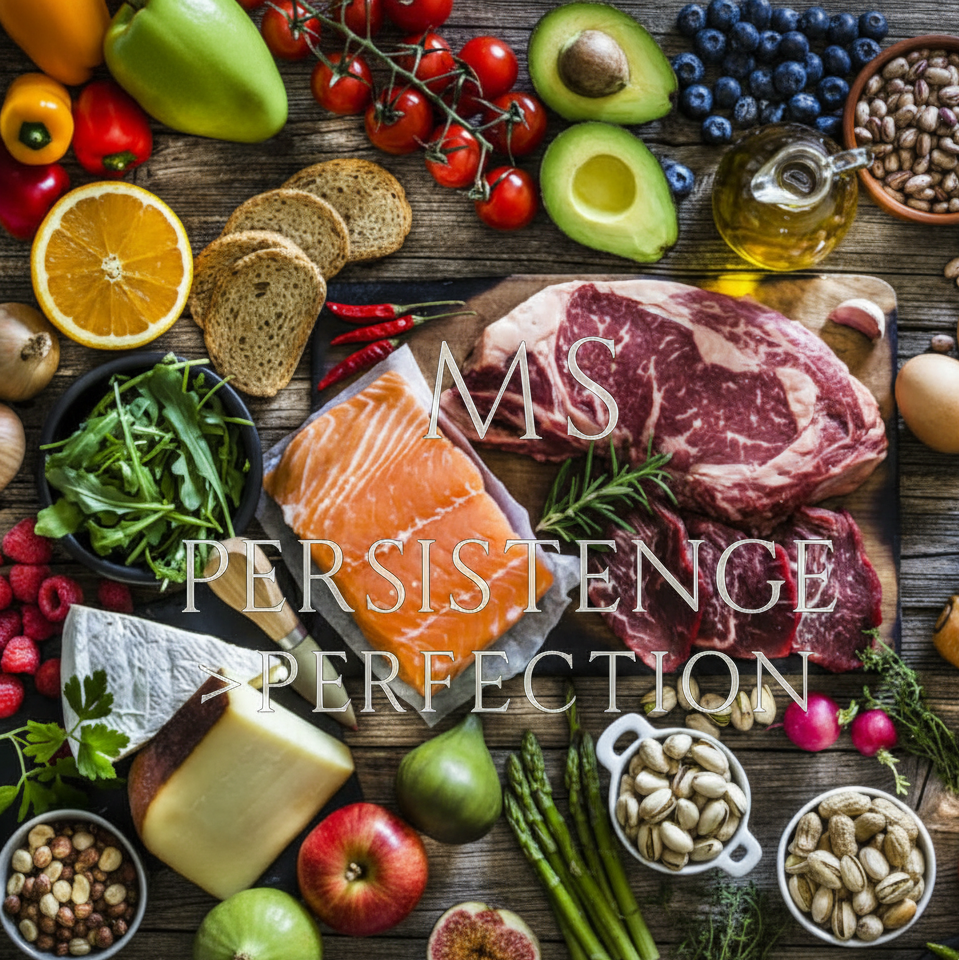
Try prepping ingredients instead of full meals. Grill or roast some proteins, cook a few types of carbs, and chop up veggies. Then, mix and match them throughout the week—maybe smoked salmon over greens one day, steak and rice another, or yogurt with fruit when you need something quick.
What “the science” says: Research from the International Journal of Behavioral Nutrition and Physical Activity found that people who plan their meals tend to have more diverse diets — not less. It’s the planning that makes variety possible, not spontaneity.
Myth #2: “Prepping takes too much time.”
Reality: Spending a few hours on Sunday or Saturday can save you from stressful evenings all week. Even just washing produce, boiling rice, or portioning fruit ahead of time can make your weekdays much easier. And it’s not just about time. People who spend even 30–60 minutes a day preparing food eat more vegetables and fruit (University of Washington research, 2014).
The time’s going somewhere either way, you can spend it prepping intentionally, or you can spend it waiting in drive-thrus.
Myth #3: “Meal prep is only for people trying to lose weight.”
Reality: That idea is just a marketing myth. Meal prep isn’t only for losing weight. It helps you avoid making poor choices when you’re hungry and supports your long-term health.
Sure, portion control helps. But more importantly, prep stabilizes your energy and makes fueling performance automatic. Whether you’re lifting, coding, or commuting, your brain and body both need steady inputs.
Home-prepped meals consistently come in lower in sodium and saturated fat, not because they’re “diet food,” but because you’re in charge of the ingredients.
You’re not dieting; you’re planning to succeed, not to fail. When in doubt, always rely on PPP, proper prior planning, and it’ll save you in countless scenarios.
Myth #4: “It’s cheaper to just grab takeout.”
Reality: The numbers don’t lie. Data from the American Journal of Preventive Medicine shows that people who cook at home spend significantly less on food than those who eat out. Prepping helps you shop with purpose, so you buy only what you need. You waste less food and make your ingredients go further.
Pro tip: Using convenience items still counts as meal prep. Things like pre-washed greens, frozen veggies, frozen fruits, or rotisserie chicken can make things easier. Being efficient is smart, not cheating.
Myth #5: “Healthy meal prep means going ‘Paleo,’ ‘keto,’ or you’re “cutting carbs.”
Reality: Restrictive eating styles burn people out. The goal is consistency, not purity. You don’t have to eliminate carbs, especially if you train. Always remember, persistence over perfection.
Your brain and body work best with carbs. Foods like fruits, vegetables, potatoes, and white rice help you perform and recover, especially if you’re working out.
Coach’s Note: We eat well today for optimal performance tomorrow.
Whether your training is on the mats, in the gym, or at your desk, food is fuel, not a moral test.
The Bottom Line
Meal prep isn’t about being perfect, it’s about being consistent. It’s a simple way to get back your energy, time, and control in a world full of distractions. Eat well, keep your plans simple, and stick with what works.
Progress comes from following through, not from always trying something new.
Fuel isn’t just for training — it’s for thinking, building, and recovering.
Athletes already know this truth: you don’t get stronger in the gym, you get stronger in recovery. Stress plus rest equals growth. Skip the rest, and all you get is breakdown.
In cybersecurity, it’s easy to forget this lesson. After long nights, incident responses, or big migrations, teams often jump straight into the next job. But recovery isn’t a luxury, it’s the bridge between surviving and improving. Without it, you just accumulate fatigue disguised as progress.
The Cost of Skipping Recovery
Burnout: tired minds make risky calls. Missed lessons: incidents get fixed, but are never studied. Fragility: systems stay brittle when they’re never given a chance to adapt.
Building Real Recovery
Post-incident reviews. Treat them like an athlete breaking down game tape, where the real learning happens.
Plan real downtime. Make sure everyone gets real rest after major efforts. Feeling worn out doesn’t show you care more; it’s a sign you need to pause.
Iterative improvement. Apply what you learned before running the next drill. Reflection without action is just rest, not improvement.
Fuel and Recovery: The Overlooked Half
Physical recovery doesn’t stop at rest. It’s also about what you put in your body. Meal prep isn’t about looking good; it’s about making sure you can keep going. Drinking enough water, eating real food, and keeping your energy steady (and your blood levels in check) all week isn’t about following a trend. It’s about having the strength to do your job well.
You can’t think clearly or respond quickly if your system’s running on fumes. Whether you’re training or troubleshooting, energy is uptime.
A rule I’ve used for years: “We eat well today for optimal performance tomorrow.” That mindset changes how you plan your day, not just for food, but for everything else as well. Every decision contributes to tomorrow’s success.
When you build those habits, you stop depending on motivation to show up. Discipline becomes your safety net.
The Mindset Connection
In martial arts, you learn to reset between rounds. In strength training, deload weeks are built in by design. Cybersecurity should be no different. We don’t just patch systems; we maintain the people running them.
Recovery isn’t the end of work, it’s part of the work.
Five weeks ago, I pulled a 41.3-second 250 meter row. Today, I hit 40.2. Just over a second faster.
Most wouldn’t notice the difference, but if you’ve ever chased improvement in anything, lifting, rowing, writing, or career-related, you know what that second really means.
It’s not one test. It’s everything between the test and the retest.
Early mornings. Late nights. Lifting after focusing on a screen all day, securing cloud configs, writing incident reports, and drafting security policies. Endless meetings, collaborating with stakeholders, or staying disciplined enough to meal prep when convenience is whispering your name.
The first test showed where I was. The weeks that followed demonstrated what I was willing to do to get a little bit better every day.
That one second didn’t come from luck. It came from honesty. From taking stock of where my form slipped when fatigue hit, where breathing got shallow, where my leg drive gave too early, and where comfort started whispering, “Hey man, you’ve done enough.”
It came from the same place real growth always hides: the re-tests, not the first runs. Every domain follows the same law: test, learn, refine, retest. That’s how systems harden. That’s how people do, too.
The next time you test something, whether it’s a lift, a sprint, IAM permissions, or a personal limit, remember this: progress rarely looks dramatic as it happens. It might seem minor, but the one second I cut over five weeks shows the value of steady effort. Others might have said, “Hey man, that 41.3 is pretty damn good for a man your age.” For me, that will never be enough.
What “the science” says:
Power output was 673 Watts
VO2 Max is 68.5 ml/kg/min
Faster than 95% of male rowers your age
89% faster than all male rowers
No matter what, 41.3 → 40.2 is proof that attention to detail and small improvements over time are earned, never issued, and that’s the real story.
History shows that the biggest threats to national security, safety, and sovereignty usually come from within. Empires, and leaders, often fail not because they are weak, but because they try to do too much, too quickly, and often end up heading in the wrong direction.
The Yalta Conference in February 1945 brought together Churchill, Roosevelt, and Stalin in an alliance of necessity. Few in the 1930s could have imagined democratic America and Britain siding with Stalin’s Soviet Union; yet necessity led to a partnership with lasting consequences.
The alliance beat Nazi Germany, but it also allowed the Soviet Union to spread into Eastern Europe, which led to the Cold War. The key takeaway: short-term use of power without considering long-term impact can resolve immediate issues but create new, lasting problems.
The same risks are present in cloud security today. Trying to do too much still undermines resilience.
Why Overreach Happens
Overreach is a common trap. If having some power is good, it’s easy to think that having more is better. In cybersecurity, this often happens because of:
Fear of falling behind leads teams to adopt new tools without a clear strategy.
Vendor pressure, with marketing insisting, “If you don’t have this, you’re insecure.”
Internal signaling, where having numerous tools initially appears impressive, but problems soon emerge.
Historical Lessons: The Cost of Overreach
Germany in WWII: Too Much, Too Fast
Germany under Hitler is a classic example of overreach. In 1941, the Nazis invaded the Soviet Union. Initially, their advance was rapid, and they gained significant territory. However, German forces became overstretched, supplies dwindled, winter conditions set in, and the supply lines became unmanageable. What appeared to be a demonstration of power ultimately contributed to their downfall.
Lesson: Expansion without capacity undermines itself.
Japan: Provoking Too Many Enemies
Japan’s decision to attack Pearl Harbor in 1941 reflected a similar flaw. In pursuit of empire across Asia, Japan provoked a much larger adversary: the United States. Instead of consolidating its position, this overreach led to a conflict Japan could not sustain. Lesson: Overreaching creates adversaries you can’t manage.
The Allies: Yalta’s Unintended Consequences
Even the victors faced challenges. The Yalta alliance was necessary at the time, but also carried significant risk. By permitting the Soviet Union to expand into Eastern Europe, the Allies set the stage for forty years of Cold War tension, arms races, and indirect conflicts. Gaining power in one region led to new risks elsewhere.
Lesson: Gains made without foresight can create future vulnerabilities.
The Cost of Overreach in Cloud Security
The same dynamics play out in modern cybersecurity:
Integration gaps: When you have too many tools, it’s like an army spread too thin—there are weak spots attackers can find.
Alert fatigue: More dashboards overwhelm teams, dulling response rather than sharpening it.
Diluted focus: Chasing new tools causes basics (IAM, logging, patching) to be neglected.
The main takeaway is that the paradox is that spending more and adding complexity often reduces resilience rather than strengthening it.
The Better Path: Discipline and Restraint
History points to a better approach. Resilience isn’t about growing without limits. It comes from balance, self-control, and getting the basics right.
For nations, that means understanding the limits of alliances and occupations. For cloud teams, it means:
Focusing on fewer, stronger tools that integrate smoothly.
Start by mastering the basics: IAM policies, patching cycles, logging, and monitoring. These may not be exciting, but they are essential.
Resisting the urge to sprawl. Don’t buy tools or add features for the sake of appearances. Invest only where it truly adds resilience.
Closing Parallel
Yalta reminds us that even the strongest powers can make bargains that carry unintended consequences. Overreach may appear to be a sign of strength in the moment, but it often sows the seeds of weakness for the future.
In cloud security, the same is true. More tools don’t equal more safety. Complexity can backfire. Overreach creates vulnerabilities. The key lesson: resilience means mastering the essentials and exercising discipline, not doing more for the sake of it. This is as true in geopolitics as it is in cybersecurity.
Where have you seen overreach undermine resilience in your organization?
Want to dive deeper into the history and strategy behind these lessons? Here are some recommended reads:
The Origins of The Second World War, by A.J.P. Taylor
Depression, War, and Cold War: Studies in Political Economy, by Robert Higgs
Churchill, Hitler, and “The Unnecessary War”: How Britain Lost Its Empire and the West Lost the World, by Patrick J. Buchanan
The New Dealers’ War: Franklin D. Roosevelt and the War Within World War II, by Thomas Fleming
The War That Ended Peace: The Road to 1914, by Margaret MacMillan
Paris 1919: Six Months That Changed the World, by Margaret MacMillan
Most workouts have a loophole. If you know how to do them, you can kip and be done in less than a minute. Most dudes who do “pull-ups” cheat the range of motion like it’s a professional sport by never fully extending at the bottom, and/OR do NOT get their chins over the bar. But, every now and then, rules will strip everything away and reveal the raw truth.
That’s the point of this challenge: 30 strict pull-ups for time.
The rules are simple but tough:
Must be done in sets of 5 or 10 only. No singles, no doubles, and no kipping (this time).
NO half a$$Pete Hegseth or RKF, Jr. reps.
Full extension at the bottom. Elbows locked out every time.
Chin over the bar at the top. No “almost” reps. No, “I was so close that time.”
Discipline over ego.
My time? Watch and see.
But the question you might be asking is, “Why Does This Even Matter?”
This is more than a physical test; it’s a mindset test, like the pressure faced in cybersecurity, leadership, or life.
Here’s what the workout teaches:
Constraints Make You Stronger Without the rule of “5 or more reps per set,” you’d see people game the system: 30 singles, done easily, no challenge. But rules force focus. They push you past your comfort zone and into real growth.
Cloud security works on the same principle as the pull-up challenge: doing things the hard, correct way leads to lasting results. In cloud security, if you make permissions too loose or skip essential controls, it seems easier—just like doing easier pull-ups. But real security comes from applying restrictions such as least privilege, multi-factor authentication, and segmentation. These are to security what strict form is to strength: they are challenging but essential for durability.
2. Form Is Discipline Locking out every rep is about integrity. Cutting corners in training leads to cutting corners under stress.
Cyber pros know the drill: if you skip patch cycles, code reviews, or alerts, you won’t suddenly excel in a crisis—you will perform only as well as your training prepared you. The point is: in emergencies, people don’t ‘rise to the occasion’; they revert to their standard preparedness.
3. Speed Comes From Structure Strict pull-ups in just over 2 minutes require planning: strict adherence to set sizes, rest, and when to push or hold back.
Incident response follows the same principle: structured speed is essential. Success comes from following practiced processes, not from last-minute effort.
4. Resilience Beats Flash Nobody remembers the person who did 20 kipping pull-ups that looked good on Instagram but didn’t count in this instance. The athletes who succeed in the gym or in life are those who can perform strict reps under pressure, year after year.
Resilience isn’t glamorous. It’s strict adherence to form and standards. Reps stacked and basics drilled.
Closing Thoughts
Thirty strict pull-ups for time really isn’t about the number. It’s about the mindset: constraints, no ego, and the discipline not to go again sooner than you can complete at least another set of 5, along with persistence under pressure.
The lessons extend beyond workouts. Whether you’re securing cloud environments, writing policies, or leading teams, following real constraints, practicing discipline, and building resilience are as vital as adhering to strict form in your pull-ups when required.
Constraints can make you sharper. Discipline makes you stronger. Resilience makes you unbreakable.
Chasing perfection can be tempting. It makes us believe that if we get everything exactly right, like following a flawless training plan or a perfect patch cycle, we’ll be safe from risks or mistakes. But perfection is fragile. One mistake or setback, and it falls apart. That’s when persistence matters most.
Persistence, on the other hand, is unbreakable and endures where perfection falters.
Anyone who’s trained in martial arts or strength sports knows some days you set PRs, some days you don’t. Some days you win; other days, you learn. The outcome of a single session doesn’t matter; what counts is that you keep showing up.
Cybersecurity runs on the same principle. Rather than expecting flawless results, it relies on the daily commitment, running scans, monitoring logs, and applying updates, which builds resilience over time.
Why Perfection Fails
Unrealistic expectations: Nobody patches everything at once. Expecting to do so leads to burnout.
Procrastination: Waiting until you can do it “perfectly” means it never gets done.
Fragility: Perfection breaks under stress; persistence adapts.
Why Persistence Wins
Consistency compounds. One small patch today, another tomorrow, adds up to systemic strength.
Resilience under pressure. When incidents occur, teams that have developed daily habits respond more quickly.
Adaptability. Persistence isn’t rigid; it bends, adjusts, and continues forward.
The Martial Arts Parallel
Martial artists don’t achieve mastery through perfection. They drill basics until instinctive, spar, fail, and adapt. Each session is about persistence; the discipline of returning to the mat, working on strikes, footwork, counter-wrestling, etc, etc.
Cybersecurity professionals must do the same. Drill, repeat, refine, and drill some more. That way, when the attacks come, your persistence in training wins the day.
Closing Thought: Persistence, not perfection, is the key to success. Perfection is unattainable, persistence ensures progress, and tangible results.
Closed out the training block on a high note — pulled a new PR double at 234kg (515lbs). This cycle was all about fast-twitch development and explosive power, and it paid off on the bar.
The plan now: a short deload through the holidays, then hit the ground running January 1st with fresh momentum.
Takeaway: whether in the gym or in cybersecurity, progress comes from focused blocks, not random effort. You train a specific quality, test it, then recover and reset. Discipline > perfection, every time.
Wishing you all a Merry Christmas — and here’s to chasing your own PRs, wherever they are.
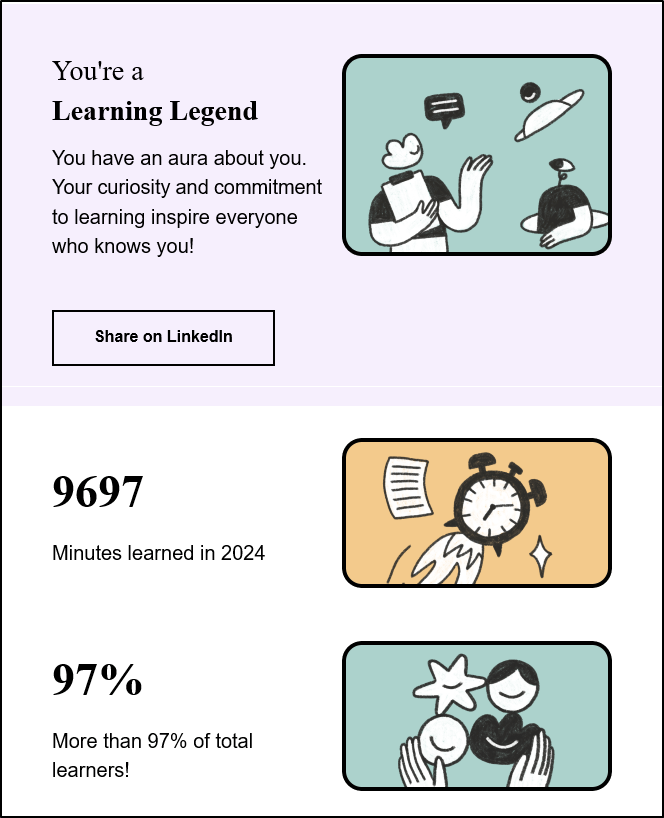
When I first clicked “Enroll,” I didn’t know it would add up to 162 hours of training. That’s almost a full month of time — stolen from late nights, weekends, and early mornings before work.
Like a lot of people breaking into cybersecurity, I started with curiosity and a mess of browser tabs. YouTube videos, Reddit threads, course recommendations. It’s easy to drown in the noise. What made the difference wasn’t just finding the right content, it was learning how to stay with it long enough for the dots to connect.
Udemy became my training ground. Not glamorous, not perfect, but consistent. Over time, those 162 hours weren’t just “video time.” They became hours of repetition, frustration, and slow understanding.
There’s a phase in every learner’s path where you stop studying for a test and start thinking like the work.
That’s what those hours taught me, how to reason through a network like a puzzle, how to see the seams where systems and people meet, how to build patience in a field where curiosity is the only constant.
Looking back, those 162 hours weren’t just prep for certification. They were the price of entry, not into a career, but into a mindset.
Every scan that failed, every lab that wouldn’t load, every problem that took three days instead of three hours, they were all small rehearsals for the real work ahead.
And that’s the absolute truth about cybersecurity training: the time never feels fast, but it’s never wasted. You’re not just learning commands. You’re learning endurance. It’s the art of staying with a problem long enough to earn its answer.
There’s a moment most people don’t talk about when they post their certifications, it’s that part where you stare at the screen, waiting for the result to load, rehearsing how you’ll feel either way.
That was me, after months of studying, rewrites, retakes, and nights when the last thing I wanted to see was another port, protocol, or payload.
I’d already passed the CompTIA trifecta, A+, Network+, Security+, and each one felt like a step forward. But PenTest+ was different. It wasn’t just about memorization. It forced me to think like an adversary, to build a structured approach out of controlled chaos. It was humbling.
There were setbacks. Long hours after long workdays. Missed weekends. That quiet voice that says, maybe this one’s just too much right now.
But that’s where persistence replaces motivation. I tell my students and training partners the same thing I remind myself: motivation gets you started, discipline keeps you moving.
When that “Pass” finally appeared on the screen, it wasn’t triumph, it was relief. And gratitude. Because every failed scan, every misconfigured lab, every late-night tracing network maps, they built the competence that makes the win real.
The truth is, no certification on its own changes who you are. The process does. The grind does. The decision to sit back down after the first, second, or third setback does.
In cybersecurity, as in martial arts, you don’t earn a belt to prove you’re done. You earn it because you’ve decided you’re not done yet.
And that lesson, more than any flag on a résumé, is what makes the next challenge possible.