Ever take a look in the mirror after your first week of serious lifting and thought, “Wait, am I getting bigger?” Here’s what’s really happening…
The Real Problem Isn’t Lifting, It’s Perception
Most women don’t avoid lifting because they’re lazy. They avoid it because they’ve been given the wrong framework. Somewhere along the way, strength training got tied to a single fear:
“If I lift weights, I’ll get bulky.”
That belief isn’t based on physiology. It’s based on misunderstanding. And if the foundation is wrong, every decision built on top of it will be, too.
Think: Understand What Actually Drives Muscle Growth
Muscle doesn’t appear by accident.
It requires:
Progressive overload
Sufficient calorie intake
Adequate protein
Consistency over months and years
Even under ideal conditions, muscle growth is slow.
Now layer in reality:
Women have significantly lower testosterone levels
Most people are not eating in a surplus
Most training programs are not optimized for maximal hypertrophy
The result?
Most women don’t accidentally get bulky. They struggle to build muscle at all.
Lift: Train for Strength, Not Fear
If your goal is to be healthier, stronger, and more capable, your training should reflect that.
That means:
Lifting with intent
Progressively increasing load over time
Training consistently across weeks, months, and years
Not:
Avoiding moderate to heavy weightlifting
Staying in low-intensity comfort zones
Making decisions based on appearance fears
Because here’s the reality: Strength training builds overall capacity, not excess.
Quick Facts: Muscle vs. Bulk
– Muscle gain is slow and is achieved intentionally, not accidentally.
– Most women gain strength, improved muscle tone, and confidence, not size.
– Temporary changes (pump or water retention) fade within hours to days.
What most women experience when they lift properly:
Improved muscle tone
Better posture
Increased strength
Reduced body fat
Higher confidence in movement
That’s not bulk. That’s functional strength.
Live: Strength Is a Long-Term Investment
This is where the conversation shifts. Not aesthetics. Not trends. Outcomes.
If you don’t build strength over time:
Muscle mass declines with age (sarcopenia)
Bone density decreases
Injury risk increases
Daily tasks become harder
Metabolic health worsens
This isn’t hypothetical. It’s guaranteed to happen to everyone.
Now flip that and you’ll find that strength training supports:
Longevity and independence
Bone density and joint health
Metabolic resilience
Cognitive and emotional stability
The ability to live life without unnecessary limitation
Strength training isn’t just about today’s confidence, it’s your ticket to stronger bones, better balance, and staying independent for decades. That’s why a change in mindset is important.
Thinkingbefore: Avoided weights, worried about getting ‘big.’
Thinkingafter: Trained with intention, gained strength, energy, and self-assurance, no bulk in sight.
What “Bulky” Actually Means and Why It’s Misunderstood
Most people don’t define “bulky” clearly.
In practice, what they’re reacting to is:
Seeing muscle definition for the first time
Temporary muscle fullness (“pump”): This can cause a temporary feeling of ‘swelling’ or looking puffier, don’t panic. It’s just increased blood flow and water retention in the muscle, and it fades quickly.
A change in body composition they’re not used to
Actual muscular size:
Takes years to build
Requires intention
Requires nutrition to support it
You don’t drift aimlessly into it, and you couldn’t even if you tried.
The Reality Most People Don’t Say Out Loud
Many women would benefit from more muscle, not less.
In fact:
Many struggle to gain even a few pounds of lean mass
Many under-eat relative to their activity
Many never train with enough load to stimulate growth
The result isn’t “too bulky.”
It’s:
Underdeveloped strength
Lower resilience
Missed potential
Action: Train Systematically, Not Emotionally
Scientific Insight:
A 2022 study in the Journal of Strength and Conditioning Research found that women who strength trained 2–4x per week improved bone density, confidence, and body composition, without significant increases in body size.
The World Health Organization and American College of Sports Medicine both recommend women include strength training at least two days per week for optimal health, resilience, and longevity.
If your decisions are driven by fear, your results will be limited.
Instead:
Train 2–4x per week with resistance
Focus on progression, not perfection
Eat enough protein to support recovery
Give it time
Let outcomes guide adjustments, not assumptions.
Coach’s Notes
Muscle is difficult to build and easy to lose. Act accordingly.
Strength is protective. It supports everything else you do.
If you ever reach a point where you feel “too muscular,” you can adjust. But, fear not, 99% of the population never even get close to that point.
Final Thought
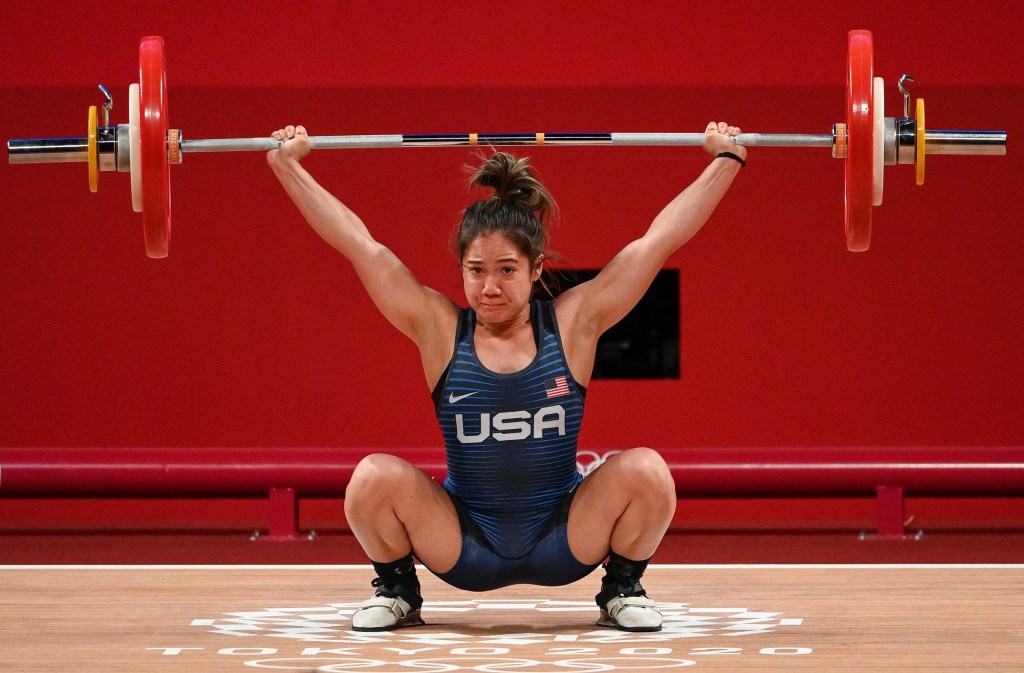
I doubt Olympic Weightlifters like Olivia Reeves or Mattie Rogers ever think twice about “getting too bulky,” and you shouldn’t either. Strong women aren’t bulky; they’re confident, capable, and resilient.
The goal is to become stronger and more capable. That means more strength, more tenacity, more control over your body, and your overall well-being.
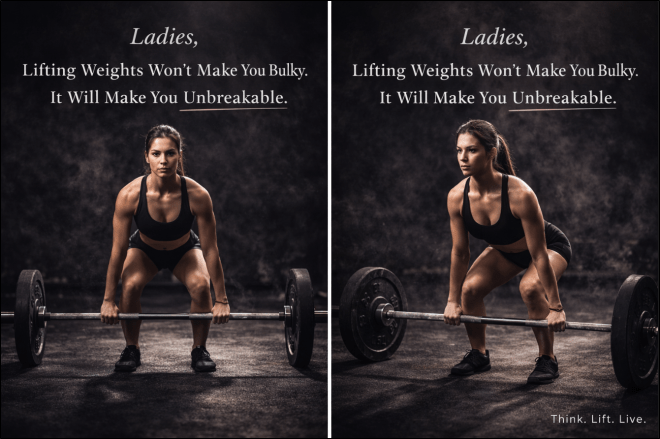
So always remember, lifting weights won’t make you bulky. It will make you unbreakable.
This 8-week program is designed to improve overall strength, explosive power via Type IIx muscle fiber development, and speed in the clean using traditional strength training methods and post activation potentiation (PAP). PAP involves performing heavy strength exercises followed by explosive movements to enhance neuromuscular performance.
Program Structure & Purpose of This Method of Training
Weeks 1-4: Strength and Hypertrophy Focus
Builds a solid foundation of strength in the specific movements and build overall muscle mass.
Emphasis is on moderate to heavy weights with traditional strength training methods.
Weeks 5-8: Explosive Strength and Speed
Increase the focus on explosive movements and speed.
Utilize PAP techniques to develop explosiveness in the lifts and maximize power output.
Weekly Training Schedule
Monday: Strength and Clean Technique
Clean: 5 x 3 reps dropping each rep from the top, focusing on as close to perfect reps every set
Focus on technical perfection/bar control in all positions. Intensity: 70-80% of 1RM; rest 2-3mins between sets
B. Front Squat: Sets: 4
Reps: 6-8 (Weeks 1-4)
Reps: 4-6 (Weeks 5-8)
Intensity: 75-85% of 1RM
C. Romanian Deadlift – sets: 3 x 8-10; rest 2
D. Pull-Ups Sets: 4 x reps: 8-10 (weighted if possible); rest :90secs
E. Trunk Work – Russian Twists & leg raises – sets: 3 x 15-20; rest 1min b/t sets
Tuesday: Traditional Strength and PAP
Back Squat 5 x 5; rest 2-3 mins b/t sets — Intensity: 80-85% of 1RM
Clean Pull (Heavy) Sets: 4 x 3 — Intensity: 90-110% of clean 1RM PAP Complex: 3 sets C1. Heavy Back Squat: 3 reps at 85-90% of 1RM C2. MAX Vertical Jump: 3-5 reps immediately after each squat set; Rest: 2-3 minutes between complexes D. Shoulder Press: Sets: 4 x 6-8
Wednesday: EASY MAP 10/Active Recovery/Mobility
MAP 10 for 30-45 minutes or mobility work and stretching focusing on hips, shoulders, and ankles
Thursday: Strength and Clean Technique
Clean: Sets: 5 x 3
Intensity: 75-85% of 1RM
Focus on bar control in the first pull and FINISHing the second pull with maximal bar speed.
B. Deadlift – Sets: 4
x 5-6 (Weeks 1-4)
x 3-4 (Weeks 5-8)
Intensity: 80-90% of your CLEAN DL 1RM
C. Push Press – Sets: 4 x 6-8
D. Barbell Rows – Sets: 4 x 8-10
E. Trunk Work (Hanging Leg Raises, Side bends with empty bar on your back) – Sets: 3 x 15-20
Friday: Explosive Strength and PAP
PAP Complex: 3 sets
A1. Heavy Front Squat – 3 reps at 85-90% of 1RM; rest :10secs
A2. Clean from Blocks: 3 reps (at 60-75%) immediately after each squat set; rest: 2-3 minutes between complexes
B. EXPLOSIVE Box Jumps 3 x 5; focus on one rep at a time being as explosive as possible; rest 1 min
C. Push Jerk 4 x 4-6; rest 2
D. Glute Ham Raise 3 x 15
Saturday: Accessory Work and Recovery
Snatch Technique work (Light) 5 x 3 – Intensity: 60-70% of 1RM
Overhead Squat 4 x 6-8
Seated Dumbbell Shoulder Press 3 x 12-15
D1. Banded Face Pulls 3 x 15; rest 0 D2. Banded upright rows 3 x 15; rest 1
Sunday: Rest and Recovery Full rest day to allow for recovery and muscle repair.
Detailed Program Highlights and Emphasis
Weeks 1-4: Strength and Hypertrophy Focus
Volume and Intensity:
Higher volume with moderate to heavy weights.
Focus on building a strong foundation with hypertrophy and strength work.
Snatch & Clean Technique:
Emphasize proper form and technique in the snatch & clean.
Use moderate weights to allow for technique improvements.
Traditional Strength Training:
We’ve incorporated compound lifts like squats, deadlifts, and presses to build overall strength. We also routinely rotate accessory exercises that target specific muscle groups to build positional strength.
Weeks 5-8: Explosive Strength and Speed
Volume and Intensity:
Increase intensity with heavier weights and lower reps.
Focus on explosive movements and speed strength.
Snatch + Clean & Jerk Technique:
Continue emphasizing technique but increase intensity to prepare for maximal lifts.
Perform heavy strength exercises followed by explosive movements to maximize power output.
Plyometric Training:
Incorporate plyometrics once a week to improve explosiveness and speed.
Exercises like box jumps and cleans from blocks complement the strength work.
Recovery and Nutrition — all around the world it’s the same song, it’s the same old song!
Sleep – Aim for 7-9 hours of quality sleep per night to support muscle recovery and growth.
Nutrition – Protein: Consume 1.6-2.2 grams of protein per kilogram of body weight daily to support muscle repair.
Carbohydrates: Ensure adequate carbohydrate intake to fuel workouts and replenish glycogen stores. Include complex carbs like whole grains, fruits, and vegetables.
Healthy Fats: Incorporate healthy fats from sources like avocados, nuts, seeds, and olive oil to support overall health and hormone production.
Hydration – Stay well-hydrated to maintain performance and facilitate recovery. Don’t forget your electrolytes!
Active Recovery – Incorporate light activities such as MAP 10, kayaking, swimming, walking, yoga, or stretching on rest days to promote blood flow and reduce muscle soreness.
Monitoring Progress
Tracking your progress is essential for adjusting your program and ensuring continuous improvement.
Use a training log to record your workouts, including weights used, sets, reps, and any relevant notes on how you felt during each session.
Regular Testing: of your 1RMs to gauge strength improvements and adjust training intensities accordingly.
Adjustments – be sure to make them based on your progress and recovery. Then you can modify variables such as intensity, volume, and exercise selection to avoid plateaus and continue to make training fun and make sure youre maximizing your gains.
Final Thoughts
This 8-week Olympic weightlifting program combines traditional strength training with post activation potentiation (PAP) to enhance strength, explosive power, and speed in the and clean. By following this structured and periodized approach, you can achieve significant improvements in your lifting performance. Stay consistent, prioritize proper form, and adjust the program as needed to continue progressing toward your Olympic lifting goals. I hope you’ve enjoyed this article and that you find it beneficial in your training. Ive been writing individual and team/group training plans for almost two decades and am very passionate about helping folks achieve their goals. If you need helping to achieve your goals let me know and Id be happy to help you, too. Until next time, all the best!
The deadlift is a foundational exercise in Olympic weightlifting, crucial for developing overall strength, maximum power, and athletic performance. Improving your deadlift can enhance your performance in the clean and jerk, snatch, and other compound lifts. Below you’ll find detailed strategies to enhance your deadlift, focusing on technique, strength training, range of motion work, and basic recovery strategies.
1. Perfect Your Technique — the main point here is this exercise will only help improve your lifts if it looks like the the first pull of the lifts. We are emphasizing the clean variation of the deadlift not the traditional deadlift.
Technique is paramount in the deadlift. Proper movement pattern not only reduces the risk of injury but also maximizes strength gains where it matters most. Here’s a more detailed breakdown of the essential components of deadlift technique:
Foot Positioning:
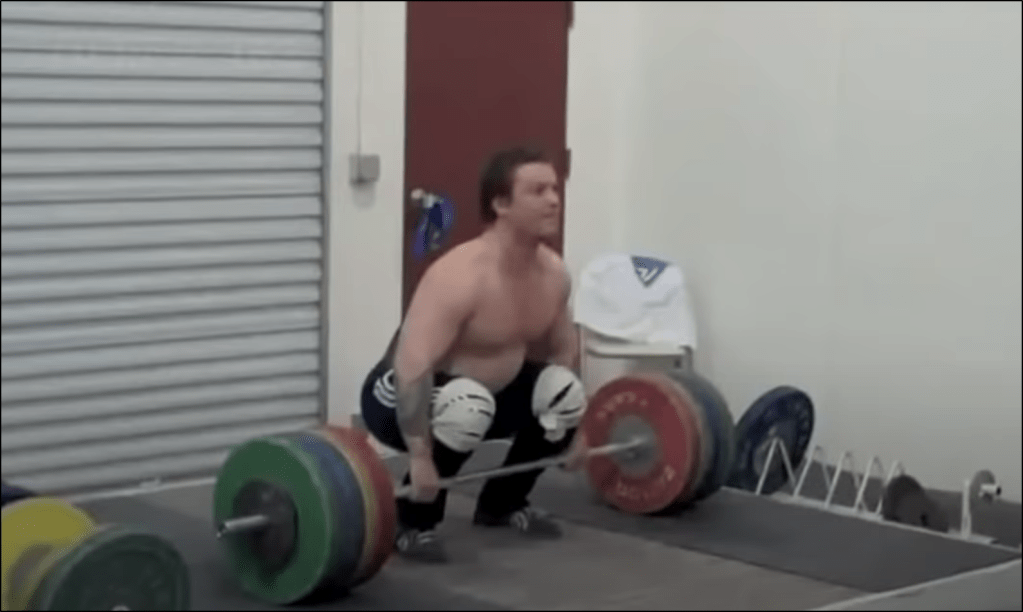
Stance: From the start, use your pulling position in the clean and/or snatch as reference. Like the conventional deadlift though be sure not to begin with your feet too narrow or too wide. My starting position varies slightly but should almost always be EXACTLY the same. Stand with your feet hip/shoulder-width apart, ensuring your toes are pointing slightly outward. How much your toes point out will determined by your hip structure genetically and your over mobility or lack-there-of. No matter where you begin, you want it to a habitual and it be a position to allow for a stable base and optimal leverage during the 1st pull, i.e. the deadlift portion of the movement.
Setup: Place the barbell over the mid-foot, close to your shins. This minimizes helps prevent the bar from traveling forward off the ground and helps keep it from getting out of position in any other portion of the lift. Even though some of you are not martial artists always remember this phrase — position before submission. This means make sure you put/keep the bar in the correct position throughout the movement so you can have MAXimal control over the bar throughout the movement.
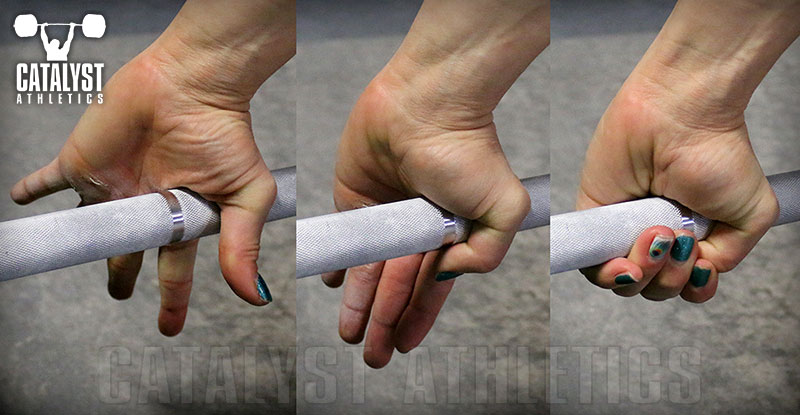
Grip: There’s only one and that’s the hook grip. get used to it early and make it habitual.
Hook Grip: Thumb is wrapped around the bar and secured by the fingers. This grip is more secure but can be uncomfortable initially.
Bar Path:
Proximity: Keep the barbell close to your body throughout the lift. The bar should travel in a straight line from the ground to the lockout position. This minimizes the distance the bar travels and reduces the strain on your lower back.
Hips and Back:
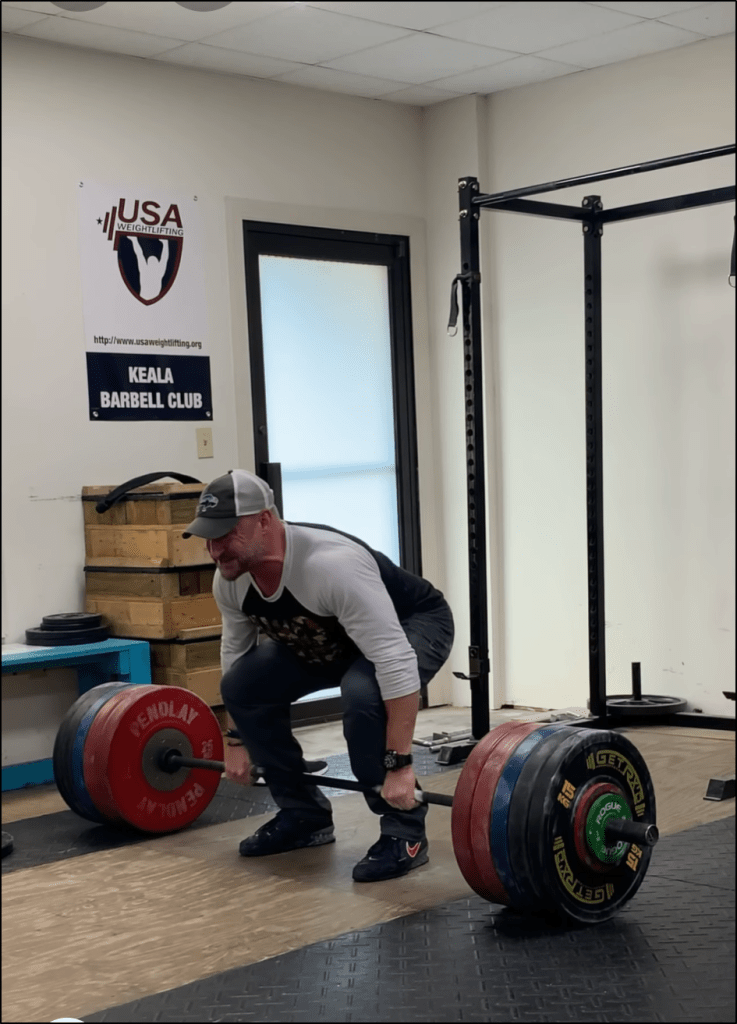
Starting Position: Begin with your hips lower than in a conventional deadlift, and your torso more upright. This engages your legs more effectively and helps you get used to using your legs to DRIVE the earth away.
Spine Position: Maintain a neutral spine throughout the lift. Avoid rounding your back to prevent injuries. Engage your core to stabilize your spine.
Pulling Motion:
Initial Lift: Drive through your WHOLE FOOT, extending your hips and knees simultaneously. Your shoulders should be slightly in front of the bar at the start.
Engagement: Engage your lats to keep the bar close to your body and prevent it from drifting forward.
Lockout: Fully extend your hips and knees at the top of the lift, ensuring your shoulders are back and your chest is up.
2. Build Strength with Accessory Exercises
Incorporate accessory exercises to target the muscles involved in the deadlift. These exercises help to build strength and address any weaknesses:
Execution: Stand in your snatch or clean pulling stance with a clean grip on the bar. Set your back in the same extension you use to pull the snatch and clean and brace your trunk forcefully.
Hinge at the hip while bending the knees very slightly to bring the bar as far down the legs as possible without losing any back extension. Actively keep the bar as close to the legs as possible throughout the motion.
Stay balanced evenly over the whole foot rather than pushing the hips back more than necessary and shifting to the heels. This will limit how much weight you can handle, but it will make the exercise more effective by increasing the force on the hips and back while reinforcing the balance we want in the snatch and clean, as well as strengthening the back and shoulders’ ability to keep the bar close to the body.
Stay braced tightly so as you change directions at the bottom, you don’t allow any softening of the back extension.
If you’re mobile enough to get the plates to the floor with perfect back extension, still stop just short of touching—the changing of direction without compromising back extension is an important element of the exercise.
Benefits: Focuses on the hamstrings and glutes, improving the posterior chain strength essential for a powerful deadlift.
Execution: The good morning is a posterior chain strength exercise that emphasizes isometric back extension strength.
Place the bar on the back as you would for a back squat. You can use either your squat or pulling stance depending on which you want to focus on.
Brace the trunk forcefully with the lower back neutral or slightly more extended and the upper back flattened as much as possible.
Bend the knees very slightly as you hinge at the hips as far as you’re able without losing back extension. Bend forward at a controlled speed, and recover at a natural to quick speed.
Maintain whole foot balance or shift slightly more to the heels, but keep the whole foot in contact with the floor.
Don’t allow your back to soften as you change direction in the bottom to stand again—resisting that force with a rigid trunk is a primary element of the exercise.
The knees can be bent more to shift more of the work to the glutes than the hamstrings, or can be locked straight to maximize hamstring emphasis.
Benefits: Strengthens the lower back, glutes, and hamstrings, promoting better hip hinge mechanics.
Pendlay Rows: AKA Bent-over row, bent forward row, barbell row
Execution: The bent row is a basic but effective upper body pulling exercise that strengthens the upper back, shoulders and arms.
Hold the bar with a clean-width grip, brace your trunk in the same position you would when pulling from the floor, and hinge forward at the hips while bending the knees to bring your trunk just above horizontal, letting the bar hang at arms’ length close to the legs.
Pull the bar to the abdomen, squeezing your shoulder blades back together and forcefully extending the upper back at the top of each rep. Lower the bar to full elbow extension without losing your braced back position.
Notes The bent row can be performed strictly with a controlled tempo, or with a little body English to put some speed on the bar and then reach the trunk into the bar at the top of the row. The angle of the trunk can also be varied depending on the desired effect, from horizontal to closer to 45-degrees—the higher the angle, the more heavily it can be loaded, but the smaller the range of motion.
Benefits: Develops mid-back strength, crucial for maintaining proper bar path and posture during the deadlift.
Execution: Fix the ankles in a glute-ham bench or similar adjusted to place the pad on the upper thighs. Bend at the hip and back to hang straight down from the hip—back relaxed and trunk hanging vertically.
Extend the hip and back together to bring yourself up to an extended position above horizontal in which the entire back, including the upper back, is extended completely and the glutes are forcefully contracted. Lift your head up at the top to reinforce upper back extension.
For unweighted back extensions, placing the hands behind the head is recommended to help encourage better extension of the upper back. For weighted back extensions, hold the weight in the form of a barbell or dumbbell behind the neck to ensure better resistance and better reinforce that upper back extension.
Notes Technically, this execution is combined back and hip extension. Back extension can be isolated by fixing the hips in place with the glutes and flexing and extending only along the spine. This can be assisted by relocating the fulcrum or pad of the bench closer to the hips.
Trunk Work: Copenhagen Plank, Chinese Plank (add weight if/when you can) Russian Twists: Leg Raises: Lying Leg Raises. For the Copenhagen & Chinese planks think doing 3-5 sets of 1min resting 1-2 mins between for all of the others think 3-4 set of 15-25 reps per exercise and also resting 1-2 mins between sets.
Execution: Use a wide grip, similar to a snatch. Perform the deadlift with this grip.
Benefits: Enhances upper back and grip strength and increases the range of motion.
3. Focus on strength in your end ranges of motion not simply “mobility” or being “flexible”
Mobility and flexibility are vital for performing a safe and effective deadlift and overall quality of your movement pattern(s). Think of and possibly implement these movements into your mobility/ROM work exercises into your routine:
Hips: Perform hip flexor stretches, pigeon pose, and hip circles to improve hip flexibility.
For your hamstrings think of using using dynamic and static stretching to enhance hamstring flexibility, allowing for better hip hinge movement. Things like poor man’s GHR, Frankensteins, Hamstring sweeps, and so on.
Ankle Mobility: Incorporate ankle plantar and dorsiflexion exercises to ensure you can maintain proper foot positioning and balance. Worst case scenario just do a couple of slow, controlled bodyweight double and single calf raise to get your calves and ankle complex warm/fired up and ready to lift!
Thoracic Mobility: Here really focus on getting the support structure of your t-spine loose and work on what you need to get yourself closer and closer to the best starting position you can achieve.
Here’s a great exercise The Barbell Physio just dropped on their IG page:
Progressive overload is essential for continuous improvement. Gradually increase the weight you lift, the number of repetitions, or the volume of your training sessions to challenge your muscles and stimulate growth. Here’s how to effectively implement progressive overload:
Linear Progression: Increase the weight lifted in small, consistent increments/percentages each week.
Volume Training: Add more sets and reps to your routine, focusing on maintaining proper form.
Tempo Variations: Incorporating tempo with your lifts, primarily slow eccentrics (lowering phase), to increase time under tension and build strength are of paramount importance. Using slow tempos also help you feel the muscles you use to do the lifts, and can be the greatest tool you’ll be exposed to help you master the positions of the lifts.
5. Last, and certainly not least, prioritize Recovery
Recovery is just as important as training itself. Proper recovery ensures that your muscles repair and grow stronger, and reduces the rick of injury.
Key recovery strategies include:
NUMBER ONE! Adequate Sleep: Aim for 8-9 hours of sleep per night to support muscle recovery and overall health.
Nutrition: As one famous fitness influencer one said — you can only piss in the gas tank for so long and expect elite performance. So, be sure to quality proteins, healthy fats, and lots of fruits and vegetables. Consider post-workout nutrition/protein shakes if you struggle to meet your daily macros to aid muscle repair. But, first and foremost, be sure you are focusing on eating whole foods vs supplementing with any kind of shakes. Yes, use them when necessary but only when necessary.
Hydration: Stay well-hydrated to maintain muscle function and performance.
Active Recovery: Engage in low-intensity activities such as walking, jogging, rowing, swimming or any sort of quality mixed modal training to help promote blood flow and muscle recovery.
Improving your Olympic weightlifting deadlift requires a comprehensive approach that includes perfecting your technique, incorporating accessory exercises, focusing on mobility, implementing progressive overload, and prioritizing recovery. By consistently applying these strategies, you will build the strength, power, and resilience needed to excel in your deadlift and overall Olympic weightlifting performance. Remember, progress takes time and dedication, so stay patient and committed to your training regimen. More importantly, deadlifting feels cool because you can move a lot of weight but don’t forget to actually do the lifts!


 Matt Shannon, Security Pro