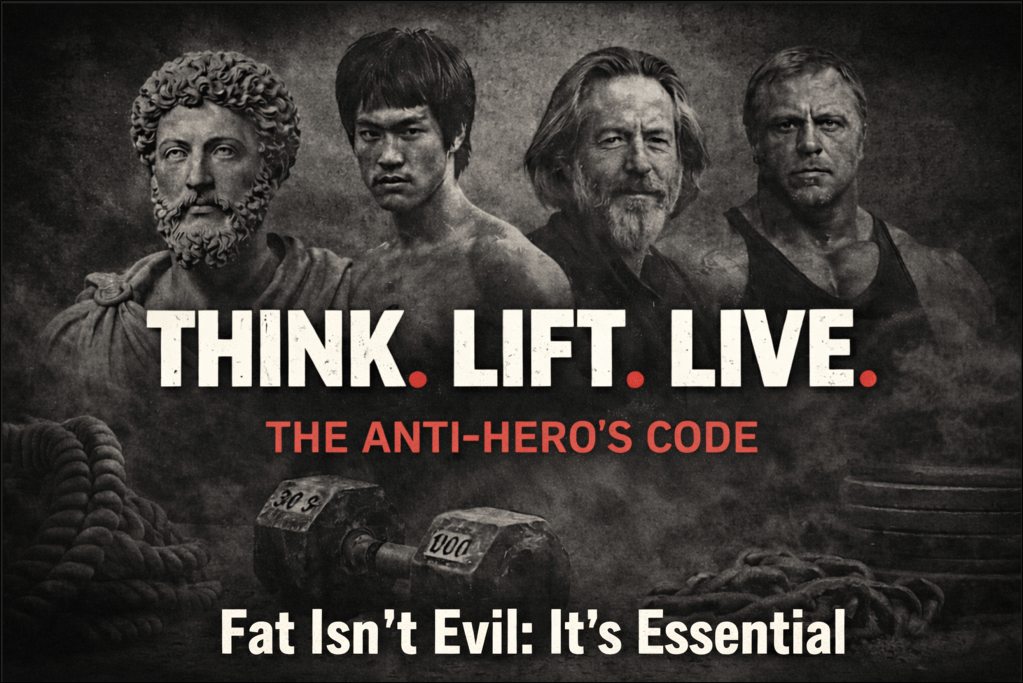
Picking up from where we left off last week — we’ve already dismantled the myths around protein and carbohydrates, now it’s time to put the final macronutrient into proper context.
In Week 3, we covered nutrient timing and why eating with intention matters. In Week 4, we cleared the air around carbs, showing they’re a necessary tool for fueling performance, not something to fear.
This week, we’re doing the same with fat, one of the most demonized and misunderstood components of the human diet.
Why This Matters:
Most people trying to ‘eat healthy’ unknowingly sabotage their energy, focus, and results by fearing fat. Understanding the truth lets you make smarter, less stressful choices in and out of the gym.
The Problem: Fat Got Blamed for What Sugar (and Sedentary Living) Did
The war on fat started in the 1970s and 80s, pushing people toward fat-free everything, from cookies to frozen dinners. What happened next?
• Obesity skyrocketed.
• Type 2 diabetes surged.
• People got sicker, not healthier.
Why? Because removing fat didn’t remove the problem. It just made food more processed, more sugary, and less satisfying.
Question:
Ever skip the avocado on your salad because you thought it was ‘too fattening’, then ended up hungry an hour later? Now, youre beginning to pick up what I’m puttin’ down.
What Fat Actually Does in the Body
Fat isn’t the enemy. It’s a required nutrient for:
• Hormone production (testosterone, estrogen, cortisol)
• Brain health and cognition
• Joint lubrication and recovery
• Fat-soluble vitamin absorption (A, D, E, and K)
• Cellular structure (yes, your cells are literally built from it)
But here’s the key: fat is fuel for low-intensity output and recovery, not high-performance explosive training. That’s where carbs step in.
Quick Fat Facts:
• Unsaturated fats (olive oil, nuts, avocado, fatty fish) support heart and brain health.
• Saturated fats (animal fats, butter, coconut oil) are fine in moderation, especially from whole foods.
• Trans fats (partially hydrogenated oils) are in a different league; avoid them entirely. They wreak havoc on cholesterol and inflammation.
You need both fat and carbs, but at the right doses for the right goals.
Data Point:
Fat slows gastric emptying, helping you feel fuller for longer—a secret weapon against late-night snacking (British Journal of Nutrition, 2021).
Why “Healthy Fats” Doesn’t Mean “Unlimited Fats”
Yes, olive oil, avocado, nuts, and salmon are great, but overconsumption is still overconsumption.
Fat is energy-dense.
• 1 gram of fat = 9 calories
• That’s more than double protein or carbs (4 calories per gram)
So while you need it, you don’t need as much as you might think, especially if you’re already fueling with protein and carbs.
Most Common Fat Mistake:
Dousing salads, veggies, or “healthy” bowls with extra oil or nuts. Even good fats add up fast, so measure, don’t guess.
What This Looks Like in Practice
Swap:
Instead of fat-free salad dressing (loaded with sugar), use olive oil and vinegar for flavor, better absorption of nutrients, and longer-lasting energy.
Here’s how to build smart, balanced fat intake into your day:
• Add a thumb-sized portion of fat to your main meals (nuts, oil, nut butter, avocado)
• Don’t dump oil or butter onto every dish “for health;” it adds up fast
• Keep fats lighter pre-workout, so digestion doesn’t slow you down
• Post-workout, prioritize protein + carbs, not a heavy fat load
• Evening meals can include more fats to help slow digestion and promote satiety
You don’t need to avoid fat, you need to respect it.
Visual Analogy:
Think of fat as the steady-burning logs on a campfire versus using pine needles: the dry pine needles can get the fire going, but don’t last. The logs are for warmth that lasts all night.
Now that we’ve set the record straight, here’s how to use fat like an anti-hero: deliberately, strategically, and never just because the label says “healthy.”
Action Challenge
For the next 3 days:
• Track how much fat you’re eating (rough estimate is fine)
• Identify where it’s coming from (meals vs snacks vs sauces/oils)
• Adjust one meal per day to intentionally include a measured fat source (e.g., 1 tbsp olive oil, 1/4 avocado, or 10 almonds)
You’ll start to see how easily fat sneaks in and how powerful it can be when used deliberately.
Coach’s Corner
• Fat is a recovery nutrient, not a performance one.
• Don’t go to war with it, just don’t treat it like a free-for-all either.
• Balance is your ally. Fat has its place, use it like a tool, not a reward.
Suggested Reading
“Deep Nutrition” by Dr. Cate Shanahan
A sharp breakdown of how traditional diets used fats well, and how we can reclaim that without getting lost in the noise.
Real-World Headline:
In 2024, a major study published in JAMA found that replacing just 5% of calories from saturated to unsaturated fat was associated with a significant reduction in cardiovascular risk. (Source: JAMA, April 2024)
Science Insight:
Regular consumption of omega-3 fatty acids (found in fatty fish, chia, and flaxseed) is associated with improved heart health and reduced inflammation, according to the American Heart Association (2023).
Quick Fact:
Contrary to old myths, moderate whole-egg consumption does not increase heart disease risk for most people (Harvard School of Public Health, 2022).
Key Takeaway: Your hormones, brain, and cells are built from fats. Don’t fear them, but definitely manage them.
Key Anti-Hero Move: Use fat on your terms, not the food industry’s. Portion is power.
Empowerment Challenge:
What’s one fat source you’ll add back this week? Try it, track it, and notice the difference. Anti-heroes don’t just read, they act.
What’s Coming Next
You’ve now got a full picture of the big three macros, but how do you put them together? In Week 6, we’ll map out what a real-world performance meal looks like, and how to adjust it for your goals, whether that’s training, leaning out, or staying sharp at work.
 Matt Shannon, Security Pro