Plyometric training is an excellent way to develop the explosive power necessary for Olympic lifts like the snatch and clean and jerk. These dynamic movements help improve muscle recruitment, speed, and power, all of which are essential for successful Olympic lifting. By incorporating a weekly plyometric session into your training regimen, you can enhance your explosiveness and overall performance. This article outlines a comprehensive once-a-week plyometric workout designed to complement your Olympic lifting training.
Plyometric Training Overview
Plyometrics, or jump training, involves explosive movements that require rapid stretching and contracting of muscles. This type of training enhances the stretch-shortening cycle (SSC) of muscles, which is crucial for generating maximal force in a short amount of time. Plyometric exercises target the fast-twitch muscle fibers, which are responsible for explosive movements.
Key Benefits of Plyometric Training for Olympic Lifters:
- Increased power output
- Improved rate of force development
- Enhanced neuromuscular coordination
- Greater agility and balance
- Reduced risk of injury through improved proprioception

Weekly Plyometric Workout
Perform this plyometric workout once a week, preferably on a day when you are not doing heavy lifting, to ensure you are fresh and can maximize your effort in each exercise. Always start with a proper warm-up and finish with a cool-down to reduce the risk of injury.
Warm-Up (10-15 minutes):
- 2-3 mins on an Ski, bike or row erg
- Dynamic Stretching: Leg swings, arm circles, hip rotations
- Light Jogging or Jump Rope: 5-10 minutes to increase heart rate and blood flow
- Mobility Drills: Ankle hops, high knees, butt kicks, hammie sweeps, et cetera
Plyometric Exercises:
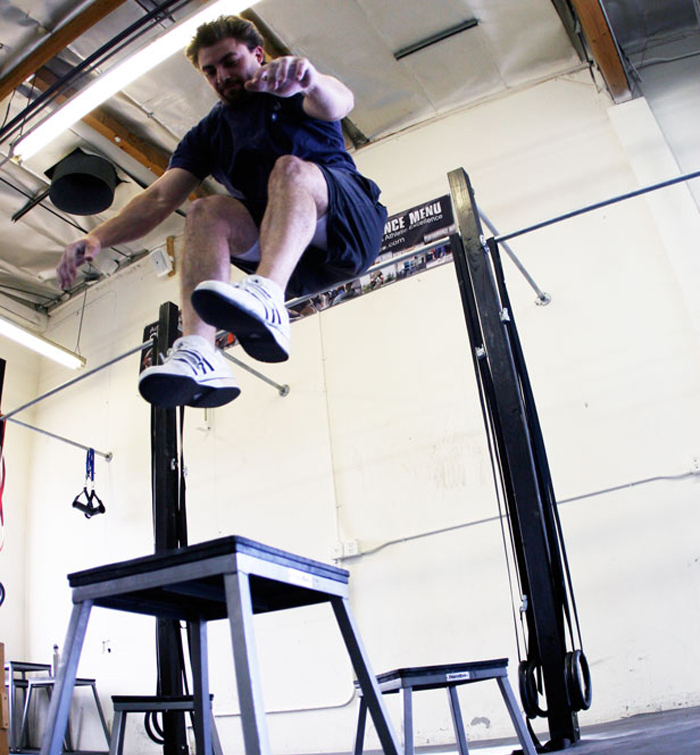
Sets: 3
Reps: 2-3
Rest: rest :10-:12 between reps and 90 seconds
Description: Stand in front of a sturdy box or platform. 1/4 squat down, then explode upward, landing softly on the box with both feet. Step down and repeat.
Sets: 3
Reps: 3-5
Rest: rest :10-:12 between reps and 90 seconds
Description: Stand on a box, step off, and upon landing, immediately jump as high as possible. Focus on minimizing ground contact time to develop reactive strength.
Sets: 3
Reps: 2-3
Rest: :10-:12 between reps and 90 seconds
Description: Stand with feet shoulder-width apart. Perform a powerful squat jump forward, aiming for maximum distance. Land softly and reset for the next jump.
Sets: 3
Reps: 3-4
Rest :10-:12 between reps and 90 seconds
Description: Hop forward on one leg, focusing on distance and height. Land softly and immediately bound forward again. Complete all reps on one leg before switching.
Sets: 3
Reps: 3-5
Rest: 90 seconds
Description: Stand with feet shoulder-width apart. Jump as high as possible, tucking your knees toward your chest at the peak of the jump. Land softly and reset.
Sets: 3
Reps: 3-5
Rest: 90 seconds
Description: Hold a medicine ball overhead. Explosively slam the ball into the ground, using your whole body. Pick up the ball and repeat.
Cool-Down (10 minutes):
Static Stretching: Hamstrings, quadriceps, calves, hip flexors
Foam Rolling: Focus on the legs and lower back to alleviate any tightness or soreness
Tips for Effective Plyometric Training
Quality Over Quantity: Focus on performing each rep with maximal effort and proper form rather than completing as many reps as possible.
Progress Gradually: Start with lower intensity plyometric exercises if you are new to this type of training and gradually progress to more advanced movements.
Adequate Rest: Ensure you get sufficient rest between sets to maintain high intensity for each exercise.
Listen to Your Body: If you feel any pain or excessive fatigue, stop the workout and assess your condition. Plyometric exercises are high-impact and can strain the joints if not performed correctly.
Integration with Olympic Lifting
Integrating plyometric training with Olympic lifting can significantly enhance your performance. Schedule your plyometric session on a day that allows for adequate recovery before and after your heavy lifting days. For example, if you perform heavy Olympic lifts on Monday and Thursday, schedule your plyometric session on Saturday.
Final thoughts
Incorporating a once-a-week plyometric session into your training regimen can dramatically improve your explosiveness and overall performance in Olympic lifts. By focusing on high-quality, explosive movements and ensuring proper recovery and technique, you can enhance your power output and lift heavier weights more effectively. Stay consistent with your training, listen to your body, and watch your performance in the snatch and clean and jerk reach new heights.
 Matt Shannon, Security Pro