Security Without the Pessimism | Capstone: The Human Architecture of Resilience

There’s a moment in every incident, and in every life, when things go sideways.
An urgent alert comes in at 2 a.m.
The phone buzzes with something you didn’t want to see.
The room suddenly feels smaller.
Your pulse skyrockets ahead of your ability to reason.

That’s the pivot point.

Not the breach, not the threat actor, not the malware strain. The moment your mind decides whether to rush, freeze, or breathe.

And if the past two decades in cybersecurity have taught us anything, it’s this: The most overlooked control isn’t technical at all — it’s the ability to think clearly under pressure.

You can build the best firewall on earth, layer your identity stack, and lock down every endpoint within reach. But if the wrong person panics at the wrong moment? Your architecture won’t crumble, but your response will.

And the irony is that the same pattern shows up everywhere.
In the gym.
In martial arts.
In American foreign policy across multiple generations.
In corporate culture.
In our personal lives.

Technology changes. Tools evolve.
But human behavior remains the battlefield.

This capstone is about that battlefield, the one beneath all the dashboards and diagrams.
The human architecture of resilience.

Not fear.
Not pessimism.
Not endless warnings.
Just clarity, culture, awareness, and depth.

I. The Calm Before the Click: Thinking Clearly Under Pressure

Cybersecurity professionals often discuss “root cause.”
The CVE.
The misconfig.
The missing patch.
The malicious link.

But if you trace incidents far enough back, you rarely find a purely technical failure.
You find someone who was tired.
Someone who rushed.
Someone is overloaded with tasks, tabs, or alerts.
Someone who clicked before the mind caught up.

Attackers have known this longer than we have.
Social engineering is, at its core, the psychological equivalent of an ambush.
It doesn’t rely on brilliance — it relies on rhythm.
Interrupt someone’s rhythm, and you can make them do almost anything.

History played the same game long before phishing emails existed.

During WWI, the U.S. population had no appetite for a European conflict until the Committee on Public Information mastered message engineering on a national scale.

During Vietnam, selective narratives were used to anchor the Gulf of Tonkin resolution, one of the clearest examples of how urgency overrides discernment.

After 9/11, emotional exhaustion and fear gave the green light to decisions that would shape two decades of conflict, including the push toward Iraq in 2003 on intelligence the government already knew was questionable at best.

The pattern is timeless: pressure → perception drops → people accept what they would normally question.

In cybersecurity, that’s the moment a breach begins. Not when the payload deploys, but the moment someone stops breathing long enough to see clearly.

Martial arts teach this early: when your structure collapses, so does your mind. The fight is rarely won by the strongest, but by the one who stays calm.

Cybersecurity isn’t so different. We need quieter minds, not louder alarms. Consider the Apollo 13 mission: when an oxygen tank exploded in space, it wasn’t advanced technology alone that saved the crew—it was the unwavering composure, clear communication, and problem-solving focus of both astronauts and mission control. Their story remains a testament to the power of preparation, training, and the human spirit under pressure.

Psychological research supports this need for balance: the Yerkes-Dodson Law demonstrates that while a certain level of stress can sharpen performance, too much leads to mistakes and paralysis. It’s not the loudest alarms or the highest stress that produce the best outcomes, but the ability to operate with steady focus under pressure.

II. Security Isn’t a Toolset. It’s a Culture.

This is the part vendors never put in their brochures.
Tools matter, of course they do, but they’re not the foundation.
If a team’s culture is fractured, fearful, or fatigued, the best tool becomes another dashboard no one trusts.

A culture of security is built on three traits: Curiosity. Communication. Psychological safety.

Curiosity is the click buffer. It’s the pause before the action. It’s the “does this feel right?” instinct that catches what technology misses.

Communication is the force multiplier. If people don’t feel comfortable asking questions, you don’t have a security program; you have a façade. The worst breaches happen in organizations where employees believe that reporting something suspicious will get them punished.

Psychological safety is the foundation beneath it all. You cannot build defense through fear.
If people feel judged, they go silent. And silence is where threat actors win.

Across American history, the same dynamic appears at scale. Governments that relied on controlling the narrative rather than fostering transparency created long-term instability.
Nations that punished dissent instead of listening to it made poorer decisions, walked into unnecessary conflicts, or ignored early warnings because no one felt safe raising them.

In cybersecurity, the equivalent is leadership that says: “If you click a bad link, come to us immediately, you’re part of the solution, not the problem.”

Culture isn’t a policy. Culture is what happens when no one is watching.

III. The Invisible Threat: Complacency

Complacency is the enemy that feels like a friend. It arrives quietly. It shows up after long stretches of “nothing happened.” It hides behind phrases like:

  • “We’ve never had an incident.”
  • “We’ve always done it this way.”
  • “Our tools would catch that.”

Every major breach you can name—SolarWinds, Equifax, Colonial Pipeline—roots itself in complacency somewhere: A missed update. An over-trusted vendor. An assumption that the environment was safer than it actually was. The 2013 Target data breach is a sobering example: multiple security alarms were triggered, but critical warnings were overlooked amidst noise and unclear processes. The failure wasn’t just technical—it was cultural and human. True resilience is built not on more tools, but on clear communication, shared responsibility, and organizational discipline.

There’s a parallel here, too, in public psychology. Before WWI, the U.S. believed oceans protected it.

Before the Vietnam War, we believed that superior technology guaranteed strategic clarity.
Before 9/11, we believed asymmetrical warfare couldn’t reach our shores.
Before the Iraq invasion, many believed intelligence agencies couldn’t be wrong.

Every time, familiarity dulled skepticism. Certainty replaced awareness.

Threat actors exploit the same weakness in cybersecurity: When we stop questioning our own assumptions, we hand them the keys.

But the solution isn’t paranoia. It’s presence—the discipline to stay aware without fear, engaged without burning out, and to use quiet periods to strengthen fundamentals rather than relax them.

Martial artists call this “maintaining the white belt mentality.” It’s the idea that no matter how skilled you become, your awareness must remain humble. The strike you don’t see coming isn’t the strongest; it’s the one you assumed wouldn’t land.

IV. Defense in Depth Begins With Humans in Depth

Defense in depth is usually presented as a diagram: Layers. Controls. Policies. Logging. Detection.

But the deepest layer is always the human beings behind the console.

Humans who communicate clearly under pressure.
Humans who don’t panic.
Humans who collaborate instead of silo.
Humans who maintain integrity even when no one is watching.

You can’t automate those traits.
You can only cultivate them.

A resilient team has depth:
Depth of character.
Depth of discipline.
Depth of humility.
Depth of trust.

Leadership plays a massive role here.
A leader who panics creates a cascading failure.
A leader who hides incidents creates blind spots.
A leader who blames creates avoidance.

But a leader who stays calm?
A leader who listens?
A leader who respects the intelligence of their team?

That kind of leadership becomes its own security layer, the kind attackers can’t penetrate.

Martial philosophy applies here beautifully:
The master doesn’t fight everything.
The master knows when not to fight.
The master conserves energy, maintains structure, and remains sufficiently present to move precisely when needed.

That’s cybersecurity at its best. Not a flurry of tools or panic-driven responses. But steady awareness, grounded action, and a team that trusts itself. The response to the Stuxnet worm demonstrated the power of multidisciplinary collaboration: security researchers, government agencies, and private-sector teams worked together to analyze, share intelligence, and adapt rapidly. Their coordinated effort underscores that no single individual or technology has all the answers—resilience is a collective achievement.

V. The Four Pillars of Real Resilience

Looking back across this entire series, four fundamentals keep appearing.

1. Calm

The ability to breathe before acting. Security begins in the mind, not the machine.

2. Culture

Tools help. Culture protects. Culture catches what software can’t.

3. Awareness

Not paranoia, presence. The discipline to question, verify, and stay awake to the world around you.

4. Depth

Technical depth is valuable. Human depth is irreplaceable. Depth fuels resilience in every domain: networks, clouds, teams, and nations.

These aren’t pessimistic ideas. These are empowering ideas. They’re principles that make security feel less like fear and more like clarity.

Threat actors depend on confusion. They depend on fatigue. They depend on people who doubt their instincts.

A calm mind. A strong culture. A present awareness. A deep team.

That’s how you win. Not loudly, but with consistency.

VI. Final Thought: Security Is a Human Practice Before It’s a Technical One

If there’s a thesis to Security Without the Pessimism, it’s this:

Security isn’t something we bolt onto systems. It’s something we build into ourselves.

The work isn’t glamorous or cinematic. It’s often quiet, slow, and unrecognized.

But it matters, because every decision and moment of awareness contributes to something bigger than any one of us—a culture of resilience.

So here’s the takeaway: You don’t need pessimism to stay secure. You just need presence.
You need clarity and people who care enough to pause, communicate, and stay humble.

That’s the foundation of a safer digital world, built one calm, aware, disciplined human at a time.
Security Without the Pessimism: Cyber Hygiene, The Daily Routine You Actually Need

The Myth of the “Security Checklist”

If you believed every cybersecurity headline, you’d think staying safe online takes a PhD, three apps, and a daily ritual in front of your firewall.

The security industry profits from this complexity. Vendors want you to believe that protection requires their latest tool, their proprietary solution, their 27-step implementation guide. More complexity means more products to sell.

But real security doesn’t look like that. It’s not about chasing every threat or memorizing every acronym. It’s about simple, repeatable habits. It’s the digital version of brushing your teeth.

Here’s the truth they don’t want you to hear: You don’t need to do everything. You just need to do the right things, consistently.

That’s cyber hygiene. And it’s boring on purpose.

The Habits That Actually Matter

Most people already know the broad strokes: use strong passwords, update software, don’t click weird links.

But here’s what actually moves the needle:

  • Multi-Factor Authentication (MFA). Still, the single best defense against credential theft.
  • Software updates. Patches close the doors that attackers love to walk through.
  • Password managers. Better one secure vault than 20 weak logins.
  • Backups. One local, one in the cloud, test them once in a while.
  • Device lock and encryption. Lost phones shouldn’t equal lost data.

That’s it. No mystery. No 27-step plan. Just a few habits that, when done daily, make 95% of attacks irrelevant.

In 2017, Equifax was breached because they didn’t patch a known vulnerability for two months. 147 million records compromised. The fix? A software update they already knew about. That’s not sophisticated hacking, that’s skipped hygiene at a catastrophic scale.

The basics aren’t basic because they’re easy to remember. They’re basic because when you skip them, everything else fails.

Why We Skip Simple Stuff

It’s not that people don’t know what to do. It’s that security doesn’t feel urgent until it’s too late.

You don’t see or feel the benefits of good hygiene, but you definitely avoid the pain of neglect. No one cheers when you floss. But everyone will notice that broccoli in your teeth if you don’t.

But there’s more to it than just invisible benefits. Three psychological forces work against cyber hygiene:

Optimism bias. “It won’t happen to me” is a powerful drug. You read about breaches happening to other people, other companies, other industries. Your brain quietly files those stories under “someone else’s problem.” Until it isn’t.

Decision fatigue. You have 47 accounts, each with different password requirements, different MFA setups, and different update schedules. The sheer volume of security decisions creates paralysis. So you do nothing, or you take shortcuts, the same password everywhere, “remind me later” on every update.

The invisible threat problem. You can see a locked door. You can’t see a botnet probing your network. Physical security has visual feedback like locks, gates, cameras. Digital security is abstract until the moment it fails catastrophically. And by then, it’s too late.

Cyber hygiene fails for the same reason flossing does: it’s easy to skip, hard to see the benefit, and the consequences feel distant. But unlike cavities, breaches don’t announce themselves with pain. They’re silent, patient, and devastating.

The trick is to make it small enough that you’ll actually do it, and easy enough that you won’t skip it.

Where Good Intentions Break Down

Even security-conscious folks sometimes miss the basics. Not because they’re careless, but because these gaps accumulate slowly, invisibly:

Outdated hardware. That router you set up five years ago? It stopped receiving security patches three years ago. Old devices become permanent vulnerabilities.

Shadow data. Files saved “temporarily” on random drives, USB sticks, or that personal Dropbox you forgot you created. Every copy is another attack surface.

Forgotten accounts. That forum you joined in 2014. That trial subscription you never canceled. Dormant logins are open doors with your email and password sitting in some leaked database.

Public Wi-Fi comfort. You use a VPN at the airport but not at the coffee shop. Inconsistent protection is predictable behavior and attackers love predictability.

You don’t have to fix everything today. Just start closing one gap at a time. Audit your accounts quarterly. Replace hardware that can’t be updated. Consolidate your data.

Security isn’t perfection. It’s progress. And progress happens one boring habit at a time.

Think of it this way: cyber hygiene is like compound interest, make small deposits now, get massive protection later. Skip the deposits, and you’re borrowing against a future breach.

Make Security Boring (That’s the Point)

The goal isn’t to turn security into a project, it’s to make it routine. Boring. Automatic. The kind of thing you do without thinking, like locking your car.

Here’s a weekly checklist that actually sticks:

  • Monday: Check updates and patches. Five minutes. Coffee in hand. Start the week secure.
  • Wednesday: Backup your files. Set it, forget it, verify it works.
  • Friday: Review new apps or accounts, prune what you don’t use. Close the week by closing gaps.

That’s 10 minutes a week. Three touchpoints. No drama. No heroics.

If you can manage that, you’re already ahead of most organizations. Not because you’re doing something extraordinary because you’re doing something sustainable.

Security should be quiet. The less you think about it, the better it’s working. The moment it becomes a production, it becomes optional.

Culture Over Blame, Turning Awareness Into Habit

People don’t need more fear. They need better routines.

I’ve seen teams transform their security posture not through mandates, but through modeling. One security lead I worked with started every Monday standup by sharing what he patched over the weekend, not as a flex, just as routine. Within a month, the team was comparing notes on password managers and backup strategies. Security became a shared practice, not a compliance checkbox.

Encourage coworkers, friends, or family to treat digital hygiene like health hygiene, it’s a shared standard, not a personal burden. When one person in a household sets up MFA, others notice. When a team lead mentions their weekly backup routine, it normalizes the behavior.

When leaders model small, consistent habits, teams follow. Security doesn’t start in policy documents; it begins in daily rhythm. And rhythm spreads.

Make it normal. Make it boring. Make it easy.

Final Thought

Cyber hygiene isn’t glamorous, but it’s the backbone of every good security posture.
You don’t need to understand encryption or chase every breach headline.
You just need to do the basics, on time, every time.

The security industry wants you to believe protection is complicated because complexity sells. But the truth is simpler and cheaper: consistent habits beat expensive tools every time.

Prevention doesn’t shout. It just works.

That’s not pessimism, that’s just daily discipline. And it’s boring, and effective, on purpose.

Security Without the Pessimism: The VPN Comfort Myth

The Digital Blanket We All Love

Few tools in cybersecurity inspire more misplaced comfort than the VPN.

We picture it as an invisibility cloak or a tunnel of safety where no one can see us, track us, or touch our data. Turn it on, and suddenly you’re “secure.”

That feeling of control is powerful, especially in a world that never stops reminding you how unsafe the internet supposedly is.

But here’s the quiet truth: a VPN protects you from some things, not from everything.
It’s a tool, not a shield.

What VPNs Actually Do

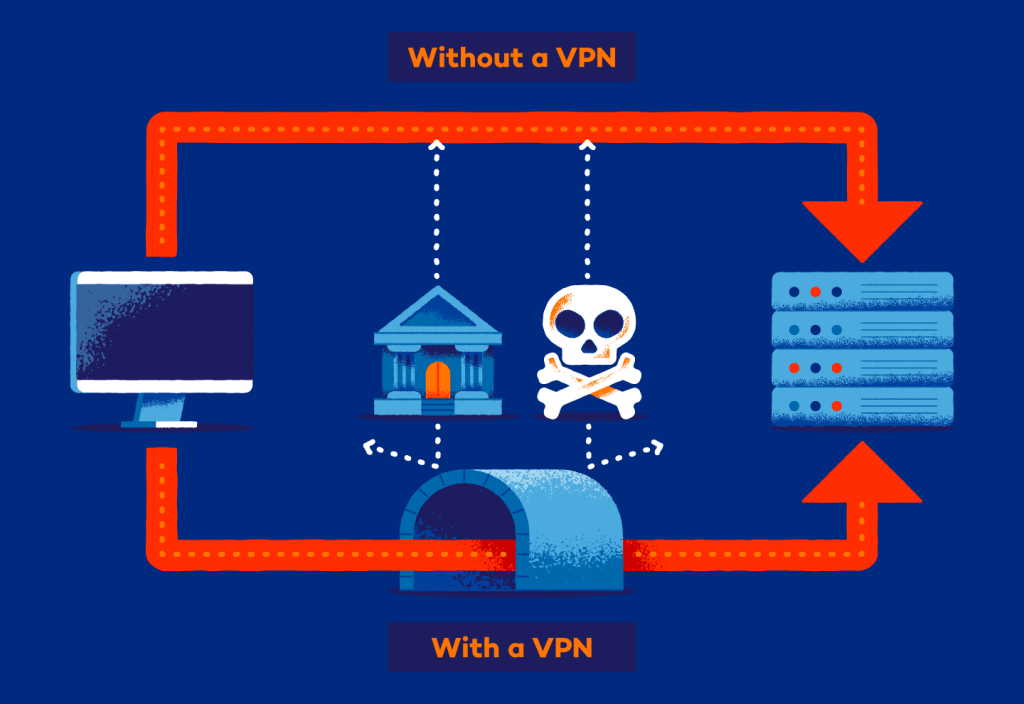
At its core, a VPN (Virtual Private Network) encrypts your internet traffic and routes it through a secure server. It hides your IP address and protects your data from casual snooping, especially on public Wi-Fi.

That’s useful, but not magic.

VPNs do not:

  • Protect you from phishing or malware
  • Stop you from logging into fake sites
  • Prevent data collection once you’re signed in somewhere

If your VPN provider keeps logs or has weak security, your trust shifts from the ISP to them.

So yes, a VPN helps. But only if you understand where its power ends.

Safety Theater for the Digital Age

VPNs scratch a deep psychological itch: the need to feel safe, even when we can’t verify it.

They’re the digital equivalent of locking your front door but leaving the windows open, a visible act that soothes anxiety without addressing every risk.

That invincibility leads many to take more risks online. This risk compensation means perceived safety can spark riskier behavior.

Real security isn’t about hiding. It’s about awareness.

Where Comfort Becomes Complacency

The most significant problems with VPN use aren’t technical; they’re behavioral.

  • Blind trust in providers. Some “free” VPNs monetize your data rather than protect it.
  • Performance trade-offs. Slower speeds lead people to disable it, often forgetting to turn it back on.
  • Assumed anonymity. Logging into your personal accounts still links behavior to identity.
  • Neglected basics. Users skip updates or MFA because “I’ve got a VPN.”

The tool becomes a crutch, and that comfort can cost you more than the subscription.

Layer, Don’t Lean

A VPN should be part of a layered defense, not its foundation.

Here’s how to use it wisely:

  • Choose providers with no-log policies and independent audits
  • Keep software updated. VPNs rely on encryption protocols that age fast
  • Use MFA everywhere. A VPN won’t save a stolen password
  • Understand context. VPNs are best for travel, remote work, and untrusted networks — not daily browsing at home

Security isn’t about hiding behind one tool. It’s about stacking the right ones.

Culture Over Blame — Moving Past Security Myths

The VPN story mirrors how we approach most security advice: quick fixes over long habits.

Instead of mocking people for misunderstanding what VPNs do, we can use that comfort as a bridge: “Good start. Now let’s talk about the rest.”

Awareness grows when education feels empowering rather than condescending. The goal isn’t to shame people for feeling safe; it’s to help them feel safe for the right reasons.

Final Thought

A VPN isn’t a vault; it’s just a smaller door to the same big house. Use it, respect it, but don’t mistake a single layer for complete protection.

Real protection isn’t invisible. It’s intentional. That’s not pessimism, that’s just good sense.

Security Without the Skepticism: Password Managers – Modern-Day Trust Issues in a Zero-Trust World


Trusting the One Tool Rule Them All

Cybersecurity presents a paradox: we are taught to be wary of everyone online, yet we’re expected to trust one application with all our passwords.

That’s a BIG ask.

Password managers claim to offer both convenience and security. They eliminate the need for sticky notes, memory tricks, and risky repeated logins. Yet, handing over the credentials to your digital life may feel risky, as if you’re leaving your house key under someone else’s doormat.

Even people who are good with technology feel this hesitation. Trusting one place with everything can seem like putting all your eggs in one basket.

How Password Managers Actually Work

At their best, password managers create a secure vault for your passwords. This vault is protected by a master password that only you know.

They use zero-knowledge encryption, so even the company that stores your vault cannot see your data.

That’s how it’s supposed to work. In reality, people hesitate because of things like:

  • High-profile breaches (e.g., LastPass, 2022)
  • Syncing fears (“What if my vault gets intercepted?”)
  • Human error (“What if I forget my master password?”)

Even though the underlying technology is strong, public trust wavers each time a major breach is reported. People remember negative headlines more than encryption details.

Control vs. Convenience

Using a password manager isn’t just a technical choice; it’s also a psychological one.

Humans like to be in control, especially when it comes to security. We equate manual effort with safety. Typing passwords ourselves feels safer than letting software do it, even when we know the software is objectively smarter than we are.

However, for many, convenience ultimately prevails: after trying a password manager, the newfound ease often surpasses early distrust.

This dynamic shows that modern security requires balance: people want independence, but security improves with some delegation to trusted tools.

When Trust Breaks Down

No password manager is immune to risk, but relying on weaker alternatives such as reused passwords or predictable patterns leaves you even more vulnerable. Minimizing trust is about minimizing risk, not eliminating it.

If a vault provider is breached, attackers still face encryption. But if you reuse one password across five sites, there’s no barrier at all.

So, it’s less about trusting the tool absolutely, and more about managing where that trust sits:

  • Choose providers with open security audits.
  • Enable MFA on your vault.
  • Keep the master password offline, not saved, not synced.

The core issue isn’t the tool itself, but the risk of blind faith. Sometimes, people subconsciously seek blind faith from such tools.

Zero-Trust Starts with You

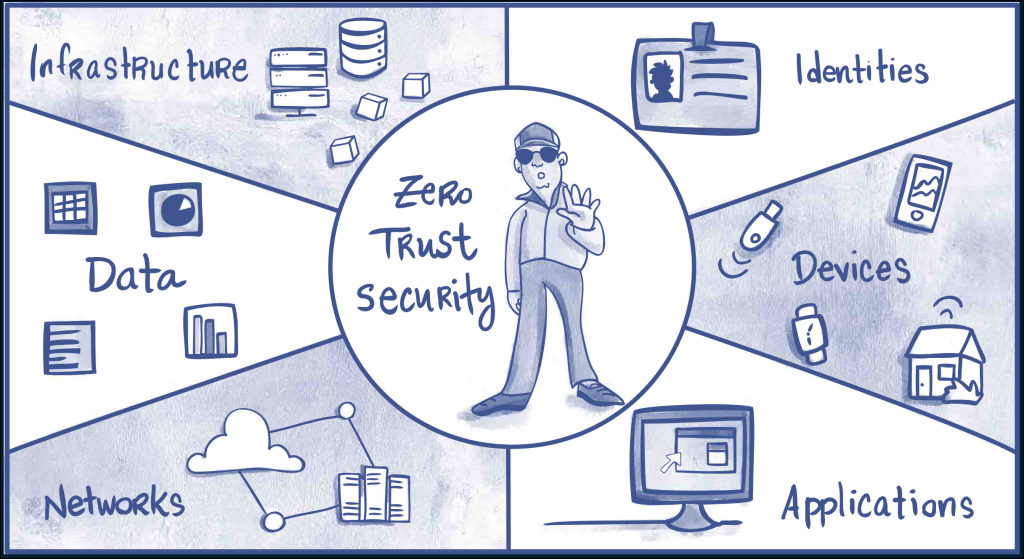
Zero-trust isn’t just a corporate buzzword; it’s a mindset. Assume every system can fail. Build layers so failures aren’t fatal.

For password managers, apply zero-trust this way:

  • Separate critical credentials (server logins, service accounts, etc.) from general logins.
  • Regularly export and back up encrypted copies to an offline location.
  • Keep MFA active everywhere.

Aim for persistence and resilience, not perfection.

Culture Over Blame

We often criticize people for using sticky notes, but we don’t always show them better ways.

Security maturity grows when using a password manager feels normal, not nerdy. Encourage colleagues and family to use them and to question them. Healthy skepticism keeps systems honest.

A culture of curiosity always beats compliance.

Final Thought

Zero-trust is about choosing where to place your trust, not avoiding it altogether. Good judgment is at the heart of modern security.

Password managers aren’t a magic fix. They’re just one important layer of security, and they work well if you stay alert.

In the end, good security comes from making careful, informed choices about trust, not just believing in technology without question.

That’s not being skeptical, that’s working to overcome modern-day trust issues in a zero-trust world.

Security Without the Pessimism: Phishing 2.0 – How Smart People Still Get Hooked

When Experience Becomes the Blind Spot

You’ve been in tech long enough to spot the obvious scams. They have bad grammar, sketchy links, and the “urgent” password resets that scream, “It’s a trap.”

Modern phishing is designed for experienced professionals, people just like you.

The senior engineer who knows better.
The manager who moves fast.
The admin is juggling too many tabs.

Phishing 2.0 targets the confident, not the naive.

Because overconfidence, that quiet, “I’d never fall for that,” is exactly what gets exploited.

How Phishing Evolved While We Were Busy

Old-school phishing was obvious: typos, weird logos, fake banks. Now? It’s clean, professional, and personalized.

Attackers scrape LinkedIn, GitHub, and Slack leaks, as well as any other platform where they can learn who you are and how you communicate. Then they build emails that sound right.

“Following up on that architecture review.”
“Can you sign off on the AWS access request?”

No panic. No red flags. Just believable context. Phishing’s power now lies in familiarity, not just deception.

The Psychology And Why Smart People Click Anyway

It’s not ignorance. It’s pattern recognition. Your brain runs on shortcuts. You see what fits your norm and fill in the rest. “This feels familiar, so it’s safe.”

Layer on fatigue, distraction, or context switching, and even the most security-conscious person can click the wrong thing.

Attackers don’t need to outsmart you, they just need to catch you mid-scroll.

The Real Tricks How Phishers Use Your Own Systems Against You

Phishing 2.0 thrives inside your workflow:

  • Cloud notifications: “New file shared with you.”
  • Team apps: Slack, Notion, or Asana lookalikes.
  • Vendor portals and HR systems: identical clones.
  • QR codes: the new “scan to verify” scam.

Attackers don’t mimic strangers anymore; they mimic your routine.

The antidote, and our greatest protection, is patience.

Forget fear. Focus on tempo.

Build a habit of thinking first, then reacting. Believe me, I know it sounds elementary and maybe even silly, but people do it every day. It reminds me of the old saying from the range: “ready, fire, aim” versus “ready, aim, fire.” People are often too quick to react without pausing to think first.

That moment of pause between seeing and clicking is what saves the enterprise. So, always:

  • Hover first. Always.
  • Verify context: Does it match your current workflow?
  • Cross-check by text or chat before responding.
  • Trust your instinct; hesitation usually means something’s off.

Security isn’t about paranoia. It’s about building patience as your strongest defense.

Culture Over Blame

Curiosity beats compliance. Blaming users for falling for a phishing attempt isn’t awareness training or good security; it’s just scapegoating. People click because they’re human, not because they don’t care.

If your environment rewards speed over care, mistakes are inevitable. Instead of punishment, build openness to conversation. A strong security culture treats “I think I clicked something bad” as a start, not a sin.

Curiosity beats complacency every time.

Final Thought

Phishing 2.0 isn’t just a tech problem; it’s a problem of pace. Attackers take advantage of our work tempo. The faster we move, the easier it is to miss what matters.

The best security upgrade?

Breathe. Scan well. Challenge every unfamiliar link or request. Pause before you click, verify before you act, and encourage your team to do the same.

That’s not being cynical or pessimistic.
That’s the difference: real security means trained, patient awareness every day.

The Art of Cyberwar | Part III | Attack by Stratagem

The principle:
If you know the enemy and know yourself, you need not fear the result of a hundred battles.  Sun Tzu – Chapter III

the golden era

Strategy vs. Stratagem

A strategy is designed for longevity, while a stratagem addresses immediate challenges. Strategy anticipates years ahead to foster resilience. Stratagem focuses on the next breach, exploit, or distraction.

Within cybersecurity, strategy encompasses architectural design, layered controls, validated incident response plans, and a culture prepared to act decisively during crises. Stratagem represents the attacker’s tools, such as persuasive emails, covert code injections, or precisely timed physical penetration tests.

Both approaches are powerful, yet each possesses inherent limitations.

The Modern Battlefield: Fluid and Fractured

The threat landscape evolves continuously. Traditional boundaries are replaced by cloud environments, API vulnerabilities, and interconnected third-party networks. Security architects must prioritize adaptability and fluidity over static defenses to effectively mitigate risks.

Zero Trust principles, continuous validation, and integrated security practices throughout the development lifecycle enable proactive identification and mitigation of vulnerabilities prior to production deployment. In an environment where compromise is presumed and rapid response is critical, these measures are indispensable.

Effective defenders adopt a proactive stance. They anticipate adversary actions, analyze behavioral patterns, and design systems to adapt under attack rather than fail.

Attack by Stratagem: The Psychology of Exploitation

Major breaches often originate through psychological manipulation rather than technical flaws. Techniques such as phishing, vishing, and deepfakes exploit cognitive vulnerabilities to diminish user awareness. This approach mirrors historical propaganda methods, where controlling perception leads to controlling behavior.

While governments previously leveraged headlines and radio broadcasts, contemporary attackers exploit digital interfaces such as login pages and hyperlinks. Both strategies depend on user fatigue, habitual behavior, and misplaced trust. If users believe a fraudulent login page is legitimate, they inadvertently compromise security.

Similarly, if citizens equate fear with patriotism, they may relinquish critical judgment in favor of perceived safety. As Ben Franklin observed, individuals who prioritize temporary safety over essential liberty may ultimately forfeit both: “Those who would give up essential Liberty, to purchase a little temporary Safety, deserve neither Liberty nor Safety.

This tactic operates effectively across a spectrum, from individual email inboxes to broader ideological movements.

The Architecture of Awareness

A resilient security architecture reflects the characteristics of an aware and vigilant mindset.

Network segmentation limits the blast radius. Application hardening predicts misuse before it happens.

Firewalls and Security Information and Event Management (SIEM) systems provide the critical, irreplaceable resource of time.

Knowing your environment is knowing yourself.

Without a thorough understanding of all dependencies, exposures, and behavioral patterns, it is impossible to detect significant changes or anomalies. The same principle applies at the national level: when societies cease to critically evaluate their narratives, division and deception proliferate with ease.

Propaganda Built Into the Code

James Montgomery Flagg, I Want You for U.S. Army, 1917, collection of Chip and Carrie Robertson, photo by Robert Wedemeyer
James Montgomery Flagg, I Want You for U.S. Army, 1917, collection of Chip and Carrie Robertson, photo by Robert Wedemeyer

From Woodrow Wilson’s Committee on Public Information to the televised theater of Desert Storm, America learned how framing shapes belief.

Attackers apply similar principles, constructing their deceptive tactics by exploiting established trust.

Deceptive login pages replicate corporate portals, ransomware communications adopt professional language, and deepfakes are crafted to appear and sound authentic.

The primary threat is not the attack itself, but the absence of awareness regarding potential dangers. Stratagem prevails when critical scrutiny is abandoned.

Reverse Engineering the Present

Post-incident analyses consistently reveal that warning signals were present before breaches. Although alerts, logs, and telemetry data were available, they did not translate into actionable understanding.

Visibility does not equate to genuine situational awareness.

Historical events reinforce this observation.

The United States has engaged in conflicts based on incomplete or inaccurate information, often mistaking perception for certainty.

In both cybersecurity and geopolitics, failure frequently results from conflating raw data with meaningful insight.

Understanding adversaries requires effective intelligence gathering, including threat hunting, reconnaissance, and red-team exercises.

Self-awareness in cybersecurity necessitates discipline, such as maintaining asset visibility, ensuring policy integrity, and sustaining composure during operations.

A deficiency in either area enables adversarial stratagems to succeed.

The Quiet Defense

The most robust networks, analogous to resilient individuals, operate discreetly.
They do not engage in ostentatious displays; instead, they maintain a constant state of preparedness.

Their resilience is embedded within their structural design rather than expressed through rhetoric.

Authentic resilience does not stem from more active dashboards or faster technical tools. Resilience is rooted in organizational culture, situational awareness, and a humble approach. It is defined by the ability to learn, adapt, and respond more rapidly than emerging threats.

Cybersecurity, akin to statecraft, is a continuous endeavor to prevent breaches. Success is achieved not by engaging in every conflict, but by anticipating and neutralizing threats before they materialize, thereby securing victory without ever having to fight. Bringing us full circle back to understanding the fundamental nature of the original principle: If you know the enemy and know yourself, you need not fear the result of a hundred battles.

Security Without Pessimism: Why “Just One Click” Can Still Break Everything

The Myth of the Harmless Click
It’s late on a Friday afternoon. You’ve taken back-to-back phone calls, your inbox is overflowing, and your caffeine is slowly but surely fading. Then comes one last email. It’s something from HR about a new hire policy update.

You click, skim, and move on.

Five minutes later, that “harmless” click starts a slow-motion domino fall. Credentials harvested, tokens stolen, access expanding, all before you’ve even closed your laptop.

People think, “It was just one click.”
That’s the point. It only ever takes one.

The Domino Effect
Here’s what happens after that moment most people never see.

That fake login page doesn’t just steal your password, it grabs your session cookies, mimics your device fingerprint, and jumps the line of trust. Suddenly, it’s you logging in from a new location, sending a file, approving an invoice.

Once inside, attackers don’t move fast. They move quietly. They study your company like a playbook, structure, tone, and approval chains. The next email they send looks even more real because it’s built with your real data.

By the time anyone notices, the damage has often been done for days.

But why do we fall for it? The answer isn’t carelessness—it’s psychology.

The Psychology of the Click
No one falls for this because they’re careless. They fall because they’re human.

Attackers know when we don’t double-check: near quitting time, maybe when you’re experiencing that post-lunch carb crash, or when you’re in a rush to make that 9am meeting. All of those moments when we see what we expect to see. They don’t need to hack your brain, they simply nudge it the right way.

Speed, familiarity, and trust are their sharpest weapons, which is why “training” alone doesn’t solve the problem. Awareness isn’t a habit. The mind knows better, but the hand clicks first.

How Attackers Exploit Normalcy
Modern phishing doesn’t seem sketchy; it seems routine.

They copy internal phrasing, familiar names, work to perfect internal branding. The trick isn’t panic anymore, it’s comfort and familiarity.

Common triggers:

  • “Quick update before the weekend.”
  • “Need approval by end of day” or “close of business.”
  • “Can you confirm this invoice?”

Nothing dramatic. That’s the point. The hook isn’t fear, it’s familiarity.

How to Build a Click Buffer
You can’t eliminate every threat, but you can slow the chain reaction.

Build a Click Buffer. Think of it as a two-second pause that keeps good habits automatic:

  • Hover before you click. Make it reflex.
  • Check the sender domain. If it looks almost right, it’s wrong.
  • Stop treating “urgent” as a priority. Urgency is a tactic, not truth.
  • Ask IT. They’d rather you check 100 false alarms than clean up one breach.

A brief pause can equal a big payoff. Security starts with seconds, not software.

Culture Over Blame
Here’s where most companies stumble: they turn mistakes into shame. Someone clicks a bad link, and suddenly they’re the subject of the next slide in “staff security awareness training.”

That doesn’t build security, it builds silence.

A healthy culture rewards curiosity. If people feel safe saying, “Hey, I think I messed up,” the damage stops faster, every time.

You can’t stop every click. However, you can build a team that identifies, shares, and learns from mistakes before they spiral out of control.

Final Thought
The real security upgrade isn’t another tool or rule to apply, it’s simply learning to breathe and take a little extra time to pause before you click.

  • One breath before the click. One second to hover over the link.
  • One habit that keeps the rest intact.
  • That’s not fearmongering.
  • That’s just good hygiene.

If you found this helpful, please share it with your team or reflect on your own scanning and clicking habits. Security is a team effort and every small pause makes a difference.