Hypertrophy Phase for Building Strength in the High Bar Back Squat

Here’s a sample 8-Week Hypertrophy Phase for Building Strength in the High Bar Back Squat.
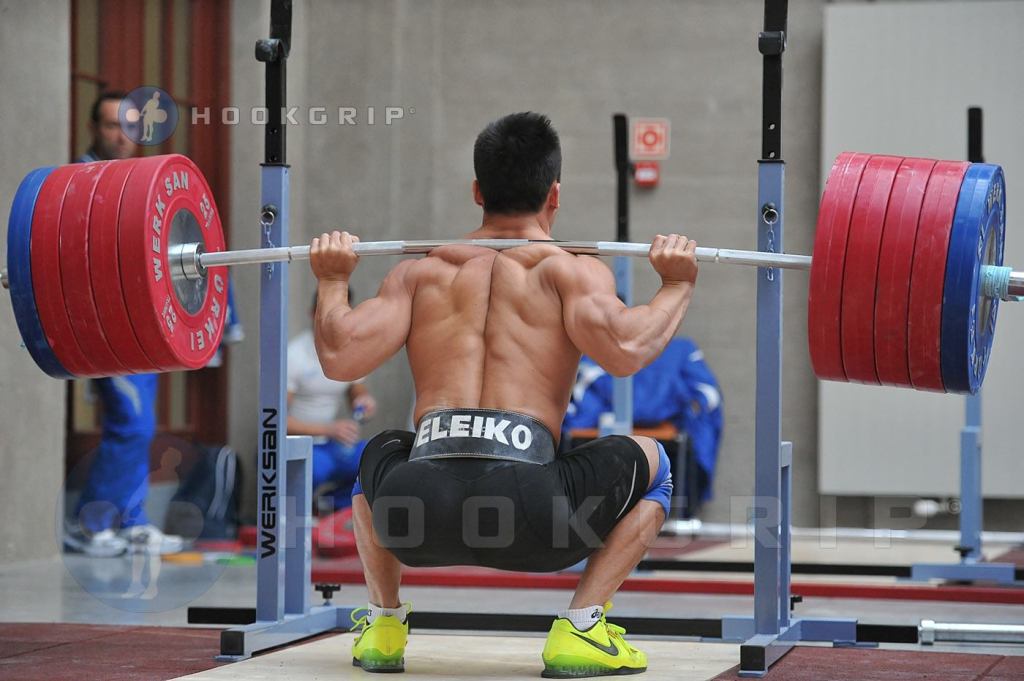
The high bar back squat is a foundational exercise for developing leg strength, power, and muscle hypertrophy. This 8-week hypertrophy program focuses on squatting twice a week, with an emphasis on high-repetition sets in the 15-20 rep range to stimulate muscle growth. Complementary accessory exercises, proper recovery, and nutrition are also crucial for maximizing gains during this phase.
Program Overview
The 8-week hypertrophy phase is divided into two 4-week blocks. Each block progressively increases the intensity and volume of your workouts to optimize muscle growth and strength. The program includes two squat sessions per week, supplemented with accessory exercises to target supporting muscle groups and ensure balanced development.

Week 1-4: Volume Accumulation

Focus: Build a foundation of muscle mass and muscle endurance.

  • Rep Range: 15-20 reps
  • Intensity: 50-60% of 1RM
  • Frequency: Twice per week

Week 5-8: Intensification

Focus: Increase intensity, maintaining high volume, and technical proficiency.

  • Rep Range: 12-15 reps
  • Intensity: 60-70% of 1RM
  • Frequency: Twice per week

Weekly Training Schedule

– Monday: High Bar Back Squat Focus

  • High Bar Back Squat: 4 sets of 15-20 reps
  • Romanian Deadlifts: 3 sets of 15-20 reps
  • Bulgarian Split Squats: 3 sets of 15-20 reps per leg
  • Front Foot Elevates Split Squat (FFESS): 3 sets of 20 reps – 10 per leg
  • Single leg, body weight calf raises: 3 sets of 20-25 reps

– Thursday: High Bar Back Squat Focus

  • High Bar Back Squat: 4 sets of 15-20 reps
  • Walking Lunges: 3 sets of 15-20 reps per leg
  • Front Squats: 3 sets of 10 reps at 40-50%
  • Frog Pumps: 3 sets of 15-20 reps
  • Tib Raises: 3 sets of 30 reps

Week 5-8 Adjustments

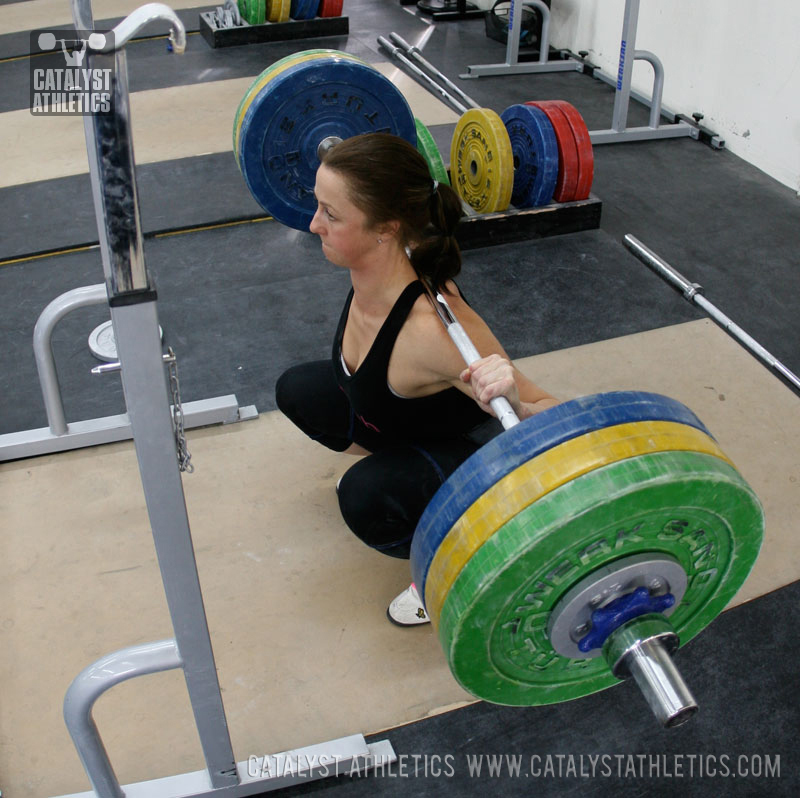
As you progress into the second block, increase the intensity by raising the weight and slightly lowering the rep range to 12-15 reps per set while maintaining the same structure and exercise selection.

Monday: High Bar Focus

  • High Bar Back Squat: 4 sets of 12-15 reps
  • Romanian Deadlifts: 3 sets of 12-15 reps
  • FFESS: 3 sets of 12-15 reps per leg
  • Reverse Hyper: 3 sets of 12-15 reps
  • Single leg, body weight calf raises: 3 sets of 15-20 reps
Thursday: High Bar Focus

  • High Bar Back Squat: 4 sets of 12-15 reps
  • Walking Lunges: 3 sets of 12-15 reps per leg
  • Front Squats: 3 sets of 10 reps at 40-50%
  • Frog Pumps: 3 sets of 15-20 reps
  • Tib Raises: 3 sets of 15-20 reps

Recovery and Nutrition: Prioritizing recovery and proper nutrition is crucial for maximizing gains during the hypertrophy phase:

Sleep: The NUMBER 1 thing you can fix to see increases in the gym — adequate rest and recovery! Aim for 7-9 hours of quality sleep each night to support muscle recovery and growth.

Nutrition:

Protein: Consume 1.6-2.2 grams of protein per kg of body weight daily to support muscle repair.

Carbohydrates: Ensure adequate carbohydrate intake to fuel workouts and replenish glycogen stores. Include complex carbs like whole grains, fruits, and vegetables.

Healthy Fats: Incorporate healthy fats from sources like avocados, nuts, seeds, and olive oil to support overall health and hormone production.

Hydration: Stay well-hydrated to maintain performance and facilitate recovery.

Active Recovery: Incorporate intensity work on such as MAP 10 training, walking, kayaking, yoga, or stretching on rest days to promote blood flow and reduce muscle soreness.

Monitoring Your Progress: Tracking your progress is essential for adjusting your program and ensuring continuous improvement:

Training Log: Record your workouts, including weights used, sets, reps, and any relevant notes on how you felt during each session.

Regular Testing: Periodically test your 1RM to gauge strength improvements and adjust training intensities accordingly. I’d suggest testing your 1RM every 3 to 4 months.

Adjustments: Based on your progress and recovery, modify variables such as intensity, volume, and exercise selection to avoid plateaus and continue making gains.

Final Thoughts:

An 8-week hypertrophy phase focused on the high bar back squat can significantly enhance your leg strength and muscle mass. By incorporating a structured training program that emphasizes high-repetition sets, prioritizing recovery and nutrition, and monitoring your progress, you can achieve substantial gains in your squat performance and overall strength. Stay consistent, maintain proper form, and adjust your program as needed to continue progressing towards your strength and hypertrophy goals.

Always remember, quality of reps over quantity of reps!
The Best Way to Perform a High Bar Back Squat and Enhancing Your Clean

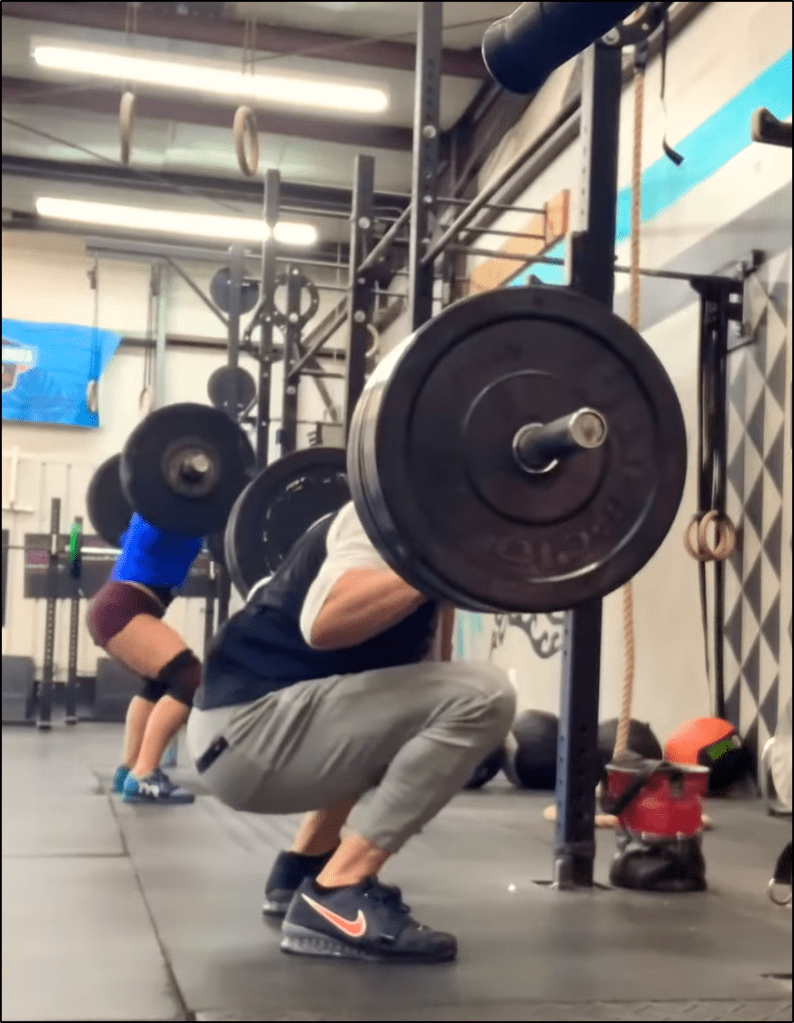
The high bar back squat is not only a fundamental exercise for building lower body strength but also an essential component for improving Olympic lifts, particularly the clean. By performing the high bar back squat correctly, you can significantly enhance your clean technique and performance. Here’s a step-by-step guide to mastering this powerful movement, along with insights on how it translates to a better clean.

Setup and Overall Positioning

  1. Bar Placement — place the barbell on the upper traps, just below the base of your neck. It should rest comfortably and not cause any pinching or discomfort.
  2. Grip — Grip the bar slightly wider than shoulder-width. Keep your hands and wrists straight, not bent. Squeeze your shoulder blades together to create a stable shelf for the bar.
  3. Foot Placement — foot placement is key. Stand with your feet shoulder-width apart. Your toes should point slightly outward, roughly at a 15-30 degree angle. This allows for better knee tracking, balance and feeling comfortable as you descend in the squat movement itself.
  4. Bracing and Unracking
    Bracing — Take a deep breath into your belly, not your chest. This helps create intra-abdominal pressure to support your spine. Brace your core as if you’re preparing to get punched in the stomach.
  5. Unracking: Stand up tall to lift the bar off the rack. Take a step back, ensuring you have enough space to squat without hitting the rack.
  6. The Descent — Initiate the Movement: Begin by pushing your hips back slightly, then bend your knees. Think about sitting down rather than straight down. Keep your chest up and eyes forward to maintain a neutral spine.
  7. Depth — Squat down until you feel your hamstrings on the back of your calves. Or, at least squat down far enough where your hip crease is below parallel to your knee joint. The best knee position is when your knees track inline and pass over your toes throughout the descent. Avoid letting them cave inward by actively pressing ‘knees out.’
  8. The Drive UP — Push through your entire foot, not just your heels. Engage your quads, glutes, and hamstrings to drive the weight upward.
  9. Hip and Chest Position — Keep your chest up and your hips under the bar as you rise. Avoid tipping forward by squeezing your glutes to help push hips through to full hip extension.
  10. Breathing — one big deep breath when you go under and lift the bar out of the rack. Step back one step and take one more or max two breaths and brace your trunk and squat. Exhale as you pass up through the most challenging part of the lift (usually just above parallel). Continue to breathe steadily as you return to the starting position.
Team aggressive tempo at crossfithui.com

Common Mistakes to Avoid
Knees caving in? If your knees tend to cave inward, it’s usually a sign of weak glutes and/or poor motor control. Also, if your knees cave in on the way up try to focus on pushing your knees out on the way out of the bottom.

    Heels lifting off the ground? If your heels lift off the ground, it’s usually indicative of a lack of calf and/or ankle mobility. Sometimes you can just be too far forward on the way down or coming out of the bottom. Always be sure your weight is evenly distributed through your entire foot.

    Also, if you have an excessive forward lean focus on keeping your chest up and facing forward while maintaining your lumbar curve. One way to help combat this is to work on weighted back extensions, death marches or other exercises to help build a strong lower back/spinal erectors.

    Tips for Improving Your Squat Range of Motion (ROM)

    The first thing is to have a general as well as a movement specific warm-up.

      Always warm up before squatting with dynamic hamstring and quad stretches, calf/ankle mobility and bodyweight squats can help prepare your muscles and joints. Always remember to warm up the movement you plan on doing with the movement itself.

      How High Bar Back Squats Improve Your Clean

      Enhanced Leg Strength:
      The high bar back squat primarily targets the quadriceps, glutes, and hamstrings, all of which are crucial for generating the explosive power needed in the clean. Stronger legs enable a more powerful drive during the clean pull and a more stable catch position.

      Improved Squat Depth:
      Regularly performing high bar back squats helps you achieve greater squat depth. This translates to a deeper and more secure receiving position in the clean, allowing you to catch heavier weights with stability and confidence.

      Better Postural Strength:
      Maintaining an upright torso during high bar back squats strengthens the muscles of the upper back and core. This is essential for keeping the barbell close to your body during the clean and maintaining a strong, upright position when receiving the bar.

      Enhanced Mobility:
      The high bar back squat demands and improves flexibility in the ankles, hips, and thoracic spine. Enhanced mobility in these areas allows for a more efficient and comfortable receiving position in the clean, reducing the risk of injury and improving overall performance.

      Transferable Movement Pattern:
      The high bar back squat closely mimics the squat position in the clean. By ingraining the correct movement pattern through squatting, you reinforce the motor skills needed for a successful clean. This includes proper knee tracking, hip engagement, and core stability.

      Increased Confidence Under the Bar:
      Regularly handling heavy weights in the high bar back squat builds mental and physical confidence, which is crucial when performing the clean. Knowing that you can squat a particular weight gives you the assurance to pull and catch that weight during your clean attempts.

        In conclusion the high bar back squat is a powerful exercise for building strength and improving athletic performance, especially in Olympic lifts like the clean. By following these steps and focusing on proper technique, you can maximize your gains and reduce the risk of injury.

        Remember, quality over quantity is key. Master the form first, and the strength and skill will follow.

        Happy lifting!