Security Without the Pessimism | Capstone: The Human Architecture of Resilience

There’s a moment in every incident, and in every life, when things go sideways.
An urgent alert comes in at 2 a.m.
The phone buzzes with something you didn’t want to see.
The room suddenly feels smaller.
Your pulse skyrockets ahead of your ability to reason.

That’s the pivot point.

Not the breach, not the threat actor, not the malware strain. The moment your mind decides whether to rush, freeze, or breathe.

And if the past two decades in cybersecurity have taught us anything, it’s this: The most overlooked control isn’t technical at all — it’s the ability to think clearly under pressure.

You can build the best firewall on earth, layer your identity stack, and lock down every endpoint within reach. But if the wrong person panics at the wrong moment? Your architecture won’t crumble, but your response will.

And the irony is that the same pattern shows up everywhere.
In the gym.
In martial arts.
In American foreign policy across multiple generations.
In corporate culture.
In our personal lives.

Technology changes. Tools evolve.
But human behavior remains the battlefield.

This capstone is about that battlefield, the one beneath all the dashboards and diagrams.
The human architecture of resilience.

Not fear.
Not pessimism.
Not endless warnings.
Just clarity, culture, awareness, and depth.

I. The Calm Before the Click: Thinking Clearly Under Pressure

Cybersecurity professionals often discuss “root cause.”
The CVE.
The misconfig.
The missing patch.
The malicious link.

But if you trace incidents far enough back, you rarely find a purely technical failure.
You find someone who was tired.
Someone who rushed.
Someone is overloaded with tasks, tabs, or alerts.
Someone who clicked before the mind caught up.

Attackers have known this longer than we have.
Social engineering is, at its core, the psychological equivalent of an ambush.
It doesn’t rely on brilliance — it relies on rhythm.
Interrupt someone’s rhythm, and you can make them do almost anything.

History played the same game long before phishing emails existed.

During WWI, the U.S. population had no appetite for a European conflict until the Committee on Public Information mastered message engineering on a national scale.

During Vietnam, selective narratives were used to anchor the Gulf of Tonkin resolution, one of the clearest examples of how urgency overrides discernment.

After 9/11, emotional exhaustion and fear gave the green light to decisions that would shape two decades of conflict, including the push toward Iraq in 2003 on intelligence the government already knew was questionable at best.

The pattern is timeless: pressure → perception drops → people accept what they would normally question.

In cybersecurity, that’s the moment a breach begins. Not when the payload deploys, but the moment someone stops breathing long enough to see clearly.

Martial arts teach this early: when your structure collapses, so does your mind. The fight is rarely won by the strongest, but by the one who stays calm.

Cybersecurity isn’t so different. We need quieter minds, not louder alarms. Consider the Apollo 13 mission: when an oxygen tank exploded in space, it wasn’t advanced technology alone that saved the crew—it was the unwavering composure, clear communication, and problem-solving focus of both astronauts and mission control. Their story remains a testament to the power of preparation, training, and the human spirit under pressure.

Psychological research supports this need for balance: the Yerkes-Dodson Law demonstrates that while a certain level of stress can sharpen performance, too much leads to mistakes and paralysis. It’s not the loudest alarms or the highest stress that produce the best outcomes, but the ability to operate with steady focus under pressure.

II. Security Isn’t a Toolset. It’s a Culture.

This is the part vendors never put in their brochures.
Tools matter, of course they do, but they’re not the foundation.
If a team’s culture is fractured, fearful, or fatigued, the best tool becomes another dashboard no one trusts.

A culture of security is built on three traits: Curiosity. Communication. Psychological safety.

Curiosity is the click buffer. It’s the pause before the action. It’s the “does this feel right?” instinct that catches what technology misses.

Communication is the force multiplier. If people don’t feel comfortable asking questions, you don’t have a security program; you have a façade. The worst breaches happen in organizations where employees believe that reporting something suspicious will get them punished.

Psychological safety is the foundation beneath it all. You cannot build defense through fear.
If people feel judged, they go silent. And silence is where threat actors win.

Across American history, the same dynamic appears at scale. Governments that relied on controlling the narrative rather than fostering transparency created long-term instability.
Nations that punished dissent instead of listening to it made poorer decisions, walked into unnecessary conflicts, or ignored early warnings because no one felt safe raising them.

In cybersecurity, the equivalent is leadership that says: “If you click a bad link, come to us immediately, you’re part of the solution, not the problem.”

Culture isn’t a policy. Culture is what happens when no one is watching.

III. The Invisible Threat: Complacency

Complacency is the enemy that feels like a friend. It arrives quietly. It shows up after long stretches of “nothing happened.” It hides behind phrases like:

  • “We’ve never had an incident.”
  • “We’ve always done it this way.”
  • “Our tools would catch that.”

Every major breach you can name—SolarWinds, Equifax, Colonial Pipeline—roots itself in complacency somewhere: A missed update. An over-trusted vendor. An assumption that the environment was safer than it actually was. The 2013 Target data breach is a sobering example: multiple security alarms were triggered, but critical warnings were overlooked amidst noise and unclear processes. The failure wasn’t just technical—it was cultural and human. True resilience is built not on more tools, but on clear communication, shared responsibility, and organizational discipline.

There’s a parallel here, too, in public psychology. Before WWI, the U.S. believed oceans protected it.

Before the Vietnam War, we believed that superior technology guaranteed strategic clarity.
Before 9/11, we believed asymmetrical warfare couldn’t reach our shores.
Before the Iraq invasion, many believed intelligence agencies couldn’t be wrong.

Every time, familiarity dulled skepticism. Certainty replaced awareness.

Threat actors exploit the same weakness in cybersecurity: When we stop questioning our own assumptions, we hand them the keys.

But the solution isn’t paranoia. It’s presence—the discipline to stay aware without fear, engaged without burning out, and to use quiet periods to strengthen fundamentals rather than relax them.

Martial artists call this “maintaining the white belt mentality.” It’s the idea that no matter how skilled you become, your awareness must remain humble. The strike you don’t see coming isn’t the strongest; it’s the one you assumed wouldn’t land.

IV. Defense in Depth Begins With Humans in Depth

Defense in depth is usually presented as a diagram: Layers. Controls. Policies. Logging. Detection.

But the deepest layer is always the human beings behind the console.

Humans who communicate clearly under pressure.
Humans who don’t panic.
Humans who collaborate instead of silo.
Humans who maintain integrity even when no one is watching.

You can’t automate those traits.
You can only cultivate them.

A resilient team has depth:
Depth of character.
Depth of discipline.
Depth of humility.
Depth of trust.

Leadership plays a massive role here.
A leader who panics creates a cascading failure.
A leader who hides incidents creates blind spots.
A leader who blames creates avoidance.

But a leader who stays calm?
A leader who listens?
A leader who respects the intelligence of their team?

That kind of leadership becomes its own security layer, the kind attackers can’t penetrate.

Martial philosophy applies here beautifully:
The master doesn’t fight everything.
The master knows when not to fight.
The master conserves energy, maintains structure, and remains sufficiently present to move precisely when needed.

That’s cybersecurity at its best. Not a flurry of tools or panic-driven responses. But steady awareness, grounded action, and a team that trusts itself. The response to the Stuxnet worm demonstrated the power of multidisciplinary collaboration: security researchers, government agencies, and private-sector teams worked together to analyze, share intelligence, and adapt rapidly. Their coordinated effort underscores that no single individual or technology has all the answers—resilience is a collective achievement.

V. The Four Pillars of Real Resilience

Looking back across this entire series, four fundamentals keep appearing.

1. Calm

The ability to breathe before acting. Security begins in the mind, not the machine.

2. Culture

Tools help. Culture protects. Culture catches what software can’t.

3. Awareness

Not paranoia, presence. The discipline to question, verify, and stay awake to the world around you.

4. Depth

Technical depth is valuable. Human depth is irreplaceable. Depth fuels resilience in every domain: networks, clouds, teams, and nations.

These aren’t pessimistic ideas. These are empowering ideas. They’re principles that make security feel less like fear and more like clarity.

Threat actors depend on confusion. They depend on fatigue. They depend on people who doubt their instincts.

A calm mind. A strong culture. A present awareness. A deep team.

That’s how you win. Not loudly, but with consistency.

VI. Final Thought: Security Is a Human Practice Before It’s a Technical One

If there’s a thesis to Security Without the Pessimism, it’s this:

Security isn’t something we bolt onto systems. It’s something we build into ourselves.

The work isn’t glamorous or cinematic. It’s often quiet, slow, and unrecognized.

But it matters, because every decision and moment of awareness contributes to something bigger than any one of us—a culture of resilience.

So here’s the takeaway: You don’t need pessimism to stay secure. You just need presence.
You need clarity and people who care enough to pause, communicate, and stay humble.

That’s the foundation of a safer digital world, built one calm, aware, disciplined human at a time.
Security Without the Pessimism: Cyber Hygiene, The Daily Routine You Actually Need

The Myth of the “Security Checklist”

If you believed every cybersecurity headline, you’d think staying safe online takes a PhD, three apps, and a daily ritual in front of your firewall.

The security industry profits from this complexity. Vendors want you to believe that protection requires their latest tool, their proprietary solution, their 27-step implementation guide. More complexity means more products to sell.

But real security doesn’t look like that. It’s not about chasing every threat or memorizing every acronym. It’s about simple, repeatable habits. It’s the digital version of brushing your teeth.

Here’s the truth they don’t want you to hear: You don’t need to do everything. You just need to do the right things, consistently.

That’s cyber hygiene. And it’s boring on purpose.

The Habits That Actually Matter

Most people already know the broad strokes: use strong passwords, update software, don’t click weird links.

But here’s what actually moves the needle:

  • Multi-Factor Authentication (MFA). Still, the single best defense against credential theft.
  • Software updates. Patches close the doors that attackers love to walk through.
  • Password managers. Better one secure vault than 20 weak logins.
  • Backups. One local, one in the cloud, test them once in a while.
  • Device lock and encryption. Lost phones shouldn’t equal lost data.

That’s it. No mystery. No 27-step plan. Just a few habits that, when done daily, make 95% of attacks irrelevant.

In 2017, Equifax was breached because they didn’t patch a known vulnerability for two months. 147 million records compromised. The fix? A software update they already knew about. That’s not sophisticated hacking, that’s skipped hygiene at a catastrophic scale.

The basics aren’t basic because they’re easy to remember. They’re basic because when you skip them, everything else fails.

Why We Skip Simple Stuff

It’s not that people don’t know what to do. It’s that security doesn’t feel urgent until it’s too late.

You don’t see or feel the benefits of good hygiene, but you definitely avoid the pain of neglect. No one cheers when you floss. But everyone will notice that broccoli in your teeth if you don’t.

But there’s more to it than just invisible benefits. Three psychological forces work against cyber hygiene:

Optimism bias. “It won’t happen to me” is a powerful drug. You read about breaches happening to other people, other companies, other industries. Your brain quietly files those stories under “someone else’s problem.” Until it isn’t.

Decision fatigue. You have 47 accounts, each with different password requirements, different MFA setups, and different update schedules. The sheer volume of security decisions creates paralysis. So you do nothing, or you take shortcuts, the same password everywhere, “remind me later” on every update.

The invisible threat problem. You can see a locked door. You can’t see a botnet probing your network. Physical security has visual feedback like locks, gates, cameras. Digital security is abstract until the moment it fails catastrophically. And by then, it’s too late.

Cyber hygiene fails for the same reason flossing does: it’s easy to skip, hard to see the benefit, and the consequences feel distant. But unlike cavities, breaches don’t announce themselves with pain. They’re silent, patient, and devastating.

The trick is to make it small enough that you’ll actually do it, and easy enough that you won’t skip it.

Where Good Intentions Break Down

Even security-conscious folks sometimes miss the basics. Not because they’re careless, but because these gaps accumulate slowly, invisibly:

Outdated hardware. That router you set up five years ago? It stopped receiving security patches three years ago. Old devices become permanent vulnerabilities.

Shadow data. Files saved “temporarily” on random drives, USB sticks, or that personal Dropbox you forgot you created. Every copy is another attack surface.

Forgotten accounts. That forum you joined in 2014. That trial subscription you never canceled. Dormant logins are open doors with your email and password sitting in some leaked database.

Public Wi-Fi comfort. You use a VPN at the airport but not at the coffee shop. Inconsistent protection is predictable behavior and attackers love predictability.

You don’t have to fix everything today. Just start closing one gap at a time. Audit your accounts quarterly. Replace hardware that can’t be updated. Consolidate your data.

Security isn’t perfection. It’s progress. And progress happens one boring habit at a time.

Think of it this way: cyber hygiene is like compound interest, make small deposits now, get massive protection later. Skip the deposits, and you’re borrowing against a future breach.

Make Security Boring (That’s the Point)

The goal isn’t to turn security into a project, it’s to make it routine. Boring. Automatic. The kind of thing you do without thinking, like locking your car.

Here’s a weekly checklist that actually sticks:

  • Monday: Check updates and patches. Five minutes. Coffee in hand. Start the week secure.
  • Wednesday: Backup your files. Set it, forget it, verify it works.
  • Friday: Review new apps or accounts, prune what you don’t use. Close the week by closing gaps.

That’s 10 minutes a week. Three touchpoints. No drama. No heroics.

If you can manage that, you’re already ahead of most organizations. Not because you’re doing something extraordinary because you’re doing something sustainable.

Security should be quiet. The less you think about it, the better it’s working. The moment it becomes a production, it becomes optional.

Culture Over Blame, Turning Awareness Into Habit

People don’t need more fear. They need better routines.

I’ve seen teams transform their security posture not through mandates, but through modeling. One security lead I worked with started every Monday standup by sharing what he patched over the weekend, not as a flex, just as routine. Within a month, the team was comparing notes on password managers and backup strategies. Security became a shared practice, not a compliance checkbox.

Encourage coworkers, friends, or family to treat digital hygiene like health hygiene, it’s a shared standard, not a personal burden. When one person in a household sets up MFA, others notice. When a team lead mentions their weekly backup routine, it normalizes the behavior.

When leaders model small, consistent habits, teams follow. Security doesn’t start in policy documents; it begins in daily rhythm. And rhythm spreads.

Make it normal. Make it boring. Make it easy.

Final Thought

Cyber hygiene isn’t glamorous, but it’s the backbone of every good security posture.
You don’t need to understand encryption or chase every breach headline.
You just need to do the basics, on time, every time.

The security industry wants you to believe protection is complicated because complexity sells. But the truth is simpler and cheaper: consistent habits beat expensive tools every time.

Prevention doesn’t shout. It just works.

That’s not pessimism, that’s just daily discipline. And it’s boring, and effective, on purpose.

Security Without the Skepticism: Password Managers – Modern-Day Trust Issues in a Zero-Trust World


Trusting the One Tool Rule Them All

Cybersecurity presents a paradox: we are taught to be wary of everyone online, yet we’re expected to trust one application with all our passwords.

That’s a BIG ask.

Password managers claim to offer both convenience and security. They eliminate the need for sticky notes, memory tricks, and risky repeated logins. Yet, handing over the credentials to your digital life may feel risky, as if you’re leaving your house key under someone else’s doormat.

Even people who are good with technology feel this hesitation. Trusting one place with everything can seem like putting all your eggs in one basket.

How Password Managers Actually Work

At their best, password managers create a secure vault for your passwords. This vault is protected by a master password that only you know.

They use zero-knowledge encryption, so even the company that stores your vault cannot see your data.

That’s how it’s supposed to work. In reality, people hesitate because of things like:

  • High-profile breaches (e.g., LastPass, 2022)
  • Syncing fears (“What if my vault gets intercepted?”)
  • Human error (“What if I forget my master password?”)

Even though the underlying technology is strong, public trust wavers each time a major breach is reported. People remember negative headlines more than encryption details.

Control vs. Convenience

Using a password manager isn’t just a technical choice; it’s also a psychological one.

Humans like to be in control, especially when it comes to security. We equate manual effort with safety. Typing passwords ourselves feels safer than letting software do it, even when we know the software is objectively smarter than we are.

However, for many, convenience ultimately prevails: after trying a password manager, the newfound ease often surpasses early distrust.

This dynamic shows that modern security requires balance: people want independence, but security improves with some delegation to trusted tools.

When Trust Breaks Down

No password manager is immune to risk, but relying on weaker alternatives such as reused passwords or predictable patterns leaves you even more vulnerable. Minimizing trust is about minimizing risk, not eliminating it.

If a vault provider is breached, attackers still face encryption. But if you reuse one password across five sites, there’s no barrier at all.

So, it’s less about trusting the tool absolutely, and more about managing where that trust sits:

  • Choose providers with open security audits.
  • Enable MFA on your vault.
  • Keep the master password offline, not saved, not synced.

The core issue isn’t the tool itself, but the risk of blind faith. Sometimes, people subconsciously seek blind faith from such tools.

Zero-Trust Starts with You

Zero-trust isn’t just a corporate buzzword; it’s a mindset. Assume every system can fail. Build layers so failures aren’t fatal.

For password managers, apply zero-trust this way:

  • Separate critical credentials (server logins, service accounts, etc.) from general logins.
  • Regularly export and back up encrypted copies to an offline location.
  • Keep MFA active everywhere.

Aim for persistence and resilience, not perfection.

Culture Over Blame

We often criticize people for using sticky notes, but we don’t always show them better ways.

Security maturity grows when using a password manager feels normal, not nerdy. Encourage colleagues and family to use them and to question them. Healthy skepticism keeps systems honest.

A culture of curiosity always beats compliance.

Final Thought

Zero-trust is about choosing where to place your trust, not avoiding it altogether. Good judgment is at the heart of modern security.

Password managers aren’t a magic fix. They’re just one important layer of security, and they work well if you stay alert.

In the end, good security comes from making careful, informed choices about trust, not just believing in technology without question.

That’s not being skeptical, that’s working to overcome modern-day trust issues in a zero-trust world.

The Art of Cyberwar | Part VI | Weak Points and Strong

matt shannon art of cyberware chapter VI weak points an strong

The principle:
“So in war, the way is to avoid what is strong and to strike at what is weak.”

Strength and Weakness Are Temporary

Sun Tzu emphasized that strength and weakness are dynamic rather than static. Although this principle may seem self-evident, it is often overlooked in practice. Many individuals disregard straightforward strategies, mistakenly believing that complexity is required. This oversight often leads to the violation of previous strategic principles or “lessons learned”, indicating a lack of genuine understanding.

It is essential to recognize that what appears robust today may become fragile in the future, while seemingly vulnerable elements can become decisive with time and increased awareness.

Power, whether military or digital, shifts with context.

The critical factor is not the quantity of resources, but the ability to perceive the entire operational landscape. Vulnerabilities arise not only from an adversary’s strengths, but also from areas where situational awareness is lacking and the speed at which adaptation occurs when new realities emerge.

In contemporary contexts, both nations and security architects often neglect this fundamental principle. There is a tendency to focus on constructing increasingly formidable defenses rather than developing adaptive strategies. Regardless of the scale of these defenses, adversaries require only minor vulnerabilities to compromise their effectiveness. Always remember, your adversaries only need to find a tiny leak in the walls to bring the entire system down.

Predictability: The Modern Weakness

Even the most secure fortresses eventually become familiar terrain for attackers. Cyber adversaries do not rely on brute force; instead, they employ strategic analysis. They examine organizational habits and exploit vulnerabilities such as unpatched servers, unmanaged privileged or service accounts, unchanged passwords, and the susceptibility of executives to social engineering.

Their success depends not on force, but on the predictability of organizational behaviors.

Nations exhibit similar vulnerabilities. Bureaucratic routines solidify into doctrine, which can devolve into dogma. Adversaries exploit these predictable patterns, waiting for repetition before executing successful attacks.

Historical events, such as the Pearl Harbor attack, the September 11 attacks, the Gulf of Tonkin incident, and numerous cyber intrusions, demonstrate that deficiencies in critical thinking, complacency, rigidity, and hubris significantly increase the likelihood of successful surprise attacks.

When Comfort Masquerades as Strength

Many organizations and governments allocate excessive resources to familiar areas, fostering a false sense of security. This environment allows risks to proliferate unnoticed, undermining overall resilience.

Cybersecurity teams often spend millions fortifying infrastructure while leaving users untrained.

Organizations frequently monitor technical metrics while neglecting human behavior. The most significant vulnerabilities often arise from areas presumed to be under adequate management.

System failures are typically attributable not to insufficient funding, but to misaligned priorities.

This pattern is evident at the national level as well. Large militaries and substantial budgets often obscure underlying fragilities, including slow adaptation, reliance on outdated assumptions, unstable alliances, and insufficient strategic foresight regarding emerging forms of conflict.

Historical Lessons of Misguided Strength

The First World War began with nations convinced that industrial might and rigid plans guaranteed victory. Those plans dissolved within months under the weight of modern weapons and static thinking.

During the Vietnam War, a major power misinterpreted its capacity for endurance as a guarantee of superiority. The Viet Cong’s guerrilla tactics transformed conventional advantages into significant liabilities.

Even the rapid success of Operation Desert Storm fostered complacency. Efficiency was mistaken for enduring security, and the perceived triumph was erroneously interpreted as evidence of invincibility.

Each era reaffirms the principle that the most conspicuous assets are not necessarily the most powerful.

Flexibility as True Power

Sun Tzu’s insight was to conceptualize power as dynamic movement. He advocated that a general should emulate water, seeking the path of least resistance and adapting to the terrain.

Within the cyber domain, the operational landscape evolves rapidly, with new threats, actors, and vulnerabilities emerging on a continual basis.

In this context, strength is defined by agility:

  • Rotate keys and credentials regularly.
  • Automate but verify.
  • Decentralize authority so teams can act without waiting for hierarchy.

The most effective defenders are those who demonstrate the greatest adaptability, learning and evolving more rapidly than adversaries can adjust their tactics.


Lao Tzu’s Echo

Lao Tzu put it simply:

“Water overcomes the stone not by strength, but by persistence.”

Endurance surpasses dominance. Properly understood, flexibility is not a sign of weakness but of resilience, characterized by the capacity to absorb disruption and recover to an original state.

In the digital context, resilience is reflected in recovery planning, redundancy, and organizational culture. The true measure of strength is not the infrequency of failure, but the speed of recovery following a compromise.


Turning Weakness Into Insight

All systems possess inherent flaws. Denial of these vulnerabilities allows them to remain concealed until a crisis occurs. Proactive defenders employ audits, red-team exercises, and transparent communication to identify weaknesses at an early stage.

Transparency transforms potential liabilities into opportunities for organizational learning.

Nations could use the same humility.

Public acknowledgment of mistakes enhances credibility, whereas concealment increases risk. The most resilient governments are not those without flaws, but those capable of adapting transparently before their constituents.

From Awareness to Action

Identifying vulnerabilities constitutes only part of the challenge; addressing them effectively demands both discipline and restraint.

In cybersecurity, this approach entails prioritizing remediation over self-congratulation, thorough preparation prior to disclosure, and critical evaluation before taking action.

In policy contexts, this requires deliberate prioritization, engaging only in actions where the anticipated outcomes justify the associated costs.
Misapplied strength can become a source of vulnerability, whereas a thorough understanding of weaknesses can provide strategic foresight.

The Next Step: The Flow of Force

Sun Tzu ends this chapter with motion: the strong shifting to the weak, the weak transforming to the strong.

He implies that awareness must evolve into timing. The wise general aligns his force with the moment, not against it. And that, “All men can see the tactics whereby I conquer, but what none can see is the strategy out of which victory is evolved.”

This concept serves as a transition to the subsequent lesson, which focuses on the dynamics of energy in motion and the strategic management of power with balance and rhythm.

We’ve learned where to stand. Next, we’ll learn how to move. As Master Tzu concludes Chapter VI:

Military tactics are like unto water; for water in its natural course runs away from high places and hastens downwards. Water shapes its course according to the nature of the ground over which it flows; the soldier works out his victory in relation to the foe whom he is facing. Therefore, just as water retains no constant shape, so in warfare there are no constant conditions.

Leading us directly back to this lesson’s seemingly simple principle: “So in war, the way is to avoid what is strong and to strike at what is weak.”

The Art of Cyberwar, Part V | Energy | The Use of Force

the art of cyberwar part V energy and the use of force. matt shannon cloud security.

The principles:
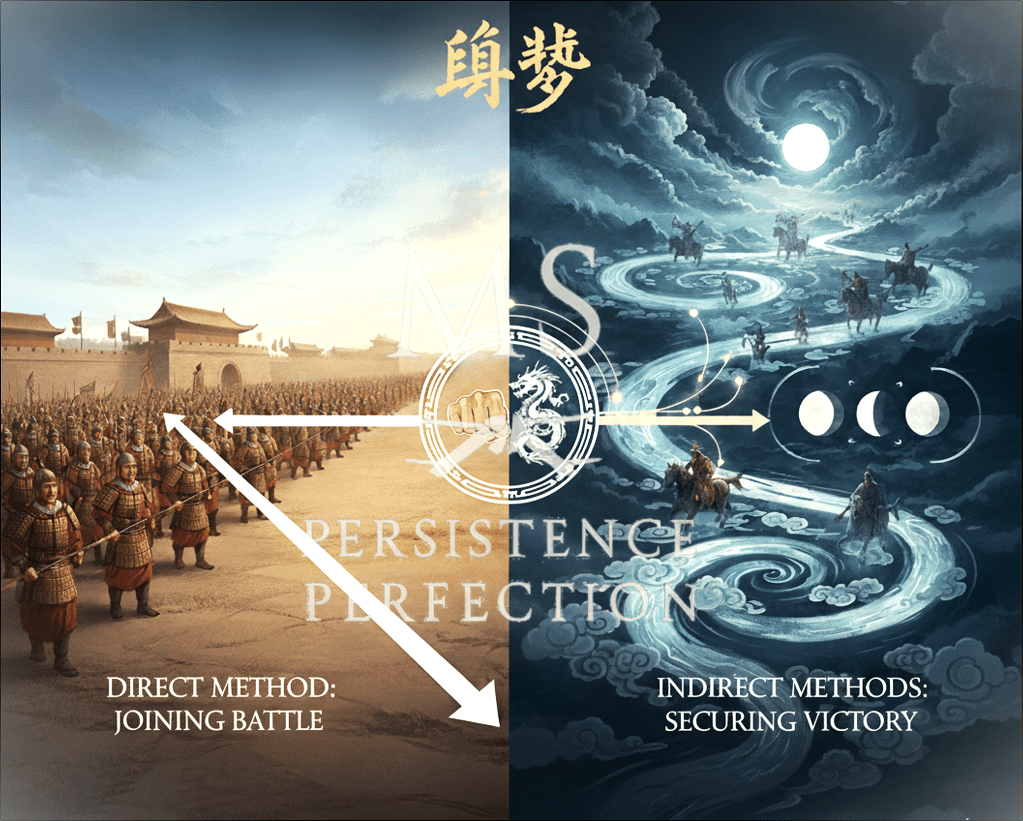
In all fighting, the direct method may be used for joining battle, but indirect methods will be needed in order to secure victory.

Indirect tactics, efficiently applied, are inexhaustible as Heaven and Earth, unending as the flow of rivers and streams; like the sun and moon, they end only to begin anew; like the four seasons, they pass away to return once more.

The Power of Controlled Motion

Sun Tzu’s fifth chapter deals with energy, not as brute strength, but as direct application of force.

He warned that a commander must know when to cultivate and store power and when to release it. Misapplied use of Energy burns itself out. However, when energy is focused, it bends the world to its will.

It’s an idea that translates effortlessly to today’s digital battlefield. Nations, like networks, often fail not because of a lack of capability, but because of a lack of control.

True mastery isn’t in how much force you can deploy. It’s in knowing how little you need to. It’s akin to the idea that, sure, you can kill a fly with a hammer, but is it the most effective tool at your disposal?

The Cost of Unchecked Energy

American Diplomatic and Military History is full of examples of lawmakers mistaking our capacity for clarity.

In Korea, overwhelming U.S. power pushed back North Korean forces, only to overextend toward China’s border and trigger an entirely new front. And thus, we have burdened ourselves with maintaining the “38th parallel” ever since.

In Vietnam, energy became inertia, force applied endlessly without definition, draining political and moral capital alike. If only the “peacemakers” at the Treaty of Versailles had let Ho Chi Minh deliver his speech on the Rights of Man, perhaps there would have been no quagmire in Southeast Asia to begin with. A guerrilla war that would take nearly 60,000 American lives and lead to what became known as the “Vietnam Syndrome.”

In Iraq, “shock and awe” demonstrated that a singular “tactical victory” can be swift, while a strategic victory remains elusive. Notwithstanding the entire list of false pretenses that led to the invasion of Iraq to begin with.

Each conflict began with a belief in momentum and ended with war fatigue. Demonstrating once again, force without direction always collapses under its own weight.

The lesson isn’t that force is wrong; it’s that force, when misapplied and unguided, becomes self-consuming. Power is not infinite. Neither is attention, money, or public trust.

The Cyber Equivalent: Sprawl and Burnout

Organizations repeat these same mistakes in digital form.

A breach occurs, and the reflex is to rush to acquire new tools, policies, and budgets, thereby triggering a cyberwar “surge.”

New dashboards, new alert monitoring, and new vendors lead to a surge in activity, while clarity plummets.

This is cyber energy without strategy, effort disconnected from insight.

As Sun Tzu also said: Amid the turmoil and tumult of battle, there may be seeming disorder and yet no real disorder at all; amid confusion and chaos, your array may be without head or tail, yet it will be proof against defeat.

Teams exhaust themselves chasing incidents instead of patterns. Leaders demand constant escalation, not realizing that perpetual crisis is its own vulnerability.

The result mirrors the national trap: motion is mistaken for genuine progress. The ability to endure is mistaken for endurance.

Energy as Rhythm, Not Frenzy

Sun Tzu described two forms of force:

  • Normal energy — the steady discipline that sustains the fight.
  • Extraordinary energy — the precise, unexpected burst that wins it.

In cybersecurity, the equivalent is security posture and precision in the application of policies.

Normal energy is the quiet work of patching, monitoring, and awareness training. Extraordinary energy is the calm, swift, and accurate incident response that turns chaos into closure.

Both are needed. But one cannot exist without the other. A team that never rests has no energy left to strike when it matters most.

It’s the same in martial arts.

In Wing Chun:
Normal energy = quality structure and energy sensitivity.
Extraordinary energy = the skill to deliver a singular, intercepting strike that ends the exchange.

Muay Thai:
Normal energy = footwork, guard, pacing.
Extraordinary energy = the slashing elbow, a stabbing teep, or perfectly placed knee.

BJJ:
Normal training energy = position, pressure, framing.
Extraordinary training energy = the ability to feel a submission triggered by feeling the opponent’s mistake. Or in Mandarin it’s an old idea called Wu Wei, or effortless action. Meaning, I don’t present the opportunity to attack; the enemy presents it to me, like water finding a leak in the dam.

A Security Team that never rests has no energy left for anything extraordinary.

Good CISOs, like good generals, good fighters, and good grapplers, understand rhythm. They know when to conserve strength so that action, when it comes, is clean and effective.

As Master Tzu also knew, “When he utilises combined energy, his fighting men become as it were like unto rolling logs or stones.” Leading to, … “the energy developed by good fighting men is as the momentum of a round stone rolled down a mountain thousands of feet in height. So important is the subject of energy.

Diplomacy and the Misuse of Force

In diplomacy, the same physics apply. The U.S. has often wielded immense power but uneven patience.

Moments like the Marshall Plan and the Cuban Missile Crisis demonstrated the value of precision, employing limited force, clear objectives, and a proportional response.

But elsewhere, the misapplication of force became diplomatic impotence on full display. Prolonged occupations and open-ended interventions constantly drain strategic reserves of will and trust.

Every drone strike, every unconstitutional data collection program, every new cyber warfare doctrine carries a similar risk: that power’s convenience will overshadow its consequence.

The Taoist counterpoint from Lao Tzu still resonates to this day:

“He who knows when to stop never finds himself in trouble.”

Knowing when not to act is the highest use of force. It’s the difference between control and compulsion.

The Lesson for Cyber Strategy

A strong digital defense isn’t constant action, it’s intelligent action.

Practical translation:

  • Automate the repeatable.
  • Escalate only with context.
  • Protect attention as aggressively as data.
  • Reserve extraordinary effort for extraordinary situations.

Energy mismanaged becomes sprawl. Energy focused becomes resilience.

It’s never the size of the arsenal. It’s the precision of the response.

Momentum and the Myth of Constant Action

Modern life rewards constant motion, refresh, respond, and reply.
In cybersecurity and foreign policy alike, stillness feels dangerous to the untrained mind.

But strategy lives in the pause between movements. Quality fighting skills are always more effective when you can strike on the half-beat, a fundamental separator on the mats, and on digital and physical battlefields.

Force has a short half-life. When it’s used endlessly, it decays quickly and fades into the ether. When it’s reserved for the right moment, it changes everything.

A breach contained quietly is often a bigger victory than a public takedown.
A crisis de-escalated without violence often preserves more stability than any show of strength.

Knowing When to “Flow With the Go”

As one of the greatest living legends in Brazilian Jiu-Jitsu, Rickson Gracie once said, “In Jiu Jitsu we flow with the go.”

Meaning:

  • don’t fight force with tension
  • stay aware but not trapped by focus
  • stay smooth and adaptive
  • flow with the opponent’s energy
  • let well-trained instinct and structure guide you

That metaphor fits the digital era perfectly. The best blue or purple teamers, like the best leaders, don’t fight the current; they learn to read it and swim with it, not against it.

Lao Tzu would say that “the soft overcomes the hard,” not through weakness but adaptability. Force channeled through awareness is stronger than force spent in anger.

In warfare and cybersecurity alike, energy is a currency. Spend it recklessly and you’ll be empty when it matters. Spend it wisely and you’ll be leading on the battlefield.

Final Reflection

Knowing how to use force is knowing its limits.
Sun Tzu and Lao Tzu shared the same truth from opposite angles:
Power must be balanced by patience.
Energy must be stored as much as it is spent.

History punishes those who forget this. So does network and security architecture.

The art isn’t in using force; it’s in knowing when the situation calls for little, none, or overwhelming force.

That’s not mysticism. That’s strategic maintenance. And it’s as accurate in security architecture as it is on the battlefield.

All of these lessons point us directly back to our opening principles: “In all fighting, the direct method may be used for joining battle, but indirect methods will be needed to secure victory.” And, “Indirect tactics, efficiently applied, are inexhaustible as Heaven and Earth, unending as the flow of rivers and streams; like the sun and moon, they end only to begin anew; like the four seasons, they pass away to return once more.

The wise strategist learns to move the same way.

Security Without the Pessimism: Phishing 2.0 – How Smart People Still Get Hooked

When Experience Becomes the Blind Spot

You’ve been in tech long enough to spot the obvious scams. They have bad grammar, sketchy links, and the “urgent” password resets that scream, “It’s a trap.”

Modern phishing is designed for experienced professionals, people just like you.

The senior engineer who knows better.
The manager who moves fast.
The admin is juggling too many tabs.

Phishing 2.0 targets the confident, not the naive.

Because overconfidence, that quiet, “I’d never fall for that,” is exactly what gets exploited.

How Phishing Evolved While We Were Busy

Old-school phishing was obvious: typos, weird logos, fake banks. Now? It’s clean, professional, and personalized.

Attackers scrape LinkedIn, GitHub, and Slack leaks, as well as any other platform where they can learn who you are and how you communicate. Then they build emails that sound right.

“Following up on that architecture review.”
“Can you sign off on the AWS access request?”

No panic. No red flags. Just believable context. Phishing’s power now lies in familiarity, not just deception.

The Psychology And Why Smart People Click Anyway

It’s not ignorance. It’s pattern recognition. Your brain runs on shortcuts. You see what fits your norm and fill in the rest. “This feels familiar, so it’s safe.”

Layer on fatigue, distraction, or context switching, and even the most security-conscious person can click the wrong thing.

Attackers don’t need to outsmart you, they just need to catch you mid-scroll.

The Real Tricks How Phishers Use Your Own Systems Against You

Phishing 2.0 thrives inside your workflow:

  • Cloud notifications: “New file shared with you.”
  • Team apps: Slack, Notion, or Asana lookalikes.
  • Vendor portals and HR systems: identical clones.
  • QR codes: the new “scan to verify” scam.

Attackers don’t mimic strangers anymore; they mimic your routine.

The antidote, and our greatest protection, is patience.

Forget fear. Focus on tempo.

Build a habit of thinking first, then reacting. Believe me, I know it sounds elementary and maybe even silly, but people do it every day. It reminds me of the old saying from the range: “ready, fire, aim” versus “ready, aim, fire.” People are often too quick to react without pausing to think first.

That moment of pause between seeing and clicking is what saves the enterprise. So, always:

  • Hover first. Always.
  • Verify context: Does it match your current workflow?
  • Cross-check by text or chat before responding.
  • Trust your instinct; hesitation usually means something’s off.

Security isn’t about paranoia. It’s about building patience as your strongest defense.

Culture Over Blame

Curiosity beats compliance. Blaming users for falling for a phishing attempt isn’t awareness training or good security; it’s just scapegoating. People click because they’re human, not because they don’t care.

If your environment rewards speed over care, mistakes are inevitable. Instead of punishment, build openness to conversation. A strong security culture treats “I think I clicked something bad” as a start, not a sin.

Curiosity beats complacency every time.

Final Thought

Phishing 2.0 isn’t just a tech problem; it’s a problem of pace. Attackers take advantage of our work tempo. The faster we move, the easier it is to miss what matters.

The best security upgrade?

Breathe. Scan well. Challenge every unfamiliar link or request. Pause before you click, verify before you act, and encourage your team to do the same.

That’s not being cynical or pessimistic.
That’s the difference: real security means trained, patient awareness every day.

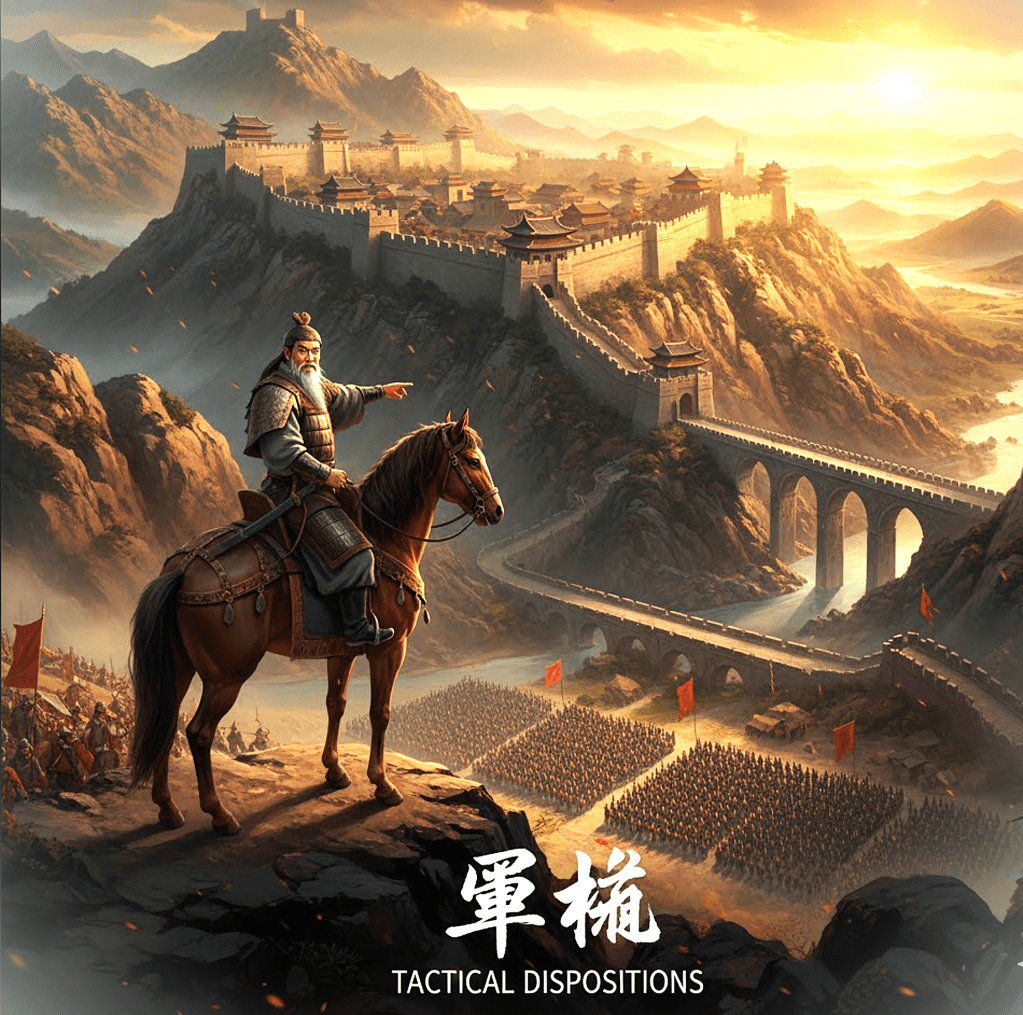
The Art of Cyberwar | Part IV | Tactical Dispositions

the art of cyberwar - tactical dispositions. matt shannon cloud security.

The Principles:
“The good fighters of old first put themselves beyond the possibility of defeat, and then waited for an opportunity of defeating the enemy.”

“Thus it is that in war the victorious strategist only seeks battle after the victory has been secured, whereas he who is destined to be defeated, first fights, and afterwards looks for victory.” —Sun Tzu

Every data breach, foreign conflict, and policy error typically originates from an action taken without adequate prior positioning.

There is a common tendency to conflate activity with progress. Sun Tzu recognized that true invincibility is rooted in defense, while the opportunity for victory depends on the adversary.

In contemporary terms, this concept is referred to as defensive posture: the disciplined practice of preparation prior to visibility.

Defensive Positions

Effective cybersecurity teams secure their positions well in advance of any actual test. They maintain comprehensive awareness of data locations, access privileges, and the criticality of various systems. Such teams implement patches discreetly, monitor systems consistently, and design infrastructures to recover from failures rather than assuming failures will not occur.

That’s tactical disposition:

  • Enforcing least privilege to build resilience.
  • Applying timely patching to keep critical systems protected.
  • Building backups as integrated mechanisms for redundancy and recovery.
  • Running tabletop exercises to rehearse scenarios that organizations hope never occur.

This often-invisible work may appear inconsequential until it proves essential in critical moments.

When Nations Forget the Same Lesson

Historical evidence indicates that both nations and organizations seldom pause sufficiently to engage in strategic reflection.

Nations often amass extensive arsenals, initiate large-scale programs, and extend supply lines to project strength. However, when strength is dispersed excessively, it transforms into fragility, a phenomenon known as overreach. Overreach fundamentally undermines resilience.

The United States has frequently responded to perceived threats with disproportionate measures, conflating activity with effective strategy and reallocating resources without a long-term perspective. Engagements in wars and alliances often occur more rapidly than preparations for their potential consequences.

The consequences include wasted resources, public fatigue, and strategic exhaustion. All of which contribute to diminished geopolitical and geostrategic self-awareness.

According to Sun Tzu, achieving invincibility does not involve amassing weapons, engaging in unnecessary interventions, or imposing ineffective sanctions. Instead, it requires constructing economic, digital, and diplomatic systems capable of absorbing shocks while maintaining integrity. A resilient nation need not swing at every shadow.

Resource Stewardship

Cybersecurity is frequently perceived as a process of continual escalation, characterized by the addition of more tools, dashboards, and alerts.

However, each new platform introduces additional complexity, which in turn creates new potential attack surfaces.

Effective security practices may require declining adoption of the latest technologies and decommissioning unnecessary systems to simplify complex environments.

As Bruce Lee once said “I fear not the man who has practiced 10,000 kicks once, but I fear the man who has practiced one kick 10,000 times.”

Simplifying operations enables organizations to concentrate on mastering essential tools, particularly when resources are limited. The principles of simplicity, directness, and economy of motion are fundamental to effective practice.

Our government should also learn to exercise the same restraint. Faithful stewardship isn’t constant investment in everything; it’s a deliberate focus on what matters most.

This approach exemplifies strategic minimalism, which emphasizes the optimal utilization of public resources and, ultimately, enriches us all by conserving precious and limited resources.

Similarly, as America’s original Foreign Policy was initially articulated by John Quincy Adams on July 4th, 1821:

[America]…goes not abroad, in search of monsters to destroy. She is the well-wisher to the freedom and independence of all.

She is the champion and vindicator only of her own.

She will commend the general cause by the countenance of her voice, and the benignant sympathy of her example.

She well knows that by once enlisting under other banners than her own, were they even the banners of foreign independence,

She would involve herself beyond the power of extrication, in all the wars of interest and intrigue, of individual avarice, envy, and ambition, which assume the colors and usurp the standard of freedom.

The fundamental maxims of her policy would insensibly change from liberty to force…
She might become the dictatress of the world. She would be no longer the ruler of her own spirit…

[America’s] glory is not dominion, but liberty. Her march is the march of the mind. She has a spear and a shield: but the motto upon her shield is, Freedom, Independence, Peace. This has been her Declaration: this has been, as far as her necessary intercourse with the rest of mankind would permit, her practice.

This practical wisdom may appear boring. However, organizations and governments alike must identify their assets, maintain them, and protect only what can be effectively defended. Continuous review, revision, and updates are fundamental.

The Cost of Perpetual Readiness

Sun Tzu cautioned that armies maintained in the field for extended periods deplete their own strength. Contemporary parallels include budgets exhausted by perpetual emergencies and professionals experiencing burnout due to continuous false positives.

The solution lies in cultivating a well-developed security posture rather than succumbing to ongoing panic and overreaction.

Organizations should prepare comprehensively, rest intentionally, and engage only when strategically necessary.

This sequence, prioritizing defense before offense and clarity before action, establishes the resilience that many organizations seek.

Learning From Tactical Blindness

Security breaches frequently result from overlooked fundamentals, such as unpatched systems, insufficiently trained users, and unreviewed alerts.

Similarly, the escalation of wars or crises is often attributable to unexamined assumptions.
Both scenarios arise from neglecting the primary principle of tactical disposition: understanding one’s position before determining a course of action.

Modern Application

  • In cybersecurity: organizations should implement defense-in-depth strategies, automate routine checks, and prioritize cultivating awareness rather than fear. Emphasizing culture over blame.
  • In governance: it is essential to align objectives with available capacity, critically assess the true cost of each commitment, and recognize that restraint can be the most strategic option.

This parallel represents a recurring pattern rather than a mere metaphor.

Practitioner’s Questions To Ask Yourself:

  1. Am I defending by hope instead of design?
  2. Which tools add noise without adding clarity?
  3. What assumptions have gone unchallenged for too long?
  4. Where has “doing more” replaced “preparing better”?

Final Reflection

While invincibility is not the explicit objective, it is often the understated result of an effective security architecture. Complete protection cannot be guaranteed. However, it can be achieved through patience and persistence. Although this approach may lack glamour, in the ongoing struggle to maintain tactical disposition, it remains essential.

Sun Tzu’s good fighter was never reckless, never idle. He shaped his defenses so well that the enemy’s attacks lost meaning.

Nations and security architects should adopt similar practices. Consistently apply the principles of tactical disposition, exercise prudent stewardship of public resources, and cultivate strength, resilience, and wisdom.

The objective is not to engage in conflict frequently, but to do so only when absolutely necessary. Making it essential to fully understand and apply this story’s principles:

“The good fighters of old first put themselves beyond the possibility of defeat, and then waited for an opportunity of defeating the enemy.”

“Thus it is that in war the victorious strategist only seeks battle after the victory has been secured, whereas he who is destined to be defeated, first fights, and afterwards looks for victory.”

Security Without Pessimism: Shadow IT – When Convenience Becomes a Security Risk

The Shortcut That Became the Standard

We’ve all done it.

You’re trying to get something simple done, but the company’s “official” tool takes six steps and two approvals just to open a project. So, you find a better one, quicker, cleaner, easier.

Maybe it’s a shared Google Sheet, a new messaging app, or some AI productivity tool that actually works. It saves you time, gets results, and honestly, no one seems to mind.

That is, until someone finally notices.

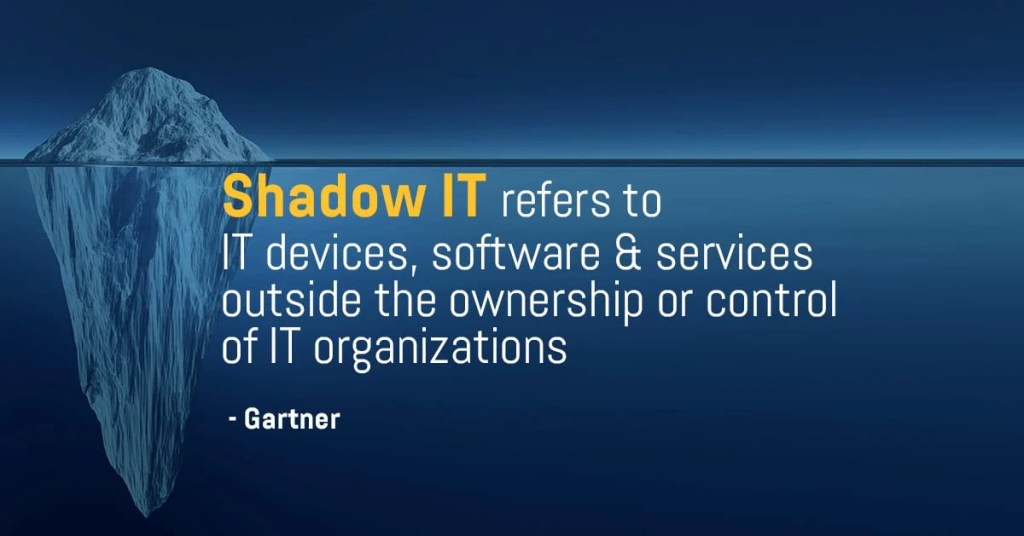
That’s Shadow IT, the silent, well-intentioned workaround that slowly turns into a security liability.

The issue isn’t carelessness; it’s the drive for efficiency.

The Anatomy of Shadow IT and How It Slips Through

Shadow IT doesn’t begin as an act of rebellion. It starts as a way to get things done.

Teams feel pressure, tools are slow, and company processes can’t keep up. So, someone tries a new tool that bends the rules, just for this one time.

That quick fix gets shared with others and soon becomes the usual way of doing this.

Before long, company data is moving through several tools that no one has officially approved:

  • Free cloud drives with no encryption.
  • Personal accounts are used for client data.
  • Messaging platforms without audit trails.
  • Chrome extensions quietly sync user info to external servers.

It’s not done out of malice; it’s just human nature. People pick what helps them get the job done. But each time we choose convenience over control, we lose sight of what’s happening.

Why Good People Go Rogue

Most shadow IT isn’t about breaking rules. It’s about finding better ways to work.

People want to do their jobs well. When approved systems slow them down, they look for alternatives. This creativity isn’t careless, but it can still be risky.

Most people don’t focus on compliance when facing a tight deadline. They focus on getting results.

Here’s the problem: attackers know this. They rely on busy teams taking shortcuts, creating unmonitored accounts, or storing data in places that go unnoticed.

Shadow IT doesn’t look like rule-breaking. It looks like taking initiative.

When Visibility Vanishes

Each unapproved app creates another potential risk.

Security teams can’t track data, fix vulnerabilities, or control access. Soon, they may not even know what needs protection.

If something goes wrong, you can’t protect what you can’t see. A hacked third-party app or a compromised account can quietly put the whole system at risk.

Shadow IT isn’t a single big mistake. It’s many small, hidden problems. By the time someone notices, it’s often too late to trace the cause.

Balance Control with Capability

The solution isn’t to make things stricter. It’s to make official tools easier to use.

Security should support people in their actual work, not just follow what policy says.

Here’s what helps:

  • Simplify the approved stack. If it’s painful to use, it’s already compromised.
  • Create a “request to innovate” process. Let employees suggest tools safely.
  • Shadow IT discovery audits. Not witch hunts — open conversations.
  • Default to transparency. Make it normal to say, “I’m testing this app” without fear.

The aim is partnership, not strict control. If security punishes creativity, people will just hide what they’re doing. Problems will still find a way through.

Building Trust Around Tools

You can’t get rid of Shadow IT by being strict. The only way is to build trust instead of secrecy.

If people think speaking up will get them in trouble, they’ll stay silent. But if they see it as a chance to work together, you’ll know what’s really happening.

The best workplaces see curiosity as a strength, not a risk. Security and innovation aren’t enemies; they work together toward the same goal.

Final Thought

Shadow IT isn’t caused by bad people. It happens when good intentions don’t fit with strict systems. For security to keep up with creativity, it needs to act as a guide, not just a gatekeeper.

That’s not being pessimistic. That’s reality and an opportunity to get better, together.

Security Without Pessimism: Why “Just One Click” Can Still Break Everything

The Myth of the Harmless Click
It’s late on a Friday afternoon. You’ve taken back-to-back phone calls, your inbox is overflowing, and your caffeine is slowly but surely fading. Then comes one last email. It’s something from HR about a new hire policy update.

You click, skim, and move on.

Five minutes later, that “harmless” click starts a slow-motion domino fall. Credentials harvested, tokens stolen, access expanding, all before you’ve even closed your laptop.

People think, “It was just one click.”
That’s the point. It only ever takes one.

The Domino Effect
Here’s what happens after that moment most people never see.

That fake login page doesn’t just steal your password, it grabs your session cookies, mimics your device fingerprint, and jumps the line of trust. Suddenly, it’s you logging in from a new location, sending a file, approving an invoice.

Once inside, attackers don’t move fast. They move quietly. They study your company like a playbook, structure, tone, and approval chains. The next email they send looks even more real because it’s built with your real data.

By the time anyone notices, the damage has often been done for days.

But why do we fall for it? The answer isn’t carelessness—it’s psychology.

The Psychology of the Click
No one falls for this because they’re careless. They fall because they’re human.

Attackers know when we don’t double-check: near quitting time, maybe when you’re experiencing that post-lunch carb crash, or when you’re in a rush to make that 9am meeting. All of those moments when we see what we expect to see. They don’t need to hack your brain, they simply nudge it the right way.

Speed, familiarity, and trust are their sharpest weapons, which is why “training” alone doesn’t solve the problem. Awareness isn’t a habit. The mind knows better, but the hand clicks first.

How Attackers Exploit Normalcy
Modern phishing doesn’t seem sketchy; it seems routine.

They copy internal phrasing, familiar names, work to perfect internal branding. The trick isn’t panic anymore, it’s comfort and familiarity.

Common triggers:

  • “Quick update before the weekend.”
  • “Need approval by end of day” or “close of business.”
  • “Can you confirm this invoice?”

Nothing dramatic. That’s the point. The hook isn’t fear, it’s familiarity.

How to Build a Click Buffer
You can’t eliminate every threat, but you can slow the chain reaction.

Build a Click Buffer. Think of it as a two-second pause that keeps good habits automatic:

  • Hover before you click. Make it reflex.
  • Check the sender domain. If it looks almost right, it’s wrong.
  • Stop treating “urgent” as a priority. Urgency is a tactic, not truth.
  • Ask IT. They’d rather you check 100 false alarms than clean up one breach.

A brief pause can equal a big payoff. Security starts with seconds, not software.

Culture Over Blame
Here’s where most companies stumble: they turn mistakes into shame. Someone clicks a bad link, and suddenly they’re the subject of the next slide in “staff security awareness training.”

That doesn’t build security, it builds silence.

A healthy culture rewards curiosity. If people feel safe saying, “Hey, I think I messed up,” the damage stops faster, every time.

You can’t stop every click. However, you can build a team that identifies, shares, and learns from mistakes before they spiral out of control.

Final Thought
The real security upgrade isn’t another tool or rule to apply, it’s simply learning to breathe and take a little extra time to pause before you click.

  • One breath before the click. One second to hover over the link.
  • One habit that keeps the rest intact.
  • That’s not fearmongering.
  • That’s just good hygiene.

If you found this helpful, please share it with your team or reflect on your own scanning and clicking habits. Security is a team effort and every small pause makes a difference.