Leadership Is a Security Control
The Environment Leaders Create Determines the Level of Security Their Organizations Achieve
Ask ten security professionals to name the most important security controls in a modern organization, and the answers will sound familiar. Multi-factor authentication. Endpoint detection and response. Network segmentation. Encryption. Vulnerability management. Security awareness training.
None of those answers is wrong. Each represents a critical layer in a mature security program.
Yet they all share a common characteristic: they are downstream of another control that receives far less attention but influences every one of them..
Leadership.
This may seem like an unusual assertion. Leadership does not appear on a network diagram. It cannot be licensed, deployed, or patched. It generates no alerts and produces no dashboard filled with metrics. Yet every meaningful security decision within an organization is ultimately shaped by leadership. Before a firewall is purchased, before a policy is written, before an employee completes awareness training, someone has already decided that security matters—or that it does not.
That decision is leadership in action.
Every Organization Is Perfectly Designed to Produce Its Security Culture
There is a saying often attributed to systems theorist W. Edwards Deming: “Every system is perfectly designed to get the results it gets.” Whether or not those were his exact words, the principle remains instructive.
Security culture is no exception.
Organizations rarely arrive at their security posture by accident. Rather, it emerges from thousands of decisions made over time. These are decisions about priorities, incentives, resources, accountability, and acceptable risk. Employees learn what truly matters not by reading policies, but by observing leadership.
If executives insist on secure practices even when they create inconvenience, employees notice.
If managers routinely ask teams to “just make it work” regardless of established procedures, employees notice that, too. Culture is not built through declarations. It is built through repetition.
Leadership determines what is repeated.
According to the 2024 Verizon Data Breach Investigations Report, over 80% of breaches involved a human element, highlighting that culture, behavior, and leadership are as critical as any technical control.

The Strongest Policies Cannot Overcome Weak Priorities.
Many organizations invest considerable effort in writing comprehensive security policies. These documents establish expectations, define responsibilities, and provide consistency across the enterprise. They are necessary.
They are also insufficient. A policy reflects what an organization says it values. Leadership reveals what it actually values.
Consider two organizations with identical password policies.
In the first, executives follow the same authentication requirements as everyone else, allocate time for security training, and treat security concerns as legitimate business discussions. In the second, executives routinely request exceptions, postpone security projects in favor of short-term operational gains, and regard cybersecurity as primarily the IT department’s responsibility.
On paper, the organizations appear identical. In practice, they are fundamentally different.
Policies establish direction and leadership establish credibility.
Employees are remarkably adept at distinguishing between the two.
Leadership Defines Acceptable Risk
One of the most misunderstood aspects of cybersecurity is the belief that the objective is to eliminate risk. It’s not. Every organization accepts risk. The question is whether those decisions are deliberate or accidental.
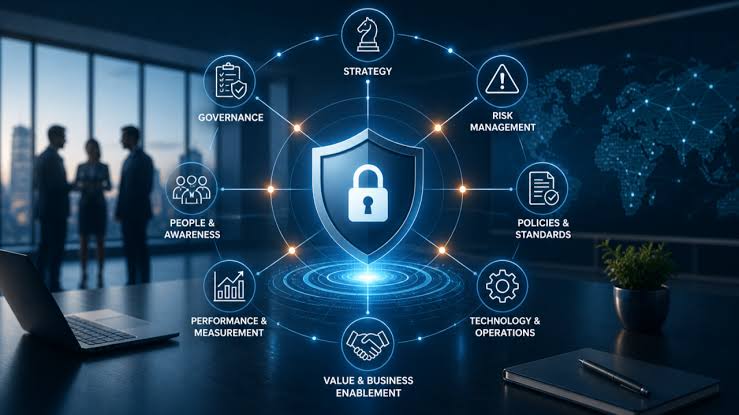
Leadership determines where that line is drawn. When a board approves funding for identity modernization rather than postponing the investment for another year, it is making a security decision.
When a superintendent supports temporary operational disruption to remediate a critical vulnerability rather than accepting unnecessary exposure, that is a security decision.
When an executive asks not only, “What will this cost?” but also, “What risk does this reduce?” security has become part of organizational decision-making rather than an afterthought.
Security professionals identify and communicate risk. Leadership determines which risks are acceptable.
These responsibilities are distinct, but inseparable.
Trust Is a Preventive Control
Technical controls prevent malicious activity, and leadership often prevents organizational failure.
Employees who trust their leaders report mistakes sooner. They ask questions before making assumptions. They admit uncertainty before uncertainty becomes an incident.
Conversely, organizations that punish honest mistakes often create an environment where employees hide them. The initial phishing email is rarely what causes the greatest damage.
Silence does.
Trust is therefore more than an abstract leadership quality. It is a practical security control that shortens response times, improves communication, and encourages the reporting behaviors upon which effective incident response depends.
Organizations frequently invest millions of dollars in detection technologies while overlooking one of the simplest ways to improve detection: creating an environment where people feel safe speaking up.

Technology Scales Capability. Leadership Scales Behavior.
Technology can authenticate identities, encrypt data, detect anomalies, and automate countless security functions. It can’t establish priorities, create accountability, model integrity, or build trust. Only leadership can accomplish those things.
This is why organizations with modest security budgets, but disciplined leadership often outperform organizations possessing sophisticated technologies but inconsistent governance. The difference is not the tools themselves. It is the environment in which those tools operate.
Technology amplifies capability and leadership amplifies behavior. Given enough time, behavior almost always proves to be the more influential force.
Actionable Steps for Leaders
- Model security behaviors consistently at every level of the organization.
- Integrate risk discussions into executive decision-making, not just technical reviews.
- Foster a culture of psychological safety so employees feel comfortable reporting mistakes and asking questions.
- Align security policies with actual business practices—avoid policies that are routinely bypassed.
- Invest in both technology and leadership development to scale capability and culture in tandem.
Final Thoughts: Leadership as the First Control
It is tempting to think of cybersecurity as something managed by the security department. Firewalls belong to network engineers. Endpoint protection belongs to security analysts. Policies belong to governance teams.
Leadership belongs in every decision.
Every decision about priorities, every allocation of resources, every conversation about acceptable risk, and every example set by those entrusted to lead either strengthens or weakens the organization’s security posture.
For that reason, leadership should not be viewed merely as support for cybersecurity.
It should be recognized for what it is.
The first security control.
Key Takeaways:
- The downstream effects of leadership shape every aspect of an organization’s security posture.
- While policies and technology matter, leadership determines how they are valued, implemented, and, more importantly, enforced.
- Trust and culture are practical security controls that improve incident response and reduce risk.
- Consistent, visible prioritization of security by leaders is more influential than any single technical investment.
- Security is ultimately a human endeavor, and its success is determined by the actions and environment set by those who lead.
- This perspective is echoed by leading frameworks, NIST CSF and ISO 27001, which position governance and leadership at the foundation of resilient security programs.
The technologies organizations deploy may change. The threats they face certainly will. But the principle remains constant: every security program ultimately reflects the leadership that built it.
Leadership, then, is not merely support for security; it’s the foundation.

