The Art of Cyberwar, Part V | Energy | The Use of Force

the art of cyberwar part V energy and the use of force. matt shannon cloud security.

The principles:
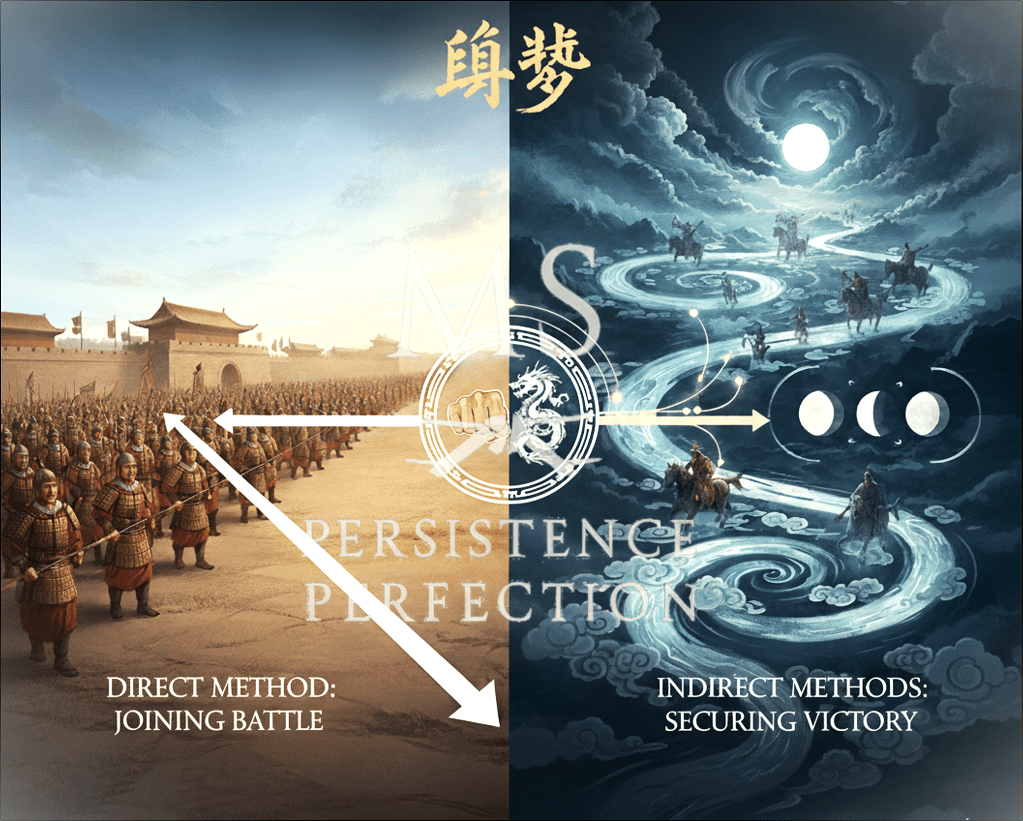
In all fighting, the direct method may be used for joining battle, but indirect methods will be needed in order to secure victory.

Indirect tactics, efficiently applied, are inexhaustible as Heaven and Earth, unending as the flow of rivers and streams; like the sun and moon, they end only to begin anew; like the four seasons, they pass away to return once more.

The Power of Controlled Motion

Sun Tzu’s fifth chapter deals with energy, not as brute strength, but as direct application of force.

He warned that a commander must know when to cultivate and store power and when to release it. Misapplied use of Energy burns itself out. However, when energy is focused, it bends the world to its will.

It’s an idea that translates effortlessly to today’s digital battlefield. Nations, like networks, often fail not because of a lack of capability, but because of a lack of control.

True mastery isn’t in how much force you can deploy. It’s in knowing how little you need to. It’s akin to the idea that, sure, you can kill a fly with a hammer, but is it the most effective tool at your disposal?

The Cost of Unchecked Energy

American Diplomatic and Military History is full of examples of lawmakers mistaking our capacity for clarity.

In Korea, overwhelming U.S. power pushed back North Korean forces, only to overextend toward China’s border and trigger an entirely new front. And thus, we have burdened ourselves with maintaining the “38th parallel” ever since.

In Vietnam, energy became inertia, force applied endlessly without definition, draining political and moral capital alike. If only the “peacemakers” at the Treaty of Versailles had let Ho Chi Minh deliver his speech on the Rights of Man, perhaps there would have been no quagmire in Southeast Asia to begin with. A guerrilla war that would take nearly 60,000 American lives and lead to what became known as the “Vietnam Syndrome.”

In Iraq, “shock and awe” demonstrated that a singular “tactical victory” can be swift, while a strategic victory remains elusive. Notwithstanding the entire list of false pretenses that led to the invasion of Iraq to begin with.

Each conflict began with a belief in momentum and ended with war fatigue. Demonstrating once again, force without direction always collapses under its own weight.

The lesson isn’t that force is wrong; it’s that force, when misapplied and unguided, becomes self-consuming. Power is not infinite. Neither is attention, money, or public trust.

The Cyber Equivalent: Sprawl and Burnout

Organizations repeat these same mistakes in digital form.

A breach occurs, and the reflex is to rush to acquire new tools, policies, and budgets, thereby triggering a cyberwar “surge.”

New dashboards, new alert monitoring, and new vendors lead to a surge in activity, while clarity plummets.

This is cyber energy without strategy, effort disconnected from insight.

As Sun Tzu also said: Amid the turmoil and tumult of battle, there may be seeming disorder and yet no real disorder at all; amid confusion and chaos, your array may be without head or tail, yet it will be proof against defeat.

Teams exhaust themselves chasing incidents instead of patterns. Leaders demand constant escalation, not realizing that perpetual crisis is its own vulnerability.

The result mirrors the national trap: motion is mistaken for genuine progress. The ability to endure is mistaken for endurance.

Energy as Rhythm, Not Frenzy

Sun Tzu described two forms of force:

  • Normal energy — the steady discipline that sustains the fight.
  • Extraordinary energy — the precise, unexpected burst that wins it.

In cybersecurity, the equivalent is security posture and precision in the application of policies.

Normal energy is the quiet work of patching, monitoring, and awareness training. Extraordinary energy is the calm, swift, and accurate incident response that turns chaos into closure.

Both are needed. But one cannot exist without the other. A team that never rests has no energy left to strike when it matters most.

It’s the same in martial arts.

In Wing Chun:
Normal energy = quality structure and energy sensitivity.
Extraordinary energy = the skill to deliver a singular, intercepting strike that ends the exchange.

Muay Thai:
Normal energy = footwork, guard, pacing.
Extraordinary energy = the slashing elbow, a stabbing teep, or perfectly placed knee.

BJJ:
Normal training energy = position, pressure, framing.
Extraordinary training energy = the ability to feel a submission triggered by feeling the opponent’s mistake. Or in Mandarin it’s an old idea called Wu Wei, or effortless action. Meaning, I don’t present the opportunity to attack; the enemy presents it to me, like water finding a leak in the dam.

A Security Team that never rests has no energy left for anything extraordinary.

Good CISOs, like good generals, good fighters, and good grapplers, understand rhythm. They know when to conserve strength so that action, when it comes, is clean and effective.

As Master Tzu also knew, “When he utilises combined energy, his fighting men become as it were like unto rolling logs or stones.” Leading to, … “the energy developed by good fighting men is as the momentum of a round stone rolled down a mountain thousands of feet in height. So important is the subject of energy.”

Diplomacy and the Misuse of Force

In diplomacy, the same physics apply. The U.S. has often wielded immense power but uneven patience.

Moments like the Marshall Plan and the Cuban Missile Crisis demonstrated the value of precision, employing limited force, clear objectives, and a proportional response.

But elsewhere, the misapplication of force became diplomatic impotence on full display. Prolonged occupations and open-ended interventions constantly drain strategic reserves of will and trust.

Every drone strike, every unconstitutional data collection program, every new cyber warfare doctrine carries a similar risk: that power’s convenience will overshadow its consequence.

The Taoist counterpoint from Lao Tzu still resonates to this day:

“He who knows when to stop never finds himself in trouble.”

Knowing when not to act is the highest use of force. It’s the difference between control and compulsion.

The Lesson for Cyber Strategy

A strong digital defense isn’t constant action, it’s intelligent action.

Practical translation:

  • Automate the repeatable.
  • Escalate only with context.
  • Protect attention as aggressively as data.
  • Reserve extraordinary effort for extraordinary situations.

Energy mismanaged becomes sprawl. Energy focused becomes resilience.

It’s never the size of the arsenal. It’s the precision of the response.

Momentum and the Myth of Constant Action

Modern life rewards constant motion, refresh, respond, and reply.
In cybersecurity and foreign policy alike, stillness feels dangerous to the untrained mind.

But strategy lives in the pause between movements. Quality fighting skills are always more effective when you can strike on the half-beat, a fundamental separator on the mats, and on digital and physical battlefields.

Force has a short half-life. When it’s used endlessly, it decays quickly and fades into the ether. When it’s reserved for the right moment, it changes everything.

A breach contained quietly is often a bigger victory than a public takedown.
A crisis de-escalated without violence often preserves more stability than any show of strength.

Knowing When to “Flow With the Go”

As one of the greatest living legends in Brazilian Jiu-Jitsu, Rickson Gracie once said, “In Jiu Jitsu we flow with the go.”

Meaning:

  • don’t fight force with tension
  • stay aware but not trapped by focus
  • stay smooth and adaptive
  • flow with the opponent’s energy
  • let well-trained instinct and structure guide you

That metaphor fits the digital era perfectly. The best blue or purple teamers, like the best leaders, don’t fight the current; they learn to read it and swim with it, not against it.

Lao Tzu would say that “the soft overcomes the hard,” not through weakness but adaptability. Force channeled through awareness is stronger than force spent in anger.

In warfare and cybersecurity alike, energy is a currency. Spend it recklessly and you’ll be empty when it matters. Spend it wisely and you’ll be leading on the battlefield.

Final Reflection

Knowing how to use force is knowing its limits.
Sun Tzu and Lao Tzu shared the same truth from opposite angles:
Power must be balanced by patience.
Energy must be stored as much as it is spent.

History punishes those who forget this. So does network and security architecture.

The art isn’t in using force; it’s in knowing when the situation calls for little, none, or overwhelming force.

That’s not mysticism. That’s strategic maintenance. And it’s as accurate in security architecture as it is on the battlefield.

All of these lessons point us directly back to our opening principles: “In all fighting, the direct method may be used for joining battle, but indirect methods will be needed to secure victory.” And, “Indirect tactics, efficiently applied, are inexhaustible as Heaven and Earth, unending as the flow of rivers and streams; like the sun and moon, they end only to begin anew; like the four seasons, they pass away to return once more.

The wise strategist learns to move the same way.
The Art of Cyberwar | Part IV | Tactical Dispositions

the art of cyberwar - tactical dispositions. matt shannon cloud security.

The Principles:
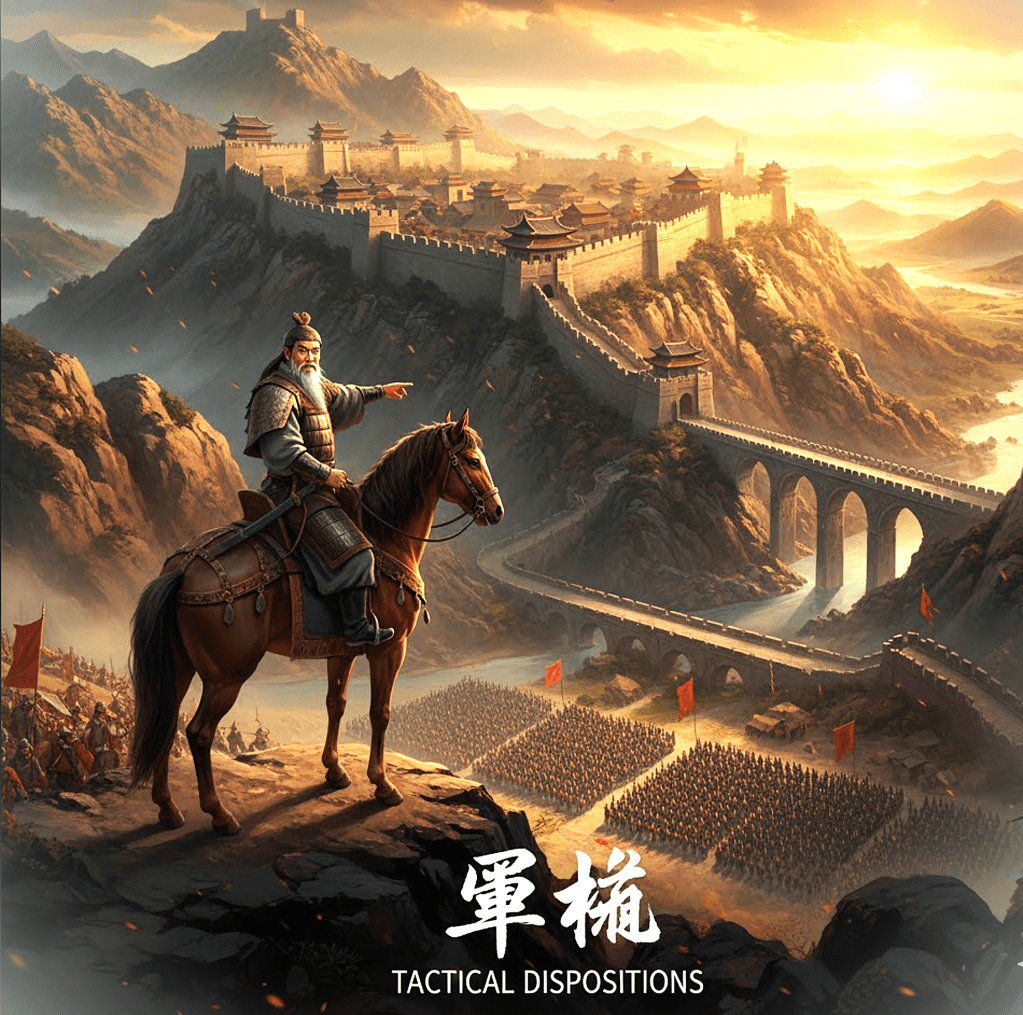
“The good fighters of old first put themselves beyond the possibility of defeat, and then waited for an opportunity of defeating the enemy.”

“Thus it is that in war the victorious strategist only seeks battle after the victory has been secured, whereas he who is destined to be defeated, first fights, and afterwards looks for victory.” —Sun Tzu

Every data breach, foreign conflict, and policy error typically originates from an action taken without adequate prior positioning.

There is a common tendency to conflate activity with progress. Sun Tzu recognized that true invincibility is rooted in defense, while the opportunity for victory depends on the adversary.

In contemporary terms, this concept is referred to as defensive posture: the disciplined practice of preparation prior to visibility.

Defensive Positions

Effective cybersecurity teams secure their positions well in advance of any actual test. They maintain comprehensive awareness of data locations, access privileges, and the criticality of various systems. Such teams implement patches discreetly, monitor systems consistently, and design infrastructures to recover from failures rather than assuming failures will not occur.

That’s tactical disposition:

  • Enforcing least privilege to build resilience.
  • Applying timely patching to keep critical systems protected.
  • Building backups as integrated mechanisms for redundancy and recovery.
  • Running tabletop exercises to rehearse scenarios that organizations hope never occur.

This often-invisible work may appear inconsequential until it proves essential in critical moments.

When Nations Forget the Same Lesson

Historical evidence indicates that both nations and organizations seldom pause sufficiently to engage in strategic reflection.

Nations often amass extensive arsenals, initiate large-scale programs, and extend supply lines to project strength. However, when strength is dispersed excessively, it transforms into fragility, a phenomenon known as overreach. Overreach fundamentally undermines resilience.

The United States has frequently responded to perceived threats with disproportionate measures, conflating activity with effective strategy and reallocating resources without a long-term perspective. Engagements in wars and alliances often occur more rapidly than preparations for their potential consequences.

The consequences include wasted resources, public fatigue, and strategic exhaustion. All of which contribute to diminished geopolitical and geostrategic self-awareness.

According to Sun Tzu, achieving invincibility does not involve amassing weapons, engaging in unnecessary interventions, or imposing ineffective sanctions. Instead, it requires constructing economic, digital, and diplomatic systems capable of absorbing shocks while maintaining integrity. A resilient nation need not swing at every shadow.

Resource Stewardship

Cybersecurity is frequently perceived as a process of continual escalation, characterized by the addition of more tools, dashboards, and alerts.

However, each new platform introduces additional complexity, which in turn creates new potential attack surfaces.

Effective security practices may require declining adoption of the latest technologies and decommissioning unnecessary systems to simplify complex environments.

As Bruce Lee once said “I fear not the man who has practiced 10,000 kicks once, but I fear the man who has practiced one kick 10,000 times.”

Simplifying operations enables organizations to concentrate on mastering essential tools, particularly when resources are limited. The principles of simplicity, directness, and economy of motion are fundamental to effective practice.

Our government should also learn to exercise the same restraint. Faithful stewardship isn’t constant investment in everything; it’s a deliberate focus on what matters most.

This approach exemplifies strategic minimalism, which emphasizes the optimal utilization of public resources and, ultimately, enriches us all by conserving precious and limited resources.

Similarly, as America’s original Foreign Policy was initially articulated by John Quincy Adams on July 4th, 1821:

[America]…goes not abroad, in search of monsters to destroy. She is the well-wisher to the freedom and independence of all.

She is the champion and vindicator only of her own.

She will commend the general cause by the countenance of her voice, and the benignant sympathy of her example.

She well knows that by once enlisting under other banners than her own, were they even the banners of foreign independence,

She would involve herself beyond the power of extrication, in all the wars of interest and intrigue, of individual avarice, envy, and ambition, which assume the colors and usurp the standard of freedom.

The fundamental maxims of her policy would insensibly change from liberty to force…
She might become the dictatress of the world. She would be no longer the ruler of her own spirit…

[America’s] glory is not dominion, but liberty. Her march is the march of the mind. She has a spear and a shield: but the motto upon her shield is, Freedom, Independence, Peace. This has been her Declaration: this has been, as far as her necessary intercourse with the rest of mankind would permit, her practice.

This practical wisdom may appear boring. However, organizations and governments alike must identify their assets, maintain them, and protect only what can be effectively defended. Continuous review, revision, and updates are fundamental.

The Cost of Perpetual Readiness

Sun Tzu cautioned that armies maintained in the field for extended periods deplete their own strength. Contemporary parallels include budgets exhausted by perpetual emergencies and professionals experiencing burnout due to continuous false positives.

The solution lies in cultivating a well-developed security posture rather than succumbing to ongoing panic and overreaction.

Organizations should prepare comprehensively, rest intentionally, and engage only when strategically necessary.

This sequence, prioritizing defense before offense and clarity before action, establishes the resilience that many organizations seek.

Learning From Tactical Blindness

Security breaches frequently result from overlooked fundamentals, such as unpatched systems, insufficiently trained users, and unreviewed alerts.

Similarly, the escalation of wars or crises is often attributable to unexamined assumptions.
Both scenarios arise from neglecting the primary principle of tactical disposition: understanding one’s position before determining a course of action.

Modern Application

  • In cybersecurity: organizations should implement defense-in-depth strategies, automate routine checks, and prioritize cultivating awareness rather than fear. Emphasizing culture over blame.
  • In governance: it is essential to align objectives with available capacity, critically assess the true cost of each commitment, and recognize that restraint can be the most strategic option.

This parallel represents a recurring pattern rather than a mere metaphor.

Practitioner’s Questions To Ask Yourself:

  1. Am I defending by hope instead of design?
  2. Which tools add noise without adding clarity?
  3. What assumptions have gone unchallenged for too long?
  4. Where has “doing more” replaced “preparing better”?

Final Reflection

While invincibility is not the explicit objective, it is often the understated result of an effective security architecture. Complete protection cannot be guaranteed. However, it can be achieved through patience and persistence. Although this approach may lack glamour, in the ongoing struggle to maintain tactical disposition, it remains essential.

Sun Tzu’s good fighter was never reckless, never idle. He shaped his defenses so well that the enemy’s attacks lost meaning.

Nations and security architects should adopt similar practices. Consistently apply the principles of tactical disposition, exercise prudent stewardship of public resources, and cultivate strength, resilience, and wisdom.

The objective is not to engage in conflict frequently, but to do so only when absolutely necessary. Making it essential to fully understand and apply this story’s principles:

“The good fighters of old first put themselves beyond the possibility of defeat, and then waited for an opportunity of defeating the enemy.”

“Thus it is that in war the victorious strategist only seeks battle after the victory has been secured, whereas he who is destined to be defeated, first fights, and afterwards looks for victory.”

Security Without Pessimism: Why “Just One Click” Can Still Break Everything

The Myth of the Harmless Click
It’s late on a Friday afternoon. You’ve taken back-to-back phone calls, your inbox is overflowing, and your caffeine is slowly but surely fading. Then comes one last email. It’s something from HR about a new hire policy update.

You click, skim, and move on.

Five minutes later, that “harmless” click starts a slow-motion domino fall. Credentials harvested, tokens stolen, access expanding, all before you’ve even closed your laptop.

People think, “It was just one click.”
That’s the point. It only ever takes one.

The Domino Effect
Here’s what happens after that moment most people never see.

That fake login page doesn’t just steal your password, it grabs your session cookies, mimics your device fingerprint, and jumps the line of trust. Suddenly, it’s you logging in from a new location, sending a file, approving an invoice.

Once inside, attackers don’t move fast. They move quietly. They study your company like a playbook, structure, tone, and approval chains. The next email they send looks even more real because it’s built with your real data.

By the time anyone notices, the damage has often been done for days.

But why do we fall for it? The answer isn’t carelessness—it’s psychology.

The Psychology of the Click
No one falls for this because they’re careless. They fall because they’re human.

Attackers know when we don’t double-check: near quitting time, maybe when you’re experiencing that post-lunch carb crash, or when you’re in a rush to make that 9am meeting. All of those moments when we see what we expect to see. They don’t need to hack your brain, they simply nudge it the right way.

Speed, familiarity, and trust are their sharpest weapons, which is why “training” alone doesn’t solve the problem. Awareness isn’t a habit. The mind knows better, but the hand clicks first.

How Attackers Exploit Normalcy
Modern phishing doesn’t seem sketchy; it seems routine.

They copy internal phrasing, familiar names, work to perfect internal branding. The trick isn’t panic anymore, it’s comfort and familiarity.

Common triggers:

  • “Quick update before the weekend.”
  • “Need approval by end of day” or “close of business.”
  • “Can you confirm this invoice?”

Nothing dramatic. That’s the point. The hook isn’t fear, it’s familiarity.

How to Build a Click Buffer
You can’t eliminate every threat, but you can slow the chain reaction.

Build a Click Buffer. Think of it as a two-second pause that keeps good habits automatic:

  • Hover before you click. Make it reflex.
  • Check the sender domain. If it looks almost right, it’s wrong.
  • Stop treating “urgent” as a priority. Urgency is a tactic, not truth.
  • Ask IT. They’d rather you check 100 false alarms than clean up one breach.

A brief pause can equal a big payoff. Security starts with seconds, not software.

Culture Over Blame
Here’s where most companies stumble: they turn mistakes into shame. Someone clicks a bad link, and suddenly they’re the subject of the next slide in “staff security awareness training.”

That doesn’t build security, it builds silence.

A healthy culture rewards curiosity. If people feel safe saying, “Hey, I think I messed up,” the damage stops faster, every time.

You can’t stop every click. However, you can build a team that identifies, shares, and learns from mistakes before they spiral out of control.

Final Thought
The real security upgrade isn’t another tool or rule to apply, it’s simply learning to breathe and take a little extra time to pause before you click.

  • One breath before the click. One second to hover over the link.
  • One habit that keeps the rest intact.
  • That’s not fearmongering.
  • That’s just good hygiene.

If you found this helpful, please share it with your team or reflect on your own scanning and clicking habits. Security is a team effort and every small pause makes a difference.

The 5 Biggest Meal Prep Myths and What Actually Works for Real People

Meal prep gets talked about so much these days, you’d swear it’s a personality trait. It’s always rigid, joyless, and maybe just a little smug. But the truth is, prepping food isn’t about discipline for its own sake. It’s about simplifying the week so you can think less about logistics, saving money, and staving off adverse health effects, and more about living your life.

While you’ll often see phrases like “may help” or “might improve” online, real data and everyday experience show what actually works. Here’s what makes a real difference for people like us.

Myth #1: “Meal prep means eating the same thing every day.”

Reality: Meal prep doesn’t mean you have to eat chicken and rice every day until you’re sick of them. The real goal is to make healthy choices easy and convenient.

Try prepping ingredients instead of full meals. Grill or roast some proteins, cook a few types of carbs, and chop up veggies. Then, mix and match them throughout the week—maybe smoked salmon over greens one day, steak and rice another, or yogurt with fruit when you need something quick.

What “the science” says: Research from the International Journal of Behavioral Nutrition and Physical Activity found that people who plan their meals tend to have more diverse diets — not less. It’s the planning that makes variety possible, not spontaneity.

Myth #2: “Prepping takes too much time.”

Reality: Spending a few hours on Sunday or Saturday can save you from stressful evenings all week. Even just washing produce, boiling rice, or portioning fruit ahead of time can make your weekdays much easier.
And it’s not just about time. People who spend even 30–60 minutes a day preparing food eat more vegetables and fruit (University of Washington research, 2014).

The time’s going somewhere either way, you can spend it prepping intentionally, or you can spend it waiting in drive-thrus.

Myth #3: “Meal prep is only for people trying to lose weight.”

Reality: That idea is just a marketing myth. Meal prep isn’t only for losing weight. It helps you avoid making poor choices when you’re hungry and supports your long-term health.

Sure, portion control helps. But more importantly, prep stabilizes your energy and makes fueling performance automatic. Whether you’re lifting, coding, or commuting, your brain and body both need steady inputs.

Home-prepped meals consistently come in lower in sodium and saturated fat, not because they’re “diet food,” but because you’re in charge of the ingredients.

You’re not dieting; you’re planning to succeed, not to fail. When in doubt, always rely on PPP, proper prior planning, and it’ll save you in countless scenarios.

Myth #4: “It’s cheaper to just grab takeout.”

Reality: The numbers don’t lie. Data from the American Journal of Preventive Medicine shows that people who cook at home spend significantly less on food than those who eat out. Prepping helps you shop with purpose, so you buy only what you need. You waste less food and make your ingredients go further.

Pro tip: Using convenience items still counts as meal prep. Things like pre-washed greens, frozen veggies, frozen fruits, or rotisserie chicken can make things easier. Being efficient is smart, not cheating.

Myth #5: “Healthy meal prep means going ‘Paleo,’ ‘keto,’ or you’re “cutting carbs.”

Reality: Restrictive eating styles burn people out. The goal is consistency, not purity. You don’t have to eliminate carbs, especially if you train. Always remember, persistence over perfection.

Your brain and body work best with carbs. Foods like fruits, vegetables, potatoes, and white rice help you perform and recover, especially if you’re working out.

Coach’s Note: We eat well today for optimal performance tomorrow.
Coach’s Note:
We eat well today for optimal performance tomorrow.

Whether your training is on the mats, in the gym, or at your desk, food is fuel, not a moral test.

The Bottom Line

Meal prep isn’t about being perfect, it’s about being consistent. It’s a simple way to get back your energy, time, and control in a world full of distractions. Eat well, keep your plans simple, and stick with what works.

Progress comes from following through, not from always trying something new.