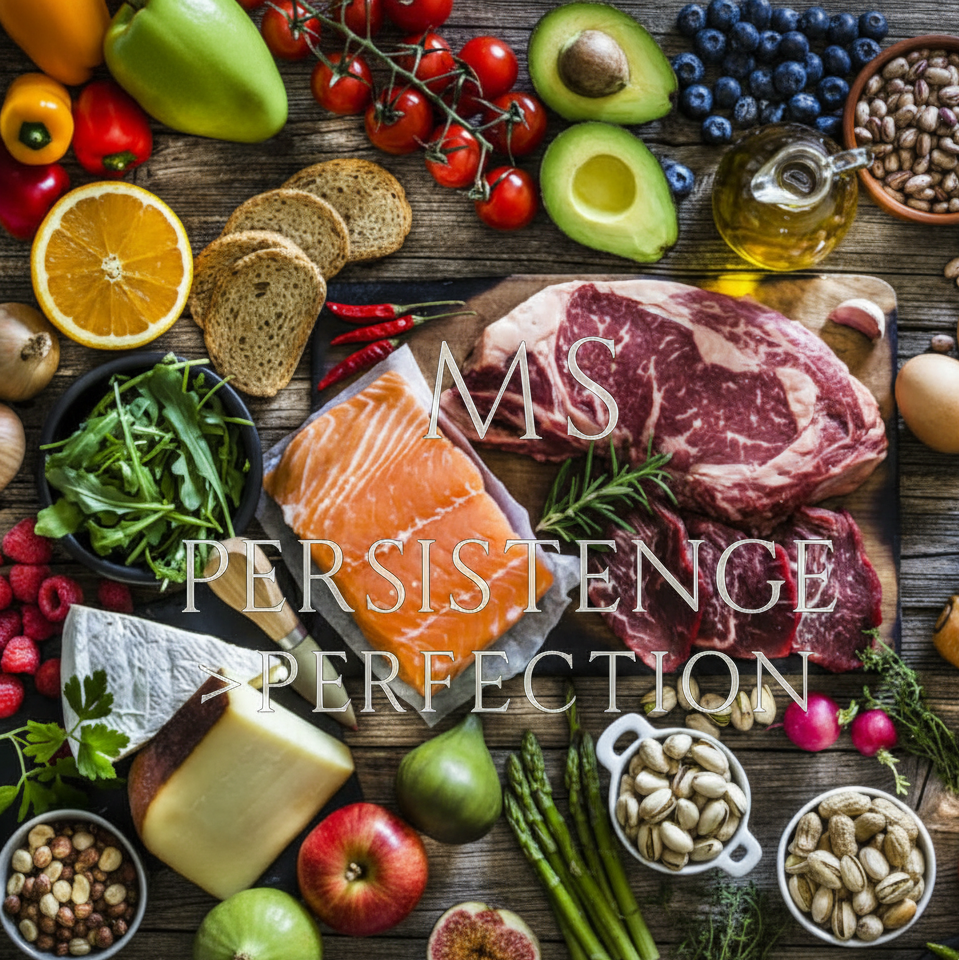
Hard Truths, Not Hashtags: 5 Nutrition Myths That Won’t Die

When you’ve trained on the mats, coached clients through cleans, kettlebell swings, and meal prep execution, and watched everyday athletes chase their performance goals, you start to see the myths vs reality.

The claims that sound sexy.

Some strategies seem fresh and innovative.

And there are promises that seem too good to be true and usually are.

Here are five of the most persistent nutrition myths that still persist in fitness culture to this day. These myths can hold back your progress, make your habits harder, and limit your performance.

Let’s put these myths to rest.

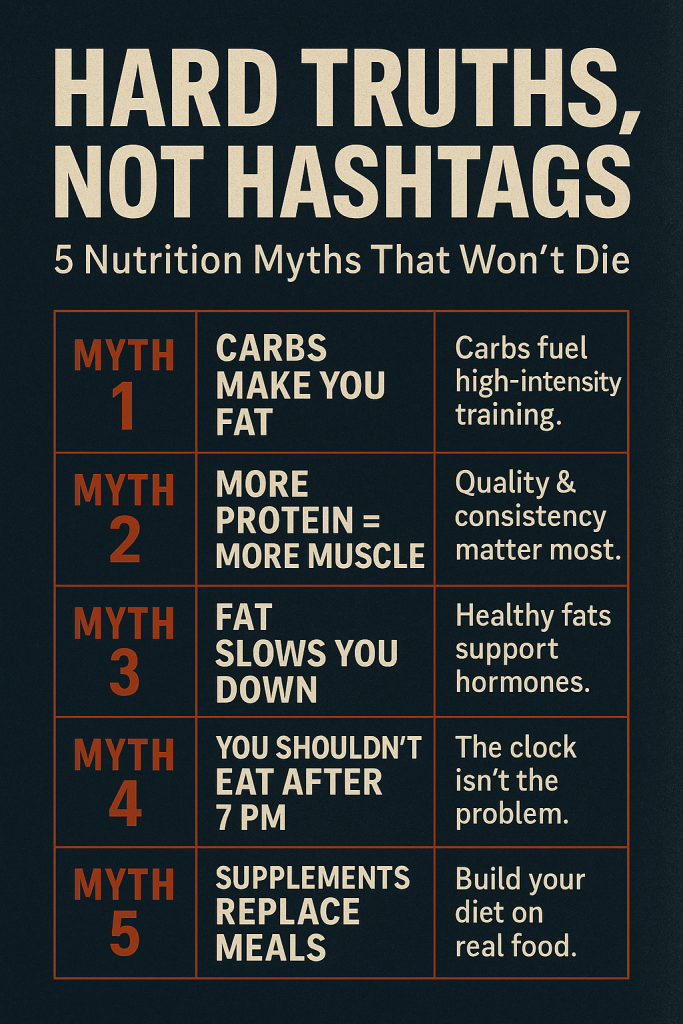
Myth 1: Carbs Make You Fat, So Avoid Them
The belief that carbohydrates are always “bad” is one of the oldest myths in fitness. Over time, people started to think of “carbs” as just donuts and soda, forgetting that fruits, vegetables, rice, and oats are also carbohydrates.

Carbohydrates are your body’s preferred fuel source for high-intensity movement. In sprinting, lifting, grappling, and EMOMs. When you cut carbs too aggressively, especially around training, you’re cutting the fuel that keeps the engine running and ready for its highest performance.

Of course, someone who doesn’t move much and eats 400 grams of sugary carbs every day will gain fat. But if you’re an athlete training 4 to 6 times a week and still avoiding fruit, you’re likely to struggle with recovery, mental clarity, and performance.

Carbs are not the problem. The real issues are poor timing, portion sizes, and choosing the wrong sources. It’s important to know the difference.

Myth 2: More Protein Equals More Muscle
It’s easy to think of protein as a magic solution for building muscle. But the idea that you can just drink more shakes and automatically grow isn’t true. Your body can only use a certain amount of protein at a time, and anything extra just adds calories.

If your training lacks volume, intensity, or progression, no amount of protein will magically build muscle. If your sleep is poor, your recovery window is compromised. And if your stress is off the charts, you’ll break down more than you build.

Think of protein as a critical piece of the puzzle, but not the only one. Focus on consistent daily intake (spread across meals), quality sources (whole food > processed powders), and real recovery habits. You don’t get stronger just by eating. You get stronger by absorbing nutrients after solid training and real rest.

Myth 3: Fat Slows You Down, Avoid It
Fat was blamed during the low-fat trends of the 1980s and 1990s, and some people still avoid it. Even now, many choose “fat-free” salad dressing and worry that eating an avocado will hurt their progress.

The truth is, healthy fats are needed for hormone production, joint health, cell repair, and brain function. Athletes who avoid fat for too long often have trouble sleeping, joint pain, low libido, or hormone problems.

You don’t have to add butter to your coffee or eat only bacon to benefit from fat. But if you’re training hard and still eating like it’s the 1990s, you’re missing out on better performance.

Balance your macronutrients to build a strong foundation.

Myth 4: You Shouldn’t Eat After 7 PM
This one sticks around like gym chalk on a black shirt. The belief is: eating late = fat gain. But what the science actually says is this: calorie balance, nutrient timing, and daily movement matter far more than the clock.

If you train in the evening, work a night shift, or just eat dinner late, you’re not hurting your progress. It’s your routine. The real problem is eating junk food late at night, snacking without thinking, stress-eating, or skipping meals earlier.

For athletes, skipping a meal after training just because it’s late can lead to poor recovery and insufficient sleep. Your body doesn’t track time; it just needs the right fuel.

Myth 5: Supplements Replace Meals
Supplements have become a billion-dollar industry promising shortcuts. But the truth? They’re called supplements for a reason. They supplement a well-rounded diet. They don’t replace one.

If your diet isn’t steady, you don’t drink enough water, and your sleep is poor, no supplement will fix your performance.

Whey protein is fine when you’re on the go. Electrolytes help when training volume is high. But if you’re leaning on powders, bars, or mystery potions more than you’re eating real food? You’re missing the point.

Eating real food leads to real results. Supplements are optional, but hard work, recovery, and whole foods are essential.

Bonus Myth That Needs to Be Busted Once and For All

You Need BCAAs to Build Muscle and Recover
Branched-chain amino acids (BCAAs) have been marketed like magic, drink this neon liquid, build more muscle, recover faster, dominate your workouts. But if you’re eating enough complete protein daily (think eggs, meat, fish, dairy, or quality whey), you’re already getting all the BCAAs your body needs.

The truth is, BCAAs are only three out of nine essential amino acids, and they don’t work alone. Building and repairing muscle needs all of them. Taking BCAAs instead of full protein is like bringing only a few bricks to a construction site and expecting to build a whole building.

This myth sticks around because supplement companies make a lot of money from BCAAs. They’re cheap to produce, easy to flavor, and simple to market to people who want quick fixes or think more is always better. Unless you train for hours without eating or have a very low protein diet, BCAAs aren’t necessary.

The bottom line: If you get enough protein each day, you don’t need BCAAs. Save your money and enjoy a good meal instead.

Why This Actually Matters
I’ve been in boardrooms, meal prep kitchens, and war rooms. I’ve been a fighter and sat across from fighters who measure life in rounds, and clients who measure progress in PRs.

The pattern is always the same:
Myths confuse, limit, and delay growth. But once you break your nutrition down into simple truths, reality & function over fad, you become harder to fool, harder to distract, harder to derail.

Field Notes: Your Mission This Week
Pick one myth above you’re still believing. Write it down. Then spend 10 minutes challenging it with real information.
Swap one habit: Still avoiding carbs around workouts? Try a simple “safe” carb on a heavy day. Watch how recovery and hunger change.
Track one metric: Not the scale. Maybe energy, sleep, or workout quality. Let that be your barometer, not guilt.
Talk it out: Share one busted myth with someone—client, teammate, or partner. Watch the shift when you trade confusion for clarity.

Nutrition is more than just eating. It’s about being ready for training, workouts, and daily life with the right fuel to help you succeed, not hold you back.

No More Macro Mayhem: How to Hit Your Numbers Without Losing Your Mind

After years of lifting, training, and meeting real-life performance demands, you realize your nutrition plan shouldn’t feel like another workout. But for many people, it turns into a tracking obsession, a spreadsheet habit, or a source of stress or anxiety every time you eat.

Let’s change that.

Why macros matter, but not how you think.

Macronutrients (protein, carbs, and fats) are the foundation of performance. They help your muscles rebuild, maintain hormonal balance, and support the overall recovery process. But knowing about them doesn’t mean you have to let them control you.

As the saying goes, precision doesn’t mean perfection. It means having a system. If you want to train hard and stay healthy for years, your nutrition shouldn’t wear you out mentally. It should feel natural, not like a burden.

Three Rules to Keep It Simple and Consistent

  1. In the Beginning, Pick Your Baseline and Repeat It
    Select one meal, either breakfast or lunch, that aligns with your nutrition goals and fits your daily routine. Use the same amount of protein, carbohydrates, and fat each time. If keeping it simple helps, don’t worry about making it exciting. Simple meals build structure, and structure leads to consistency.

    This meal becomes your anchor, helping you stay on track. After week one, you can start making small changes to keep your meals interesting while still keeping things simple.
  2. When Portioning, Simply Use Visual Portion Anchors
    Instead of chasing macros with a food scale, use your hands as portion tools:
    • Protein = palm of your hand
    • Carbs = cupped hand
    • Fats = thumb or small handful

      This method works for everyone from tactical athletes to Olympic weightlifters and CrossFit competitors. It’s not about being exact with every number. It’s about enjoying your food and reaching your goals by being consistent and making steady progress each day.
  3. Make Tweaks with Purpose, Not Panic
    Most people make changes too soon out of worry. Try not to do that. If your training feels off or you’re hungrier than usual outside of workout times, make minor adjustments instead: add +5% protein. +10% carbs. Be sure you’re consuming the bulk of your carbs around your training window.

    Here’s a bonus tip: Start by keeping notes. Each week, look back, notice any patterns, and make changes with confidence. Being consistent and clear is better than chasing new trends or getting distracted by outside opinions.

What Gets In the Way

Let’s be honest: people don’t miss their macros because they’re lazy. It happens because life gets busy, maybe you didn’t sleep well, your kids are sick, your workout got delayed, or work meetings piled up.

That’s why I follow a simple rule: plan your meals for the life you really have, not the one you wish you could organize. If your plan falls apart when things get unpredictable, it needs to be stronger. Don’t stress—just adapt and keep going.

That’s where coaching and real-world experience make the difference.

The Coach’s Corner

I’ve seen this happen with everyone I’ve coached—military members, athletes, and in my own nutrition journey, even while running a Paleo meal prep business. I always try to share these ideas and show people how to cook good food that supports real performance. The athletes who succeed over time don’t eat perfectly; they eat well and stay consistent. They build habits, rely on routines, and make their food work for them.

This Week’s Action Plan

  • Anchor a meal: Pick one go-to meal that hits your macros and repeat it 4–5 days this week.
  • Use your hands: Apply the visual anchor method to every other meal.
  • Track with context: Pick one training day and one rest day to log. How did you feel? What did you eat? Did it support recovery?
  • If necessary, adjust just one thing next week based on performance, energy, or hunger cues.

Final Word

This is about fueling your performance without burning out. Your training needs clarity, and your life needs structure. Eating well and hitting your macros shouldn’t feel like a burden. It can be the steady, powerful engine that keeps everything running smoothly in the background.

Try these strategies and let your nutrition support your best work, both in the gym and in your daily life.

The 5 Biggest Meal Prep Myths and What Actually Works for Real People

Meal prep gets talked about so much these days, you’d swear it’s a personality trait. It’s always rigid, joyless, and maybe just a little smug. But the truth is, prepping food isn’t about discipline for its own sake. It’s about simplifying the week so you can think less about logistics, saving money, and staving off adverse health effects, and more about living your life.

While you’ll often see phrases like “may help” or “might improve” online, real data and everyday experience show what actually works. Here’s what makes a real difference for people like us.

Myth #1: “Meal prep means eating the same thing every day.”

Reality: Meal prep doesn’t mean you have to eat chicken and rice every day until you’re sick of them. The real goal is to make healthy choices easy and convenient.

Try prepping ingredients instead of full meals. Grill or roast some proteins, cook a few types of carbs, and chop up veggies. Then, mix and match them throughout the week—maybe smoked salmon over greens one day, steak and rice another, or yogurt with fruit when you need something quick.

What “the science” says: Research from the International Journal of Behavioral Nutrition and Physical Activity found that people who plan their meals tend to have more diverse diets — not less. It’s the planning that makes variety possible, not spontaneity.

Myth #2: “Prepping takes too much time.”

Reality: Spending a few hours on Sunday or Saturday can save you from stressful evenings all week. Even just washing produce, boiling rice, or portioning fruit ahead of time can make your weekdays much easier.
And it’s not just about time. People who spend even 30–60 minutes a day preparing food eat more vegetables and fruit (University of Washington research, 2014).

The time’s going somewhere either way, you can spend it prepping intentionally, or you can spend it waiting in drive-thrus.

Myth #3: “Meal prep is only for people trying to lose weight.”

Reality: That idea is just a marketing myth. Meal prep isn’t only for losing weight. It helps you avoid making poor choices when you’re hungry and supports your long-term health.

Sure, portion control helps. But more importantly, prep stabilizes your energy and makes fueling performance automatic. Whether you’re lifting, coding, or commuting, your brain and body both need steady inputs.

Home-prepped meals consistently come in lower in sodium and saturated fat, not because they’re “diet food,” but because you’re in charge of the ingredients.

You’re not dieting; you’re planning to succeed, not to fail. When in doubt, always rely on PPP, proper prior planning, and it’ll save you in countless scenarios.

Myth #4: “It’s cheaper to just grab takeout.”

Reality: The numbers don’t lie. Data from the American Journal of Preventive Medicine shows that people who cook at home spend significantly less on food than those who eat out. Prepping helps you shop with purpose, so you buy only what you need. You waste less food and make your ingredients go further.

Pro tip: Using convenience items still counts as meal prep. Things like pre-washed greens, frozen veggies, frozen fruits, or rotisserie chicken can make things easier. Being efficient is smart, not cheating.

Myth #5: “Healthy meal prep means going ‘Paleo,’ ‘keto,’ or you’re “cutting carbs.”

Reality: Restrictive eating styles burn people out. The goal is consistency, not purity. You don’t have to eliminate carbs, especially if you train. Always remember, persistence over perfection.

Your brain and body work best with carbs. Foods like fruits, vegetables, potatoes, and white rice help you perform and recover, especially if you’re working out.

Coach’s Note: We eat well today for optimal performance tomorrow.
Coach’s Note:
We eat well today for optimal performance tomorrow.

Whether your training is on the mats, in the gym, or at your desk, food is fuel, not a moral test.

The Bottom Line

Meal prep isn’t about being perfect, it’s about being consistent. It’s a simple way to get back your energy, time, and control in a world full of distractions. Eat well, keep your plans simple, and stick with what works.

Progress comes from following through, not from always trying something new.

Recovery Is Training Too

Fuel isn’t just for training — it’s for thinking, building, and recovering.

Athletes already know this truth: you don’t get stronger in the gym, you get stronger in recovery. Stress plus rest equals growth. Skip the rest, and all you get is breakdown.

In cybersecurity, it’s easy to forget this lesson. After long nights, incident responses, or big migrations, teams often jump straight into the next job. But recovery isn’t a luxury, it’s the bridge between surviving and improving. Without it, you just accumulate fatigue disguised as progress.

The Cost of Skipping Recovery

Burnout: tired minds make risky calls.
Missed lessons: incidents get fixed, but are never studied.
Fragility: systems stay brittle when they’re never given a chance to adapt.

Building Real Recovery

  • Post-incident reviews. Treat them like an athlete breaking down game tape, where the real learning happens.
  • Plan real downtime. Make sure everyone gets real rest after major efforts. Feeling worn out doesn’t show you care more; it’s a sign you need to pause.
  • Iterative improvement. Apply what you learned before running the next drill. Reflection without action is just rest, not improvement.

Fuel and Recovery: The Overlooked Half

Physical recovery doesn’t stop at rest. It’s also about what you put in your body.
Meal prep isn’t about looking good; it’s about making sure you can keep going. Drinking enough water, eating real food, and keeping your energy steady (and your blood levels in check) all week isn’t about following a trend. It’s about having the strength to do your job well.

You can’t think clearly or respond quickly if your system’s running on fumes. Whether you’re training or troubleshooting, energy is uptime.

A rule I’ve used for years: “We eat well today for optimal performance tomorrow.” That mindset changes how you plan your day, not just for food, but for everything else as well. Every decision contributes to tomorrow’s success.

When you build those habits, you stop depending on motivation to show up. Discipline becomes your safety net.

The Mindset Connection

In martial arts, you learn to reset between rounds. In strength training, deload weeks are built in by design. Cybersecurity should be no different. We don’t just patch systems; we maintain the people running them.

Recovery isn’t the end of work, it’s part of the work.

It’s where resilience grows.