The Art of Cyberwar, Part V | Energy | The Use of Force

the art of cyberwar part V energy and the use of force. matt shannon cloud security.

The principles:
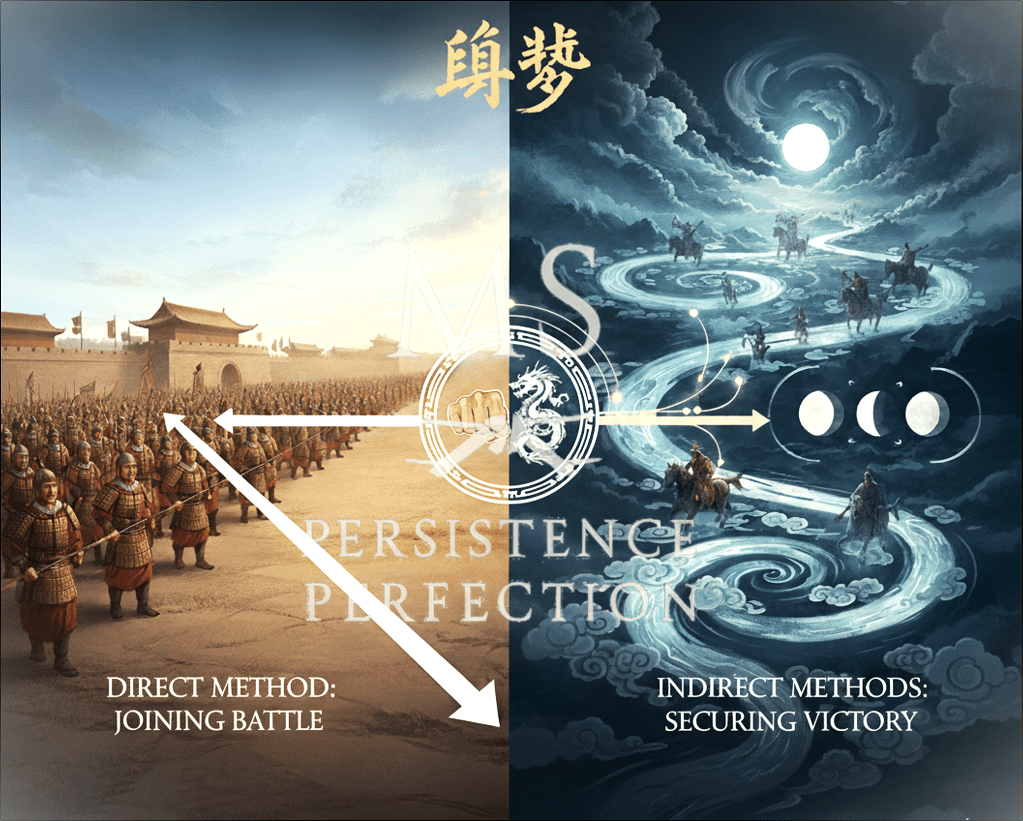
In all fighting, the direct method may be used for joining battle, but indirect methods will be needed in order to secure victory.

Indirect tactics, efficiently applied, are inexhaustible as Heaven and Earth, unending as the flow of rivers and streams; like the sun and moon, they end only to begin anew; like the four seasons, they pass away to return once more.

The Power of Controlled Motion

Sun Tzu’s fifth chapter deals with energy, not as brute strength, but as direct application of force.

He warned that a commander must know when to cultivate and store power and when to release it. Misapplied use of Energy burns itself out. However, when energy is focused, it bends the world to its will.

It’s an idea that translates effortlessly to today’s digital battlefield. Nations, like networks, often fail not because of a lack of capability, but because of a lack of control.

True mastery isn’t in how much force you can deploy. It’s in knowing how little you need to. It’s akin to the idea that, sure, you can kill a fly with a hammer, but is it the most effective tool at your disposal?

The Cost of Unchecked Energy

American Diplomatic and Military History is full of examples of lawmakers mistaking our capacity for clarity.

In Korea, overwhelming U.S. power pushed back North Korean forces, only to overextend toward China’s border and trigger an entirely new front. And thus, we have burdened ourselves with maintaining the “38th parallel” ever since.

In Vietnam, energy became inertia, force applied endlessly without definition, draining political and moral capital alike. If only the “peacemakers” at the Treaty of Versailles had let Ho Chi Minh deliver his speech on the Rights of Man, perhaps there would have been no quagmire in Southeast Asia to begin with. A guerrilla war that would take nearly 60,000 American lives and lead to what became known as the “Vietnam Syndrome.”

In Iraq, “shock and awe” demonstrated that a singular “tactical victory” can be swift, while a strategic victory remains elusive. Notwithstanding the entire list of false pretenses that led to the invasion of Iraq to begin with.

Each conflict began with a belief in momentum and ended with war fatigue. Demonstrating once again, force without direction always collapses under its own weight.

The lesson isn’t that force is wrong; it’s that force, when misapplied and unguided, becomes self-consuming. Power is not infinite. Neither is attention, money, or public trust.

The Cyber Equivalent: Sprawl and Burnout

Organizations repeat these same mistakes in digital form.

A breach occurs, and the reflex is to rush to acquire new tools, policies, and budgets, thereby triggering a cyberwar “surge.”

New dashboards, new alert monitoring, and new vendors lead to a surge in activity, while clarity plummets.

This is cyber energy without strategy, effort disconnected from insight.

As Sun Tzu also said: Amid the turmoil and tumult of battle, there may be seeming disorder and yet no real disorder at all; amid confusion and chaos, your array may be without head or tail, yet it will be proof against defeat.

Teams exhaust themselves chasing incidents instead of patterns. Leaders demand constant escalation, not realizing that perpetual crisis is its own vulnerability.

The result mirrors the national trap: motion is mistaken for genuine progress. The ability to endure is mistaken for endurance.

Energy as Rhythm, Not Frenzy

Sun Tzu described two forms of force:

  • Normal energy — the steady discipline that sustains the fight.
  • Extraordinary energy — the precise, unexpected burst that wins it.

In cybersecurity, the equivalent is security posture and precision in the application of policies.

Normal energy is the quiet work of patching, monitoring, and awareness training. Extraordinary energy is the calm, swift, and accurate incident response that turns chaos into closure.

Both are needed. But one cannot exist without the other. A team that never rests has no energy left to strike when it matters most.

It’s the same in martial arts.

In Wing Chun:
Normal energy = quality structure and energy sensitivity.
Extraordinary energy = the skill to deliver a singular, intercepting strike that ends the exchange.

Muay Thai:
Normal energy = footwork, guard, pacing.
Extraordinary energy = the slashing elbow, a stabbing teep, or perfectly placed knee.

BJJ:
Normal training energy = position, pressure, framing.
Extraordinary training energy = the ability to feel a submission triggered by feeling the opponent’s mistake. Or in Mandarin it’s an old idea called Wu Wei, or effortless action. Meaning, I don’t present the opportunity to attack; the enemy presents it to me, like water finding a leak in the dam.

A Security Team that never rests has no energy left for anything extraordinary.

Good CISOs, like good generals, good fighters, and good grapplers, understand rhythm. They know when to conserve strength so that action, when it comes, is clean and effective.

As Master Tzu also knew, “When he utilises combined energy, his fighting men become as it were like unto rolling logs or stones.” Leading to, … “the energy developed by good fighting men is as the momentum of a round stone rolled down a mountain thousands of feet in height. So important is the subject of energy.

Diplomacy and the Misuse of Force

In diplomacy, the same physics apply. The U.S. has often wielded immense power but uneven patience.

Moments like the Marshall Plan and the Cuban Missile Crisis demonstrated the value of precision, employing limited force, clear objectives, and a proportional response.

But elsewhere, the misapplication of force became diplomatic impotence on full display. Prolonged occupations and open-ended interventions constantly drain strategic reserves of will and trust.

Every drone strike, every unconstitutional data collection program, every new cyber warfare doctrine carries a similar risk: that power’s convenience will overshadow its consequence.

The Taoist counterpoint from Lao Tzu still resonates to this day:

“He who knows when to stop never finds himself in trouble.”

Knowing when not to act is the highest use of force. It’s the difference between control and compulsion.

The Lesson for Cyber Strategy

A strong digital defense isn’t constant action, it’s intelligent action.

Practical translation:

  • Automate the repeatable.
  • Escalate only with context.
  • Protect attention as aggressively as data.
  • Reserve extraordinary effort for extraordinary situations.

Energy mismanaged becomes sprawl. Energy focused becomes resilience.

It’s never the size of the arsenal. It’s the precision of the response.

Momentum and the Myth of Constant Action

Modern life rewards constant motion, refresh, respond, and reply.
In cybersecurity and foreign policy alike, stillness feels dangerous to the untrained mind.

But strategy lives in the pause between movements. Quality fighting skills are always more effective when you can strike on the half-beat, a fundamental separator on the mats, and on digital and physical battlefields.

Force has a short half-life. When it’s used endlessly, it decays quickly and fades into the ether. When it’s reserved for the right moment, it changes everything.

A breach contained quietly is often a bigger victory than a public takedown.
A crisis de-escalated without violence often preserves more stability than any show of strength.

Knowing When to “Flow With the Go”

As one of the greatest living legends in Brazilian Jiu-Jitsu, Rickson Gracie once said, “In Jiu Jitsu we flow with the go.”

Meaning:

  • don’t fight force with tension
  • stay aware but not trapped by focus
  • stay smooth and adaptive
  • flow with the opponent’s energy
  • let well-trained instinct and structure guide you

That metaphor fits the digital era perfectly. The best blue or purple teamers, like the best leaders, don’t fight the current; they learn to read it and swim with it, not against it.

Lao Tzu would say that “the soft overcomes the hard,” not through weakness but adaptability. Force channeled through awareness is stronger than force spent in anger.

In warfare and cybersecurity alike, energy is a currency. Spend it recklessly and you’ll be empty when it matters. Spend it wisely and you’ll be leading on the battlefield.

Final Reflection

Knowing how to use force is knowing its limits.
Sun Tzu and Lao Tzu shared the same truth from opposite angles:
Power must be balanced by patience.
Energy must be stored as much as it is spent.

History punishes those who forget this. So does network and security architecture.

The art isn’t in using force; it’s in knowing when the situation calls for little, none, or overwhelming force.

That’s not mysticism. That’s strategic maintenance. And it’s as accurate in security architecture as it is on the battlefield.

All of these lessons point us directly back to our opening principles: “In all fighting, the direct method may be used for joining battle, but indirect methods will be needed to secure victory.” And, “Indirect tactics, efficiently applied, are inexhaustible as Heaven and Earth, unending as the flow of rivers and streams; like the sun and moon, they end only to begin anew; like the four seasons, they pass away to return once more.

The wise strategist learns to move the same way.

Security Without the Pessimism: Phishing 2.0 – How Smart People Still Get Hooked

When Experience Becomes the Blind Spot

You’ve been in tech long enough to spot the obvious scams. They have bad grammar, sketchy links, and the “urgent” password resets that scream, “It’s a trap.”

Modern phishing is designed for experienced professionals, people just like you.

The senior engineer who knows better.
The manager who moves fast.
The admin is juggling too many tabs.

Phishing 2.0 targets the confident, not the naive.

Because overconfidence, that quiet, “I’d never fall for that,” is exactly what gets exploited.

How Phishing Evolved While We Were Busy

Old-school phishing was obvious: typos, weird logos, fake banks. Now? It’s clean, professional, and personalized.

Attackers scrape LinkedIn, GitHub, and Slack leaks, as well as any other platform where they can learn who you are and how you communicate. Then they build emails that sound right.

“Following up on that architecture review.”
“Can you sign off on the AWS access request?”

No panic. No red flags. Just believable context. Phishing’s power now lies in familiarity, not just deception.

The Psychology And Why Smart People Click Anyway

It’s not ignorance. It’s pattern recognition. Your brain runs on shortcuts. You see what fits your norm and fill in the rest. “This feels familiar, so it’s safe.”

Layer on fatigue, distraction, or context switching, and even the most security-conscious person can click the wrong thing.

Attackers don’t need to outsmart you, they just need to catch you mid-scroll.

The Real Tricks How Phishers Use Your Own Systems Against You

Phishing 2.0 thrives inside your workflow:

  • Cloud notifications: “New file shared with you.”
  • Team apps: Slack, Notion, or Asana lookalikes.
  • Vendor portals and HR systems: identical clones.
  • QR codes: the new “scan to verify” scam.

Attackers don’t mimic strangers anymore; they mimic your routine.

The antidote, and our greatest protection, is patience.

Forget fear. Focus on tempo.

Build a habit of thinking first, then reacting. Believe me, I know it sounds elementary and maybe even silly, but people do it every day. It reminds me of the old saying from the range: “ready, fire, aim” versus “ready, aim, fire.” People are often too quick to react without pausing to think first.

That moment of pause between seeing and clicking is what saves the enterprise. So, always:

  • Hover first. Always.
  • Verify context: Does it match your current workflow?
  • Cross-check by text or chat before responding.
  • Trust your instinct; hesitation usually means something’s off.

Security isn’t about paranoia. It’s about building patience as your strongest defense.

Culture Over Blame

Curiosity beats compliance. Blaming users for falling for a phishing attempt isn’t awareness training or good security; it’s just scapegoating. People click because they’re human, not because they don’t care.

If your environment rewards speed over care, mistakes are inevitable. Instead of punishment, build openness to conversation. A strong security culture treats “I think I clicked something bad” as a start, not a sin.

Curiosity beats complacency every time.

Final Thought

Phishing 2.0 isn’t just a tech problem; it’s a problem of pace. Attackers take advantage of our work tempo. The faster we move, the easier it is to miss what matters.

The best security upgrade?

Breathe. Scan well. Challenge every unfamiliar link or request. Pause before you click, verify before you act, and encourage your team to do the same.

That’s not being cynical or pessimistic.
That’s the difference: real security means trained, patient awareness every day.

Security Without Pessimism: Shadow IT – When Convenience Becomes a Security Risk

The Shortcut That Became the Standard

We’ve all done it.

You’re trying to get something simple done, but the company’s “official” tool takes six steps and two approvals just to open a project. So, you find a better one, quicker, cleaner, easier.

Maybe it’s a shared Google Sheet, a new messaging app, or some AI productivity tool that actually works. It saves you time, gets results, and honestly, no one seems to mind.

That is, until someone finally notices.

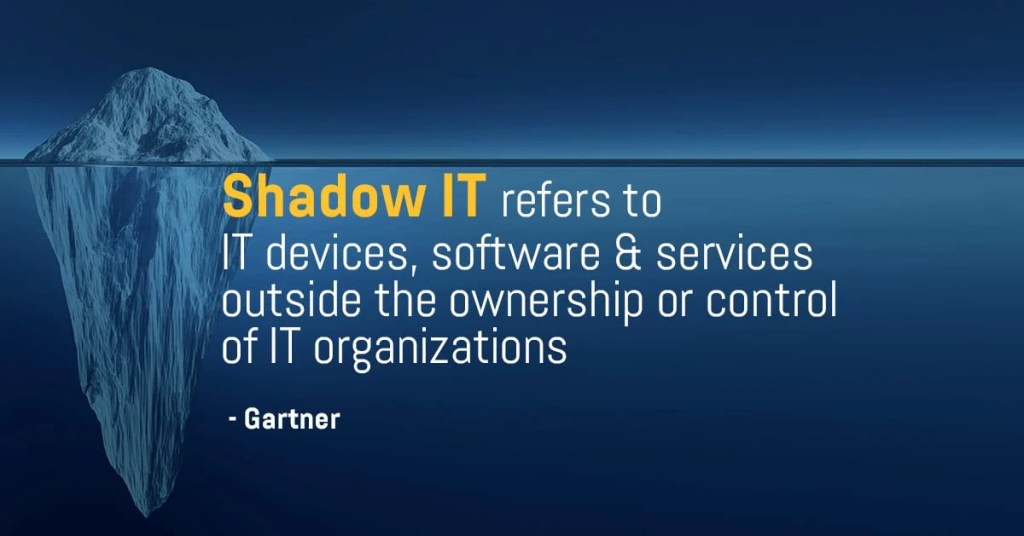
That’s Shadow IT, the silent, well-intentioned workaround that slowly turns into a security liability.

The issue isn’t carelessness; it’s the drive for efficiency.

The Anatomy of Shadow IT and How It Slips Through

Shadow IT doesn’t begin as an act of rebellion. It starts as a way to get things done.

Teams feel pressure, tools are slow, and company processes can’t keep up. So, someone tries a new tool that bends the rules, just for this one time.

That quick fix gets shared with others and soon becomes the usual way of doing this.

Before long, company data is moving through several tools that no one has officially approved:

  • Free cloud drives with no encryption.
  • Personal accounts are used for client data.
  • Messaging platforms without audit trails.
  • Chrome extensions quietly sync user info to external servers.

It’s not done out of malice; it’s just human nature. People pick what helps them get the job done. But each time we choose convenience over control, we lose sight of what’s happening.

Why Good People Go Rogue

Most shadow IT isn’t about breaking rules. It’s about finding better ways to work.

People want to do their jobs well. When approved systems slow them down, they look for alternatives. This creativity isn’t careless, but it can still be risky.

Most people don’t focus on compliance when facing a tight deadline. They focus on getting results.

Here’s the problem: attackers know this. They rely on busy teams taking shortcuts, creating unmonitored accounts, or storing data in places that go unnoticed.

Shadow IT doesn’t look like rule-breaking. It looks like taking initiative.

When Visibility Vanishes

Each unapproved app creates another potential risk.

Security teams can’t track data, fix vulnerabilities, or control access. Soon, they may not even know what needs protection.

If something goes wrong, you can’t protect what you can’t see. A hacked third-party app or a compromised account can quietly put the whole system at risk.

Shadow IT isn’t a single big mistake. It’s many small, hidden problems. By the time someone notices, it’s often too late to trace the cause.

Balance Control with Capability

The solution isn’t to make things stricter. It’s to make official tools easier to use.

Security should support people in their actual work, not just follow what policy says.

Here’s what helps:

  • Simplify the approved stack. If it’s painful to use, it’s already compromised.
  • Create a “request to innovate” process. Let employees suggest tools safely.
  • Shadow IT discovery audits. Not witch hunts — open conversations.
  • Default to transparency. Make it normal to say, “I’m testing this app” without fear.

The aim is partnership, not strict control. If security punishes creativity, people will just hide what they’re doing. Problems will still find a way through.

Building Trust Around Tools

You can’t get rid of Shadow IT by being strict. The only way is to build trust instead of secrecy.

If people think speaking up will get them in trouble, they’ll stay silent. But if they see it as a chance to work together, you’ll know what’s really happening.

The best workplaces see curiosity as a strength, not a risk. Security and innovation aren’t enemies; they work together toward the same goal.

Final Thought

Shadow IT isn’t caused by bad people. It happens when good intentions don’t fit with strict systems. For security to keep up with creativity, it needs to act as a guide, not just a gatekeeper.

That’s not being pessimistic. That’s reality and an opportunity to get better, together.

Security Without Pessimism: Why “Just One Click” Can Still Break Everything

The Myth of the Harmless Click
It’s late on a Friday afternoon. You’ve taken back-to-back phone calls, your inbox is overflowing, and your caffeine is slowly but surely fading. Then comes one last email. It’s something from HR about a new hire policy update.

You click, skim, and move on.

Five minutes later, that “harmless” click starts a slow-motion domino fall. Credentials harvested, tokens stolen, access expanding, all before you’ve even closed your laptop.

People think, “It was just one click.”
That’s the point. It only ever takes one.

The Domino Effect
Here’s what happens after that moment most people never see.

That fake login page doesn’t just steal your password, it grabs your session cookies, mimics your device fingerprint, and jumps the line of trust. Suddenly, it’s you logging in from a new location, sending a file, approving an invoice.

Once inside, attackers don’t move fast. They move quietly. They study your company like a playbook, structure, tone, and approval chains. The next email they send looks even more real because it’s built with your real data.

By the time anyone notices, the damage has often been done for days.

But why do we fall for it? The answer isn’t carelessness—it’s psychology.

The Psychology of the Click
No one falls for this because they’re careless. They fall because they’re human.

Attackers know when we don’t double-check: near quitting time, maybe when you’re experiencing that post-lunch carb crash, or when you’re in a rush to make that 9am meeting. All of those moments when we see what we expect to see. They don’t need to hack your brain, they simply nudge it the right way.

Speed, familiarity, and trust are their sharpest weapons, which is why “training” alone doesn’t solve the problem. Awareness isn’t a habit. The mind knows better, but the hand clicks first.

How Attackers Exploit Normalcy
Modern phishing doesn’t seem sketchy; it seems routine.

They copy internal phrasing, familiar names, work to perfect internal branding. The trick isn’t panic anymore, it’s comfort and familiarity.

Common triggers:

  • “Quick update before the weekend.”
  • “Need approval by end of day” or “close of business.”
  • “Can you confirm this invoice?”

Nothing dramatic. That’s the point. The hook isn’t fear, it’s familiarity.

How to Build a Click Buffer
You can’t eliminate every threat, but you can slow the chain reaction.

Build a Click Buffer. Think of it as a two-second pause that keeps good habits automatic:

  • Hover before you click. Make it reflex.
  • Check the sender domain. If it looks almost right, it’s wrong.
  • Stop treating “urgent” as a priority. Urgency is a tactic, not truth.
  • Ask IT. They’d rather you check 100 false alarms than clean up one breach.

A brief pause can equal a big payoff. Security starts with seconds, not software.

Culture Over Blame
Here’s where most companies stumble: they turn mistakes into shame. Someone clicks a bad link, and suddenly they’re the subject of the next slide in “staff security awareness training.”

That doesn’t build security, it builds silence.

A healthy culture rewards curiosity. If people feel safe saying, “Hey, I think I messed up,” the damage stops faster, every time.

You can’t stop every click. However, you can build a team that identifies, shares, and learns from mistakes before they spiral out of control.

Final Thought
The real security upgrade isn’t another tool or rule to apply, it’s simply learning to breathe and take a little extra time to pause before you click.

  • One breath before the click. One second to hover over the link.
  • One habit that keeps the rest intact.
  • That’s not fearmongering.
  • That’s just good hygiene.

If you found this helpful, please share it with your team or reflect on your own scanning and clicking habits. Security is a team effort and every small pause makes a difference.

Multi-Factor Authentication: Boring, Annoying, Essential

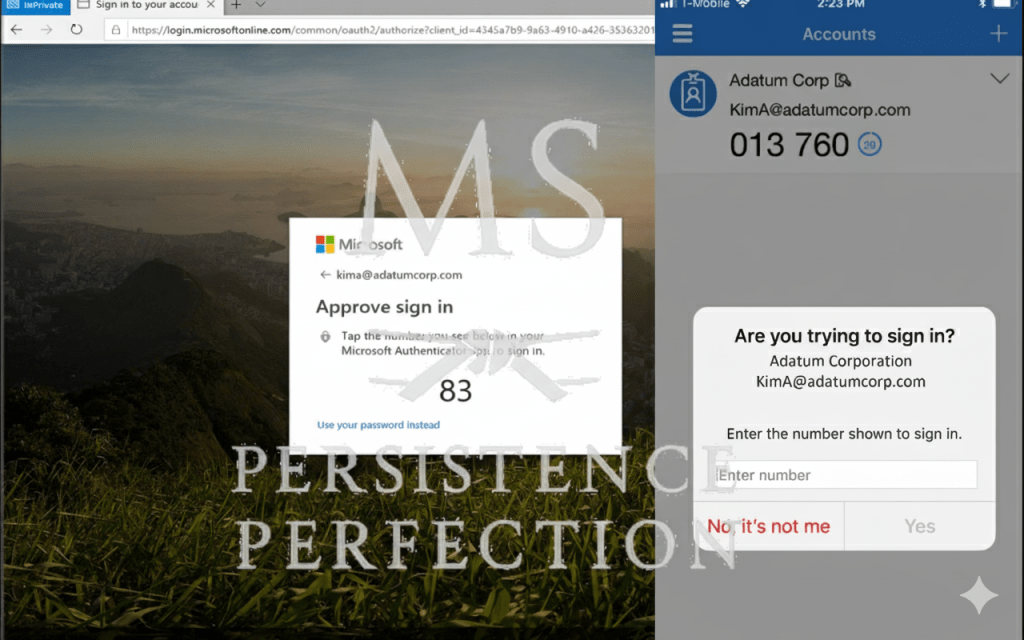
In cybersecurity, we get excited about new technologies like AI, zero trust, and quantum encryption. But ask any practitioner what quietly stops the most breaches day to day? It’s still MFA.

Multi-Factor Authentication may not be exciting. It can slow people down and sometimes feels awkward. Even so, it remains one of the best ways to stop credential theft, which is the most common way attackers get into any network.

Why MFA Matters

• Passwords are weak. People reuse them across accounts, attackers buy them on the dark web, and “123456” still shows up in breach data.
• Phishing is effective. Users still click links and enter credentials. MFA blocks stolen passwords from being enough.
• Attacks are automated. Bots hammer login pages at scale. MFA breaks that automation by forcing a second factor.

Despite everything we know, MFA is still the easiest and most effective step in cyber defense. It often makes the difference between stopping an incident and having to respond to one.

The Pushback Problem

When we first rolled out MFA our district, the resistance was loud.

“It’s annoying.”
“It slows us down.”
“We don’t have time for that.”
“Why do I need this if I’m just checking email?”

At first, security changes can feel like a big hassle for everyone, whether you’re a teacher, technician, or leader. But a few seconds of extra effort can save us from days or even weeks of problems.

To make sure everyone accepted MFA, we took our time and built support step by step:

• Continuous staff education. Regular updates explained the “why” behind MFA, not just the “how.”
• Knowledge-base articles gave our help desk a clear playbook, no scrambling when someone was locked out or confused.
• Anticipating questions became part of the rollout strategy. From custodians logging into shared workstations to the superintendent approving district-wide communications, everyone got personalized guidance.

We kept the message clear: MFA is not a burden. It’s part of how we protect our entire staff and precious student PII, and PHI data. We aways have to remain FERPA, COPPA, CIPA, and PPRA compliant.

Over time, the complaints faded. Now, using MFA is second nature. It’s simply part of our routine.

The Fix

• Enforce MFA on all critical systems.
• Use phishing-resistant methods (authenticator apps, hardware keys) and worst-case scenario SMS.
• Train users that a few extra seconds of friction is the cost of resilience.

The Parallel

Using MFA is similar to wrapping your hands before boxing. It might seem tedious when you’re just getting started, but it protects you. If you skip it once, you might be fine, but skip it again, and you risk real trouble.

Security, like weightlifting, CrossFit, martial arts or meal prep it works best when the basics become instinct.

Again, MFA is boring. But, it’s also one of the most powerful shields you have.