
Nutrition for female athletes is about fueling strength, performance, and long-term vitality, not restriction or “losing weight.”
Performance Over Perception
Most nutrition advice aimed at women is still built around restriction, aesthetics, or outdated assumptions about metabolism and training. Training for ladies varies in degree, not kind.
That’s a problem.
If you are training 3–5 days per week, lifting with intent, and layering in conditioning, your body is not asking for less. It is asking for structure, consistency, and sufficient nutritional intake to support your output.
This is not about eating less. It’s about eating appropriately for what you demand of your body.
Myth vs. Reality
Myth: Eating more carbs or fats for performance will automatically lead to fat gain.
Reality: Adequate carbs and fats are essential for training intensity, hormonal health, and recovery. Under-fueling is far riskier for female athletes.
What Changes for Female Athletes?
Physiologically, women:
- Oxidize slightly more fat at rest and during lower intensity work
- May rely more heavily on carbohydrate during higher intensity training
- Are more sensitive to low energy availability, which can disrupt:
- Hormonal health
- Bone density
- Recovery and performance
This makes under-fueling a much bigger issue than over-fueling.
Key concept: Performance nutrition for women is not scaled-down male nutrition. It requires adequate intake and consistency, not chronic restriction.
Caloric Baseline – Your Starting Point
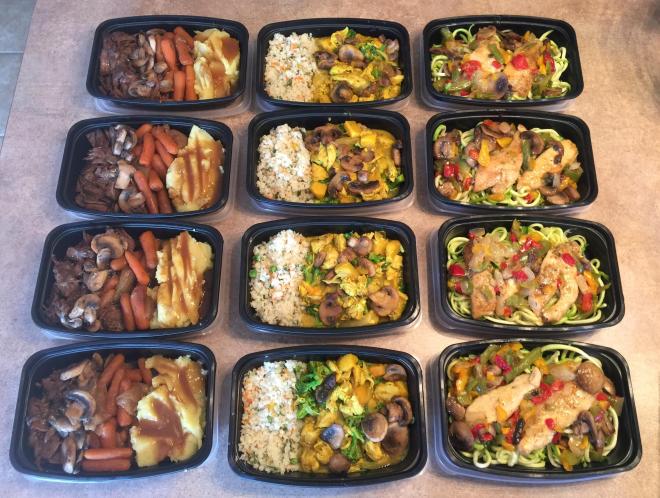
For most beginner to intermediate female athletes:
- ~12–16 calories per lb bodyweight/day
Adjust based on:
- Training frequency and intensity
- Body composition goals
- Recovery and energy levels
Macro Quick Reference (per lb bodyweight)
• Calories: 12–16/day
• Protein: 0.8–1.1g
• Carbs: 1.5–2.5g
• Fat: 0.3–0.5g
Protein: The Non-Negotiable
Recommendation
- 0.8 – 1.1 g per lb bodyweight per day
Why does it matter?
Protein supports:
- Muscle repair and growth
- Tendon and ligament integrity
- Immune function
- Hormonal signaling
Women often under-consume protein, especially earlier in the day.
Distribution
Aim for:
- 25–40g per meal
- 3–4 meals per day
This supports repeated stimulation of muscle protein synthesis (MPS).
Scientific Support
- Morton et al., 2018 (Br J Sports Med)
→ ~1.6 g/kg (~0.7 g/lb) minimum, with higher intakes beneficial for active individuals - Areta et al., 2013 (J Physiol)
→ Even protein distribution improves MPS vs skewed intake
Carbohydrates: The Performance Driver
Recommendation
- 1.5 – 2.5 g per lb bodyweight per day
Adjust based on:
- Conditioning volume
- Training intensity
- Recovery demands
Why Carbs Matter
Carbohydrates:
- Fuel resistance training and conditioning
- Support glycogen replenishment
- Improve performance output and training quality
- Help regulate cortisol post-training
For Hybrid Training (Lifting + Conditioning)
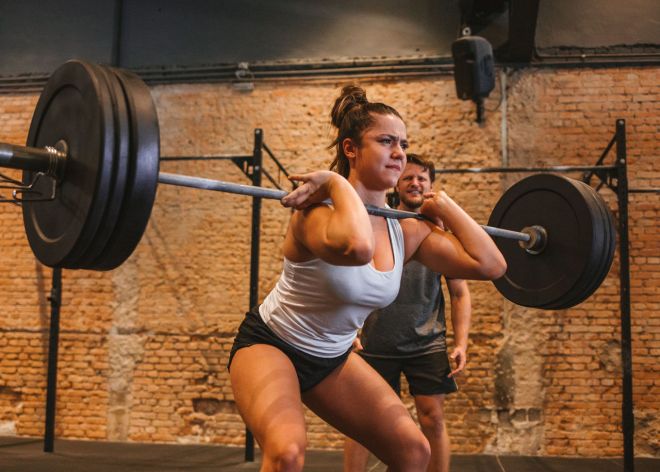
With 2 days of added metabolic work:
- Bias carbs around training windows
- Slightly higher intake on those days
Scientific Support
- Kerksick et al., 2017 (JISSN Position Stand)
Carbs critical for performance and recovery in high-intensity training - Burke et al., 2011 (J Sports Sci)
Glycogen availability directly impacts training capacity
Fats: Essential, Not Optional
Recommendation
- 0.3 – 0.5 g per lb bodyweight per day
Why It Matters
Fats support:
- Hormone production (including estrogen)
- Brain function
- Nutrient absorption
- Long-term health
Chronically low fat intake in women is linked to:
- Hormonal disruption
- Menstrual irregularities
- Reduced recovery capacity
Scientific Support
- De Souza et al., 2014 (Br J Sports Med)
Low energy and fat intake linked to endocrine disruption
Nutrient Timing: Useful, Not Obsessive
Pre-Training
- Protein + carbohydrates
- Example: Greek yogurt + fruit, or protein + oats
Post-Training
- Protein + carbohydrates
- Example: whey + fruit, or whole meal
Evening Eating
Avoid large meals too close to sleep.
If needed:
- Smaller protein + carb option
- Example: 1 serving of fat-free Greek yogurt, 1 serving of your favorite protein powder + 1 serving of fruit
Hydration & Electrolytes
Especially important for:
- Conditioning sessions
- Longer training days
Baseline
- ~0.5–0.7 oz water per lb bodyweight daily
Add electrolytes if:
- Sweating heavily
- Training in heat
- Doing longer sessions
Common Mistakes That Limit Progress
1. Under-eating protein
2. Avoiding carbohydrates
3. Skipping meals and “catching up” later
4. Relying on snacks instead of structured meals
5. Treating food as a reward or a punishment
Practical Daily Structure
Example Day
Meal 1
- Eggs + oats + fruit
Meal 2
- Chicken + white rice + vegetables + olive oil
Meal 3 (Pre/Post Training)
- Protein shake + banana
Meal 4
- Salmon + potatoes + vegetables
Action Challenge
For the next 3 days:
- Hit your protein target
- Add carbohydrates to support training
- Eat 3–4 structured meals
No tracking perfection required. Just consistency.
Coach’s Notes
- You don’t need a perfect plan. You need a repeatable one.
- Consistency builds performance.
- Intensity in training requires support from nutrition
- If you feel constantly fatigued, flat, or under-recovered, you are likely under-fueling
Suggested Reading

“Roar” by Stacy Sims — Focuses on female-specific physiology and performance nutrition.
One athlete I worked with spent years fearing carbs and eating as little fat as possible. When she finally fueled for her training, hitting just her protein and carb targets, she broke her plateau, gained strength, and recovered faster than ever. Performance nutrition changed her body and her confidence.
Key Takeaways
Lifting and conditioning place real demands on your body.
If you want:
- Strength
- Performance
- Longevity
Then your nutrition must reflect that and not focus on eating less to “lose weight” or simply “be skinnier.”
 Matt Shannon, Security Pro