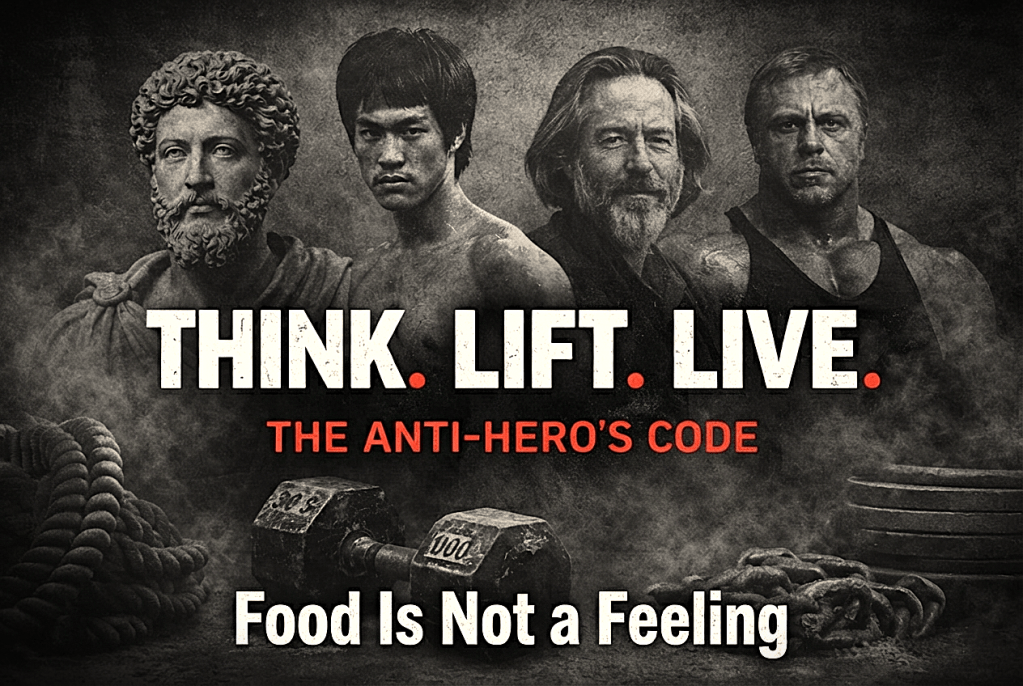
Most people don’t have a nutrition problem; they have a perspective problem.
They’re not making poor food choices because they don’t know better. They’re making them because food has become emotional, reactive, and inconsistent. It’s comfort. It’s control or lack of it. It’s a celebration. It’s punishment. Worse still, it may be a genetic issue. And that is often the one that is least talked about. Often, almost every fitness “influencer” or goofy “guru” just tells everyone who will listen that they just need more or less of (fill in the blank). Given the particular and foundational nature of thetopic, 99% of influencers and “online fitness coaches” do their best to cram everyone into the same box.
And that’s the first thing we need to dismantle.
The Problem: Food Has Been Taught as Reward, Not Resource
We’re told from a young age that food is earned. Or to “earn your calories.” That it’s something you deserve when you’ve worked really hard, “been good,” or achieved something meaningful. Now, in some ways, that can be true, but it makes much more sense that, after all this time, we shouldn’t treat it like some sort of mood regulator.
- Stress = snacks
- Sadness = sugar
- Boredom = bites
- Hard workout = “reward meal”
But if you’re trying to feel, think, move, and live better—whether in training or just day-to-day—then food should support those goals. Emotions fluctuate, but your system for eating can remain steady.
A More Useful Lens: Food as a Support System
This isn’t about becoming robotic or clinical. It’s simply about building stability.
If you train, work, and live with intention, then food is one of your daily support tools. It’s not a treat. It’s not a cheat. It’s structure.
That means:
- You eat when your body needs fuel.
- You eat with an understanding of what’s coming next.
- You repeat meals that work.
- You build rituals around consistency, not emotion.
It’s how professionals eat. Not rigid. Not joyless. Just consistent, and you can do it, too.
What This Looks Like in Practice
We’ve covered this info a few times, but it bears repeating:
- A consistent breakfast with protein, fiber, and hydration (not just a dose of caffeine and chaos and you’re out the door).
- A post-workout meal that supports recovery, not emotional relief.
- Default/backup meals when you’re too tired to think.
- Less “what am I in the mood for?” and more “what supports what I’m doing today?”
For example, my go-to breakfast is eggs, oats, and berries. I repeat it most mornings because it works for me. Again, not robotic, just straightforward, easy to maintain, offers lots of flavor combinations, and is a simple, logical way to handle your food for the day.
You’ll find plenty of room for flexibility later. But not if you’re always reactively eating.
ACTION CHALLENGE:
Track what you eat for 3 days, but not just what, also why. Each time you eat, note what prompted it.
- Was it hunger?
- Boredom?
- Social pressure?
- Stress?
- Fatigue?
You’ll be shocked by how often it has nothing to do with performance or physical need.
Coach’s Corner:
- Start small. You don’t need the perfect meal plan; you need a few solid defaults.
- Emotion is part of eating, and sometimes, comfort eating is okay. But it can’t be the foundation.
- If your day feels chaotic, your nutrition shouldn’t add to that chaos. It should bring structure.
Suggested reading: “The Hungry Brain” by Stephan Guyenet
One of the best deep dives into the biology of eating behavior, hunger, and food decision-making.
Key takeaway: The more you can separate food from mood, and link it to your daily needs, the more empowered and consistent you’ll become, no guilt, no perfection required.
A great life = persistence > perfection.
 Matt Shannon, Security Pro